Anvil Strikes Turn Isengard Into a Rhythm
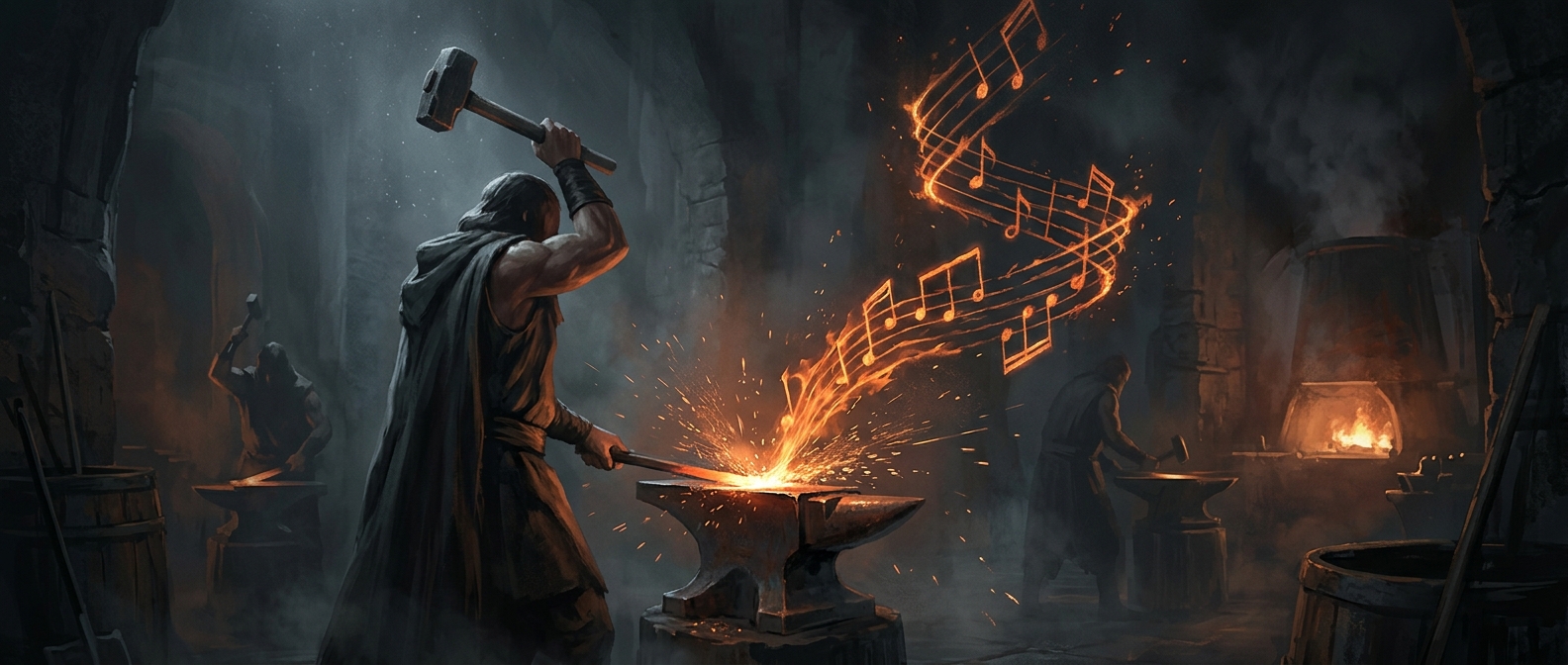
In The Lord of the Rings, the music associated with Saruman’s industrializing power does not rely only on orchestral instruments to suggest menace. Howard Shore used the hard, ringing sounds of iron chains and blacksmith hammers striking anvils. Those sounds make the machinery behind the music feel physical: each hit suggests metal being worked, not merely a dramatic mood being played.
An anvil is normally a tool for shaping hot metal, but its bright, forceful ring also makes it a natural percussion instrument. Against the orchestra, its clang cuts through with a blunt, industrial edge. The chains add another metallic texture, helping the music evoke a place organized around labor and production.
Why the Uneven Beat Feels Relentless
The theme’s 5/4 meter means each musical bar contains five beats rather than the more familiar four. That extra beat keeps the rhythm from settling into a standard, symmetrical march. Instead, the pulse feels lopsided but insistent—always pushing forward, as if the machinery will not stop.
The effect is more than a musical shorthand for “evil.” The sound and meter connect Saruman’s threat to a process: Middle-earth is being reshaped through relentless industrial work. When the anvil rings, the listener hears that transformation as labor—metal struck, force repeated, and the rhythm continuing beyond any single blow.