A festival runs on a compressed clock
A festival may look like a string of premieres and parties, but its working rhythm is closer to a deadline-driven conference. Films have fixed screening times, guests have limited days in town, and meetings compete with travel, interviews, and the next event. That compression makes every gap in the schedule feel usable—and leaves little room to recover when plans slip.
For filmmakers, the crowded program is part of the opportunity. A screening brings a film before audiences and industry guests in one place; the conversations afterward can help a project find collaborators, distributors, or support. But those chances arrive in brief windows. A pitch may have to fit into a walk between events, when both the person pitching and the person listening are already tired.
Why the lobby becomes a workplace
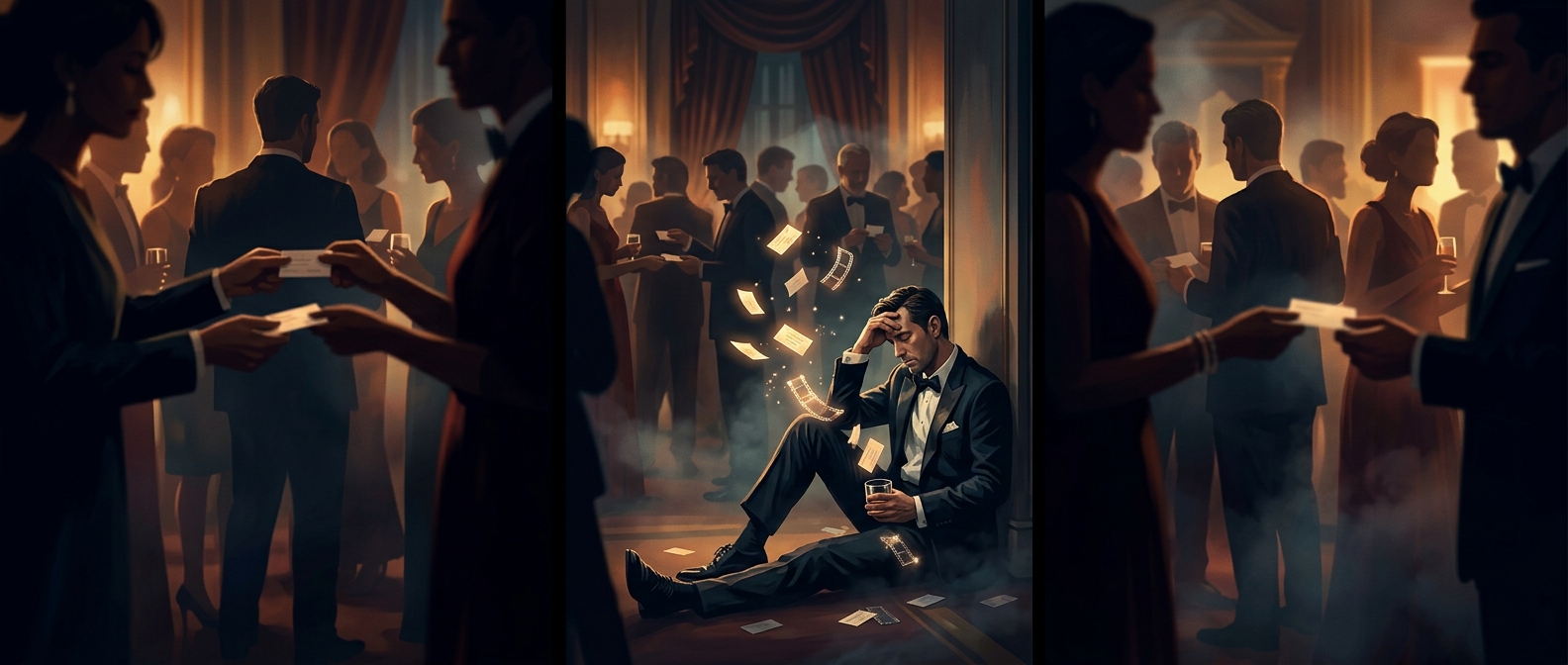
A hotel lobby is not merely a convenient backdrop. It is shared ground: people from different screenings and meetings pass through it, and an informal conversation can happen without arranging another appointment. That makes it useful for introductions and quick follow-ups, especially when everyone’s calendar is packed.
The tradeoff is that a pitch delivered in a noisy public space has to compete with distraction. There may be no quiet room, presentation, or long explanation—just a chance to make the project clear enough for someone to want a later conversation. Festivals therefore reward not only a strong film or idea, but also preparation: knowing what to say, carrying the materials a contact may need, and recognizing when a brief exchange should become a proper meeting.
The glamour is the visible result; the work is often conducted in the spaces between scheduled events, with a small window to turn a chance encounter into a next step.