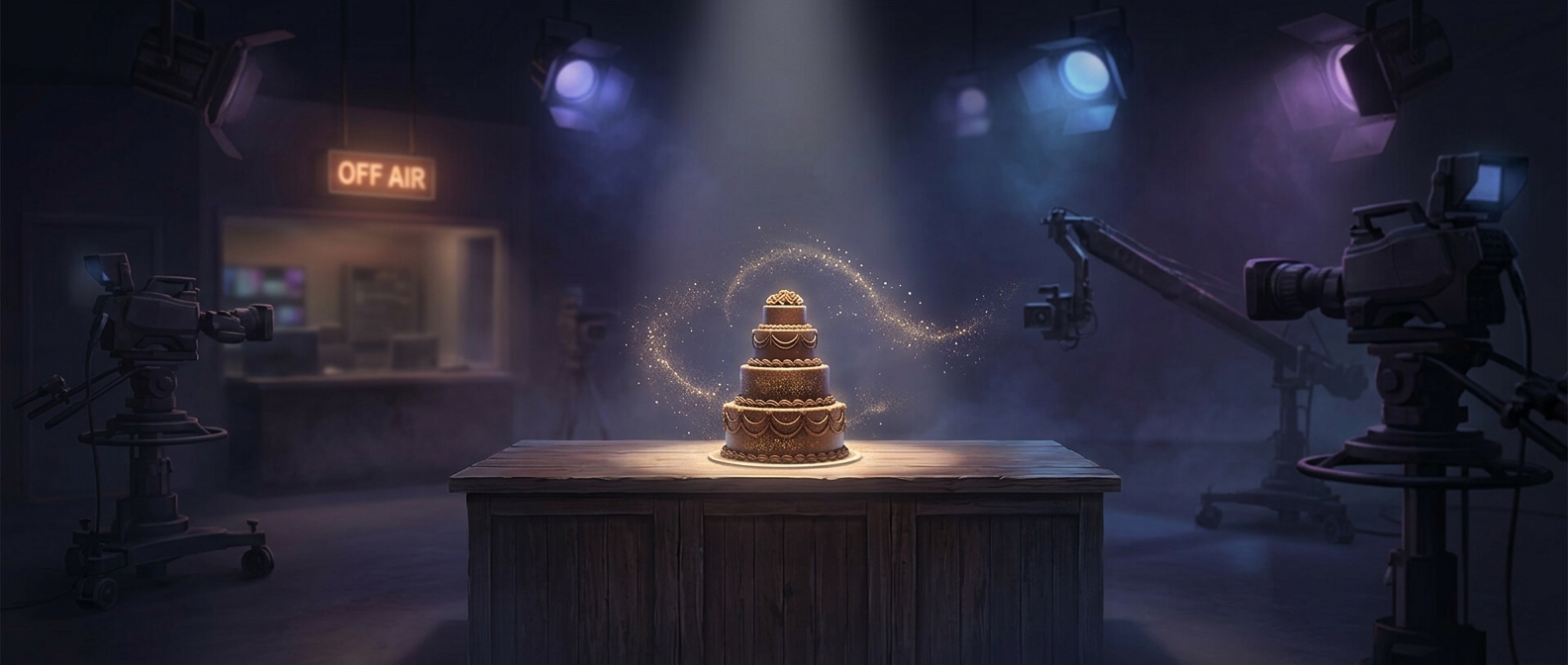
The “Oven Swap” Is a Piece of Stagecraft
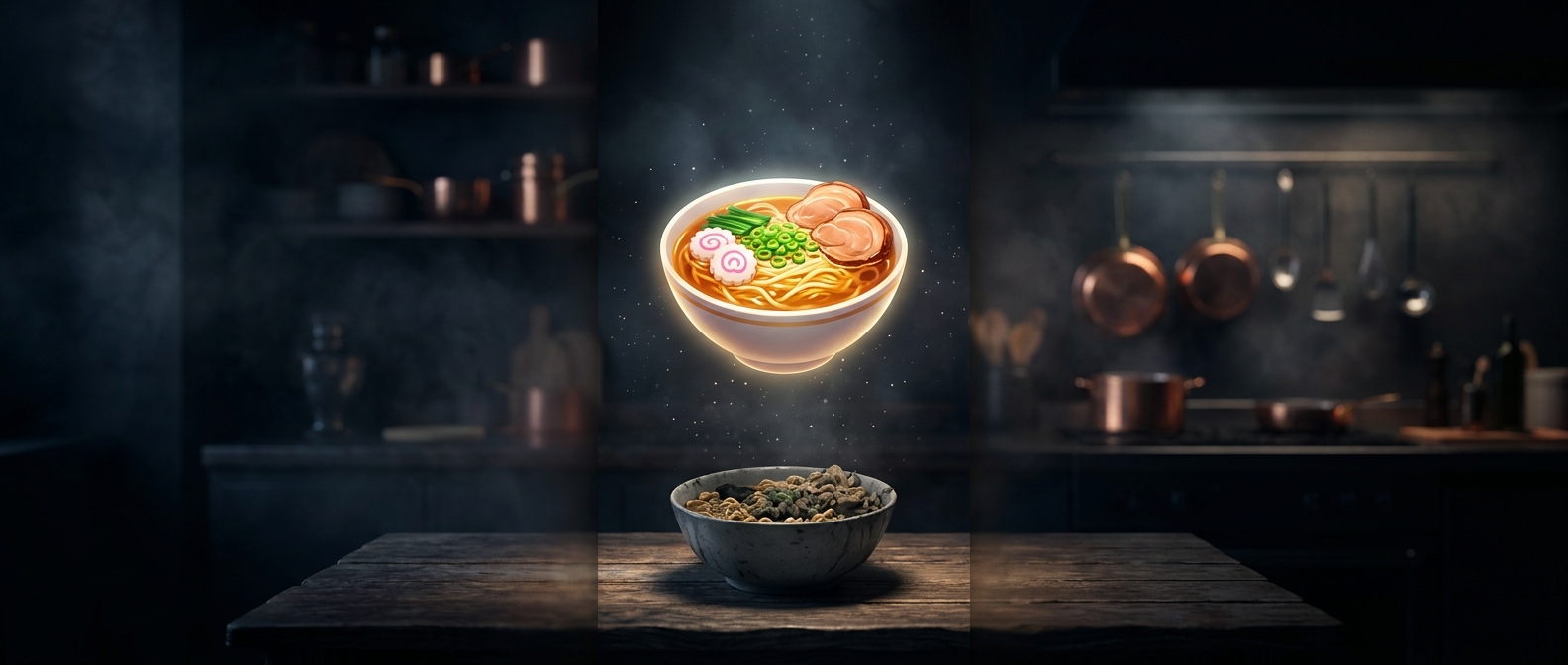
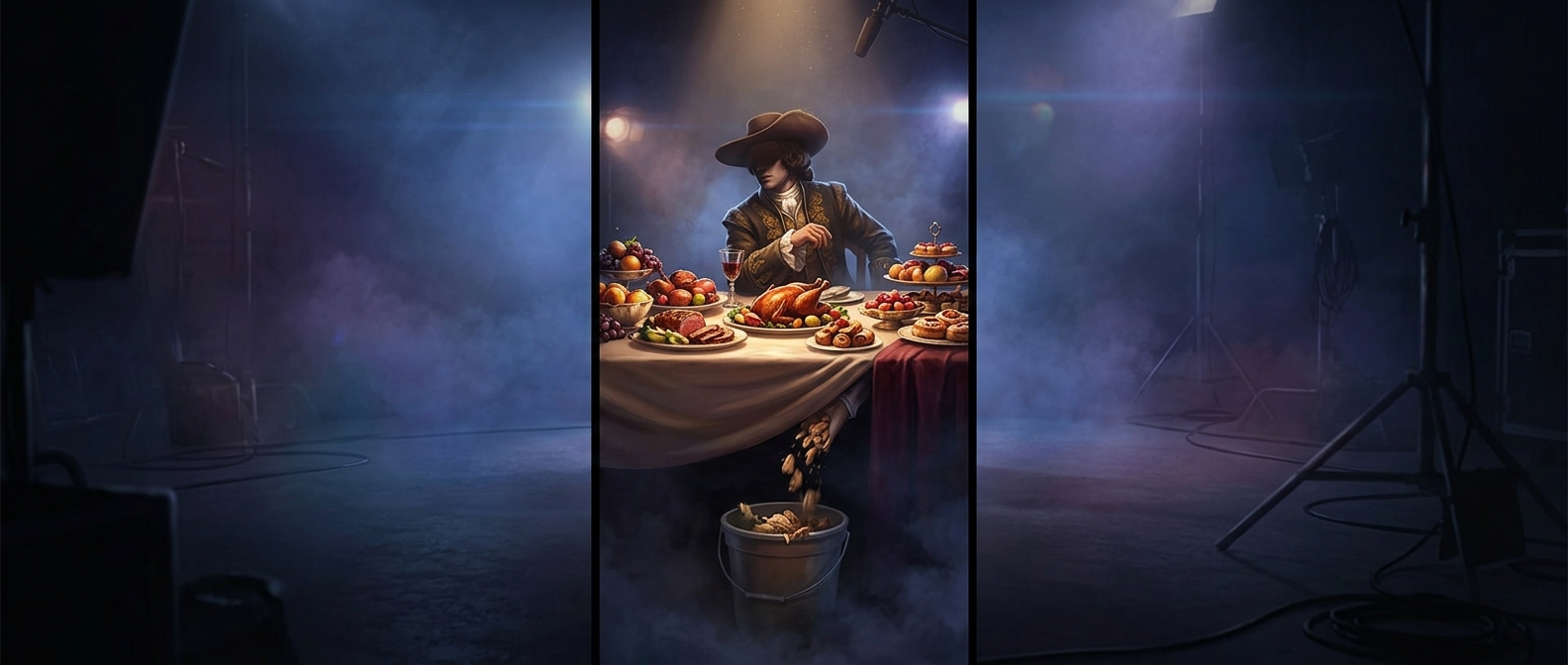
A cake cannot bake in the few seconds it takes to cut from one shot to another. The apparent instant change is made possible by filming the messy, slow parts and the finished result as separate moments, then joining them in the edit. The counter helps hide the handoff: batter or an unfinished cake disappears from view, and a ready cake is brought up in its place.
This is a practical form of continuity editing—the technique of making separate takes feel like one uninterrupted action. A camera angle, a counter edge, or a cut can conceal the gap without asking viewers to watch a long wait. The swap is not a trick that speeds up baking; it keeps real baking time from dictating the pace of the program.
Why the Swap Has to Look Seamless
The finished cake still needs to belong to the scene. Its pan, decoration, and overall appearance have to make sense beside what the baker was shown making. Otherwise, the transition draws attention to the production rather than the baking. Producers can show enough of the process to make the result feel earned, while leaving out the oven time that would stall the action.
That tradeoff is especially useful in a competition show, where several bakers and tasks must fit into a watchable episode. The next time a bowl vanishes and a cake rises from below the counter, the reveal is also an editing solution: the show preserves the feeling of a baking challenge without making viewers sit through the wait.