How an extra chromosome changes development
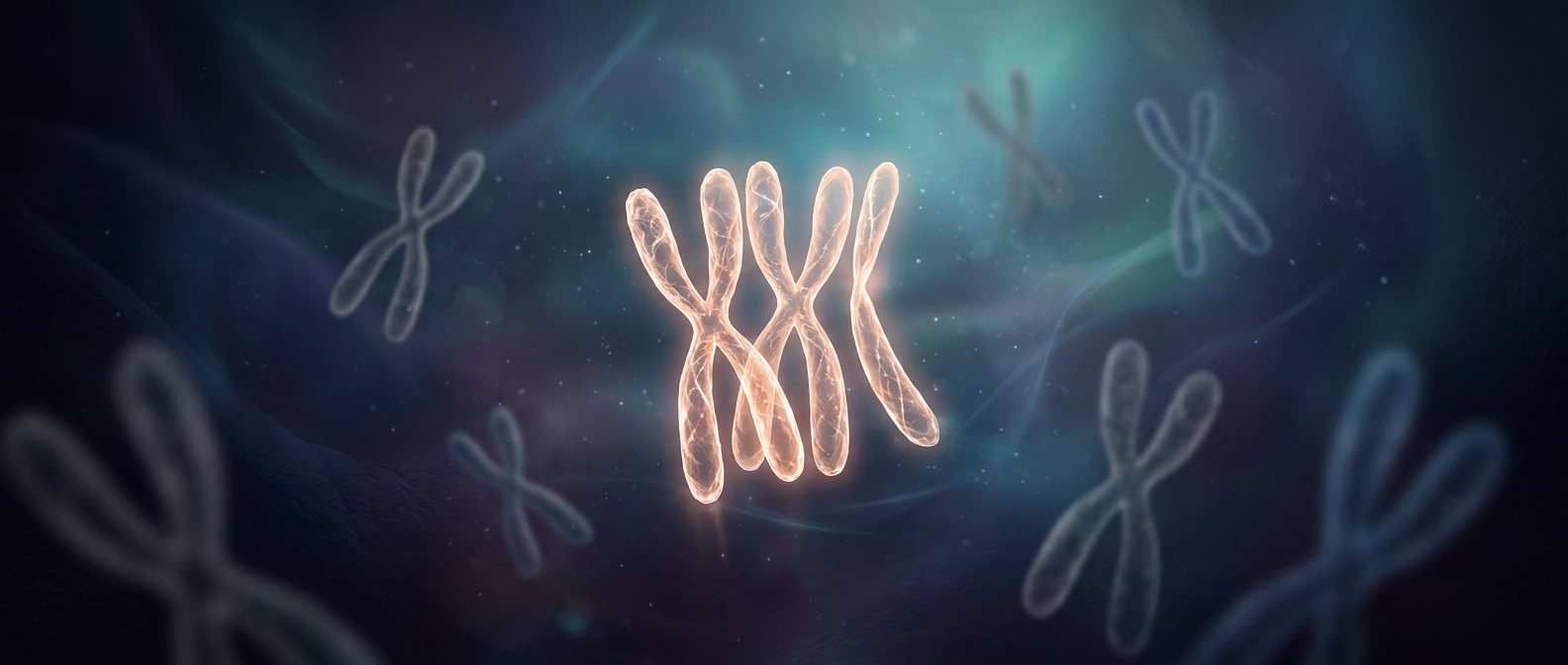
Most human cells carry two copies of each chromosome, one inherited from each parent. In the most common form of Down syndrome, cells carry three copies of chromosome 21 instead of two. This is called trisomy 21. The extra copy supplies additional instructions for making proteins, shifting the activity of many genes as tissues and organs develop.
The change usually begins when egg or sperm cells are being formed. Chromosomes that should separate into different cells sometimes travel together. If a resulting egg or sperm contributes two copies of chromosome 21, the fertilized egg can begin with three. As that egg divides, its descendants carry the extra chromosome too.
Why the effects vary
Genes work in networks, so an extra copy does not simply add one isolated trait. It can alter the timing or amount of signals that guide development. Those changes help explain why Down syndrome is associated with a recognizable pattern of physical and developmental characteristics, and why some health conditions occur more often. But the extra chromosome does not affect every person in the same way: the particular mix and degree of effects vary widely.
Not every case involves three complete copies in every cell. In mosaic Down syndrome, some cells have the extra chromosome and others do not. In translocation Down syndrome, extra chromosome 21 material is attached to another chromosome. In both cases, the key feature is extra genetic material from chromosome 21—not necessarily three separate, complete copies in every cell.
That distinction matters: a chromosome count describes the genetic change, but it cannot predict one person’s abilities, health, or future. The same extra set of instructions can play out differently across cells and across individuals.