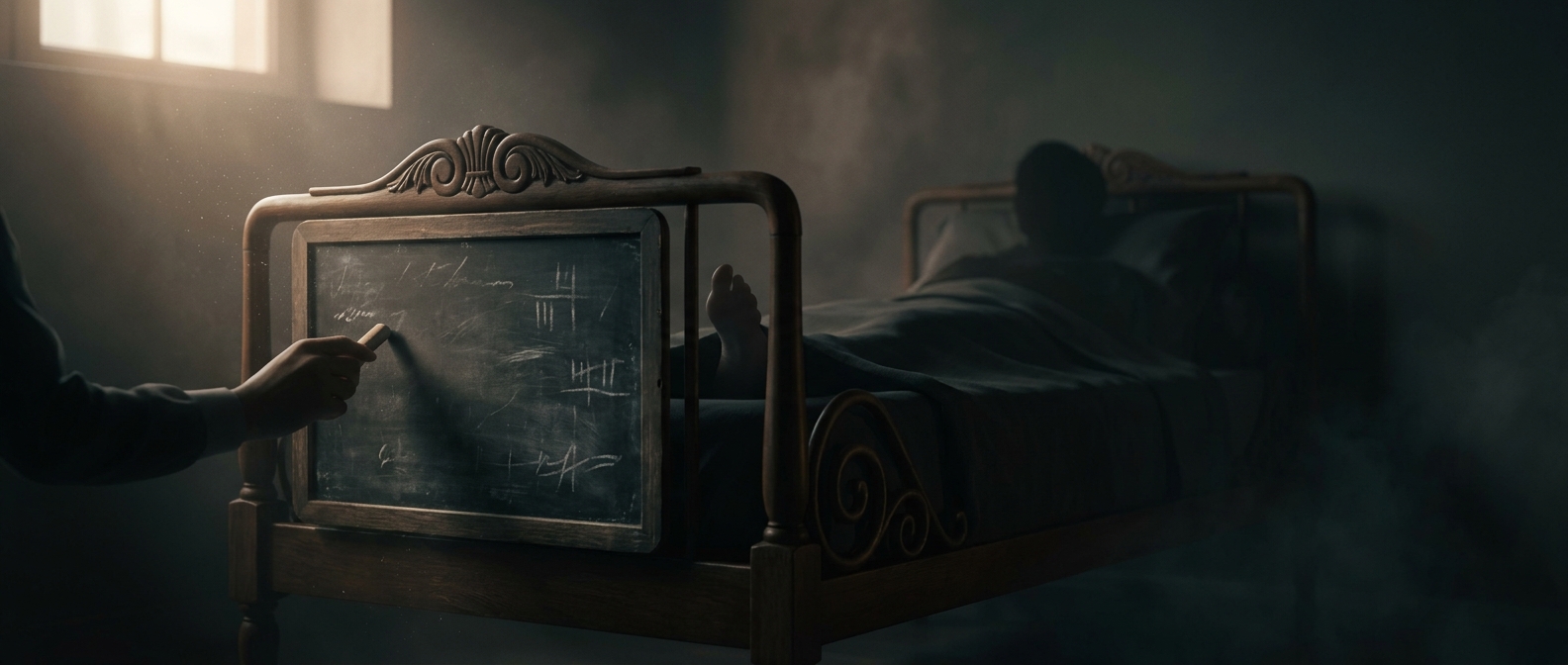
A Bedside Board Turned the Patient Into a Shared Reference
A chalkboard at the foot of a bed made important information available without anyone having to fetch a chart. Staff passing through could glance at the same visible notes, and whoever updated the board could make a change apparent to the next person. In a busy ward, that kind of quick reference could help keep routine care coordinated.
But a board is useful precisely because it is easy to see. Unlike a folder kept with a clinician or a record stored away, writing on the bed’s end was exposed to anyone with a view of it—including visitors and other patients in a shared room. Details meant to guide care could also reveal something personal to people who had no role in providing it.
Convenience and Confidentiality Pull in Opposite Directions
The board was not the same as a complete medical chart: it served as a visible summary, not a private place for every detail of a patient’s history. That distinction did not eliminate the privacy problem. Even a brief note can disclose sensitive information when it is displayed in public view.
The arrangement makes a lasting design tradeoff easy to see: information that is instantly accessible to a care team is also harder to keep confidential. Moving details out of sight can protect privacy, but it can also make them less convenient to consult. At the foot of the bed, the very feature that made the notes practical—their visibility—was also what made them vulnerable.