How Romans counted a mile
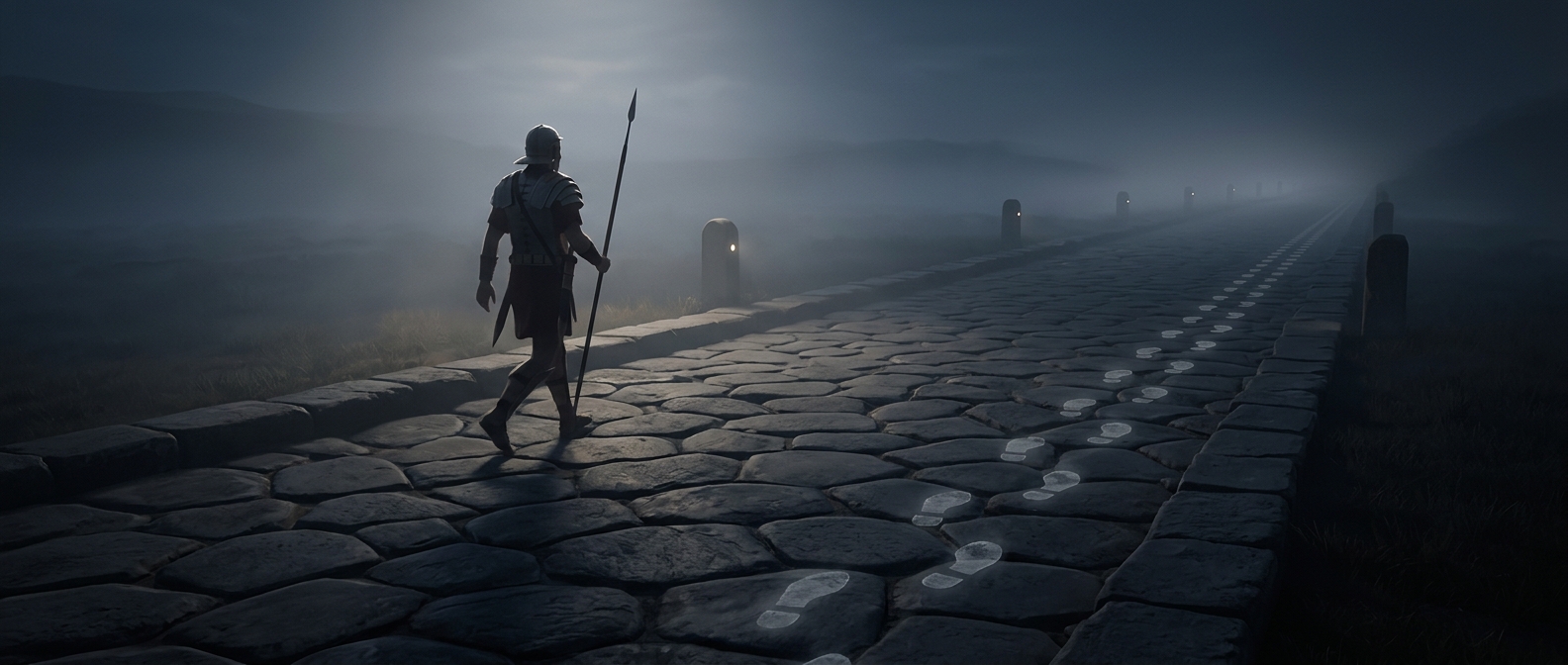
The Latin phrase mille passus means “a thousand paces.” The apparent puzzle is that a Roman pace was not one footfall. It measured the distance from one foot striking the ground to that same foot striking again—a full stride, made up of two steps.
So a soldier counting 1,000 paces was counting 2,000 steps. The unit was tied to the rhythm of walking, but its count used a longer beat than the everyday sense of “pace” can suggest.
From marching rhythm to measured distance
That distinction mattered on the road. Roman soldiers could track distance by counting strides as they marched, while milestones gave travelers a fixed marker along the route. In either case, the mile was a standard unit, not a tally of every single step.
The Roman mile was roughly 1.48 kilometers, or just under a modern statute mile. Its name preserves the original counting method, even though the modern mile is a different standardized distance.
The small trap is therefore in the word, not the arithmetic: a Roman “pace” contained two steps, so a thousand paces meant two thousand footfalls.