How a trike turns by giving up grip
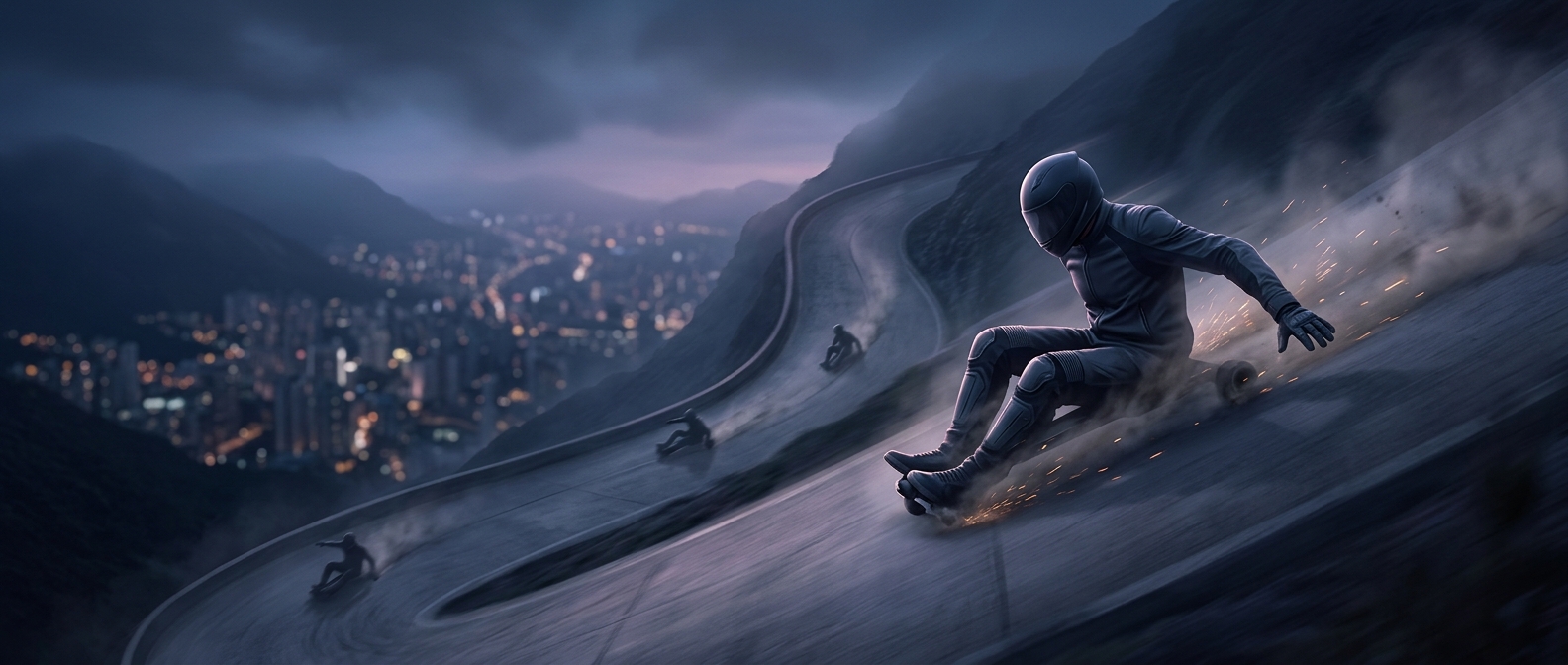
A drift trike is built around an unusual division of labor: the front tire is meant to guide the vehicle, while the rear wheels are made easier to slide. Their smooth plastic sleeves reduce the rubber’s grip on pavement. In a corner, the rear can therefore swing outward instead of tracking neatly behind the front wheel.
That sideways motion is a controlled loss of traction. The front wheel still points the trike along a path, but the sliding rear changes the vehicle’s angle to that path. The rider steers and shifts body weight to manage the slide; too little sideways movement and the trike grips through the turn, too much and it can rotate beyond recovery.
Why the hill matters
On level ground, a rider would have to supply the energy to keep moving. A downhill slope continually converts height into motion, so the trike can carry enough speed for the rear to break loose. The same force makes each turn a balancing act: the faster the trike approaches a bend, the more demanding it becomes to manage its sideways momentum.
Surface conditions matter because the rear sleeves have limited grip to begin with. A change in pavement can alter how readily they slide, while the front tire still needs enough contact to steer. Riders are not simply aiming to make the trike slip; they are trying to keep the front wheel’s path, the rear’s swing, and the hill’s speed working together. That narrow balance is what turns a basic downhill run into a precision sport.