A launch clears the fence—but not the journey
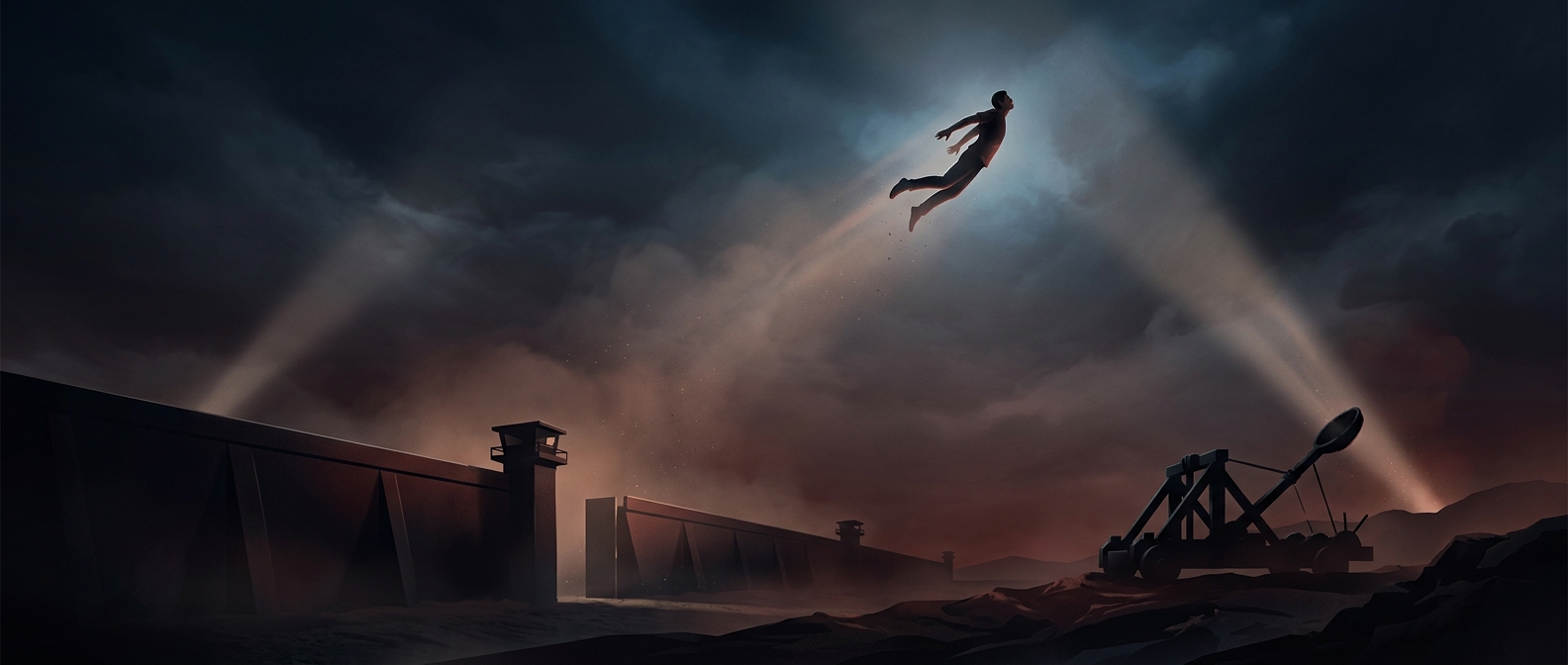
A catapult can turn tension in a bent frame or stretched rope into a sudden burst of motion. Point it upward, and a person could in principle rise over a wall or border barrier. The obstacle is that a border is only one part of the route: the traveler still has to come down somewhere on the other side.
The landing is part of the design
Once launched, a person follows an arc shaped by the launch’s speed and angle, then by gravity. Aiming too low risks hitting the barrier; aiming higher means a longer, less controlled fall. Unlike a vehicle, a catapult offers little ability to steer or slow down after release, so the destination would need to be clear and forgiving—and the launch itself would have to be survivable.
That is the gap between a striking escape idea and usable transport. A catapult can solve the problem of getting airborne; it cannot make the far side of the border a safe place to arrive.