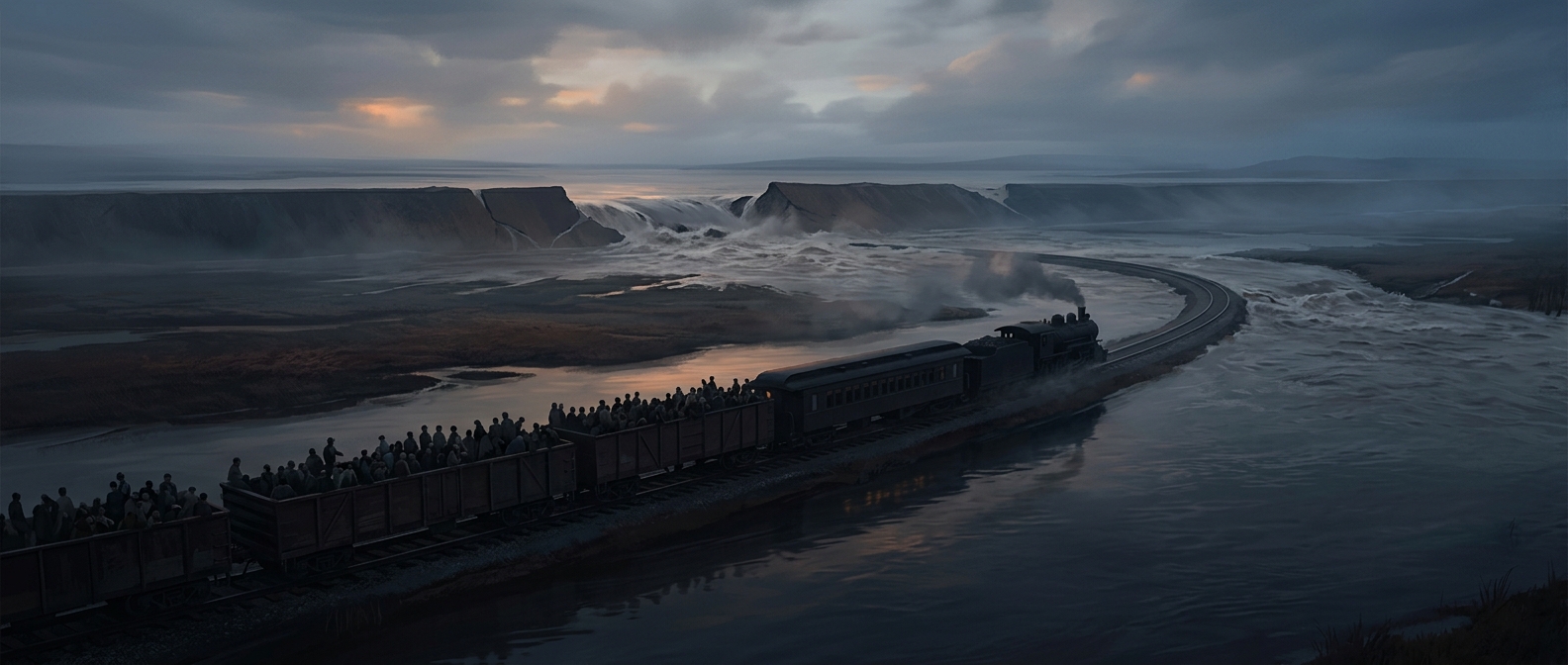
When the Levee Broke, the Return Trip Changed
In 1927, floodwaters covered vast stretches of the lower Mississippi Valley. To reduce the danger to New Orleans, officials opened a levee south of the city, sending water into rural communities. For Black farm families, the breach meant more than losing shelter: it submerged fields, livestock, tools, and the places where they had been expected to work once the water receded.
Many of those families were sharecroppers. They farmed land owned by someone else and paid rent with a portion of the crop. At harvest, debts for food, seed, and supplies could leave workers owing money rather than earning enough to leave. A flood could destroy the crop while leaving those obligations—and the unequal labor arrangement—intact.
A Rescue Route Became a Way Out
With roads under water and homes unlivable, trains offered a practical escape. Rescue trains carried displaced people away from flooded districts; for some Black passengers, continuing north meant using that emergency journey to leave the sharecropping system altogether. Returning could mean rebuilding on damaged land and facing the same dependence on landlords and creditors.
The decision was not simply a choice between two destinations. It was a choice between an uncertain life elsewhere and a return to work shaped by debt and limited bargaining power. The flood did not create those conditions, but it disrupted the arrangements that had kept families tied to them. In that sense, the train ride north carried people beyond immediate danger—and made displacement a route toward a different future.