Why a coaster queue doubles back on itself
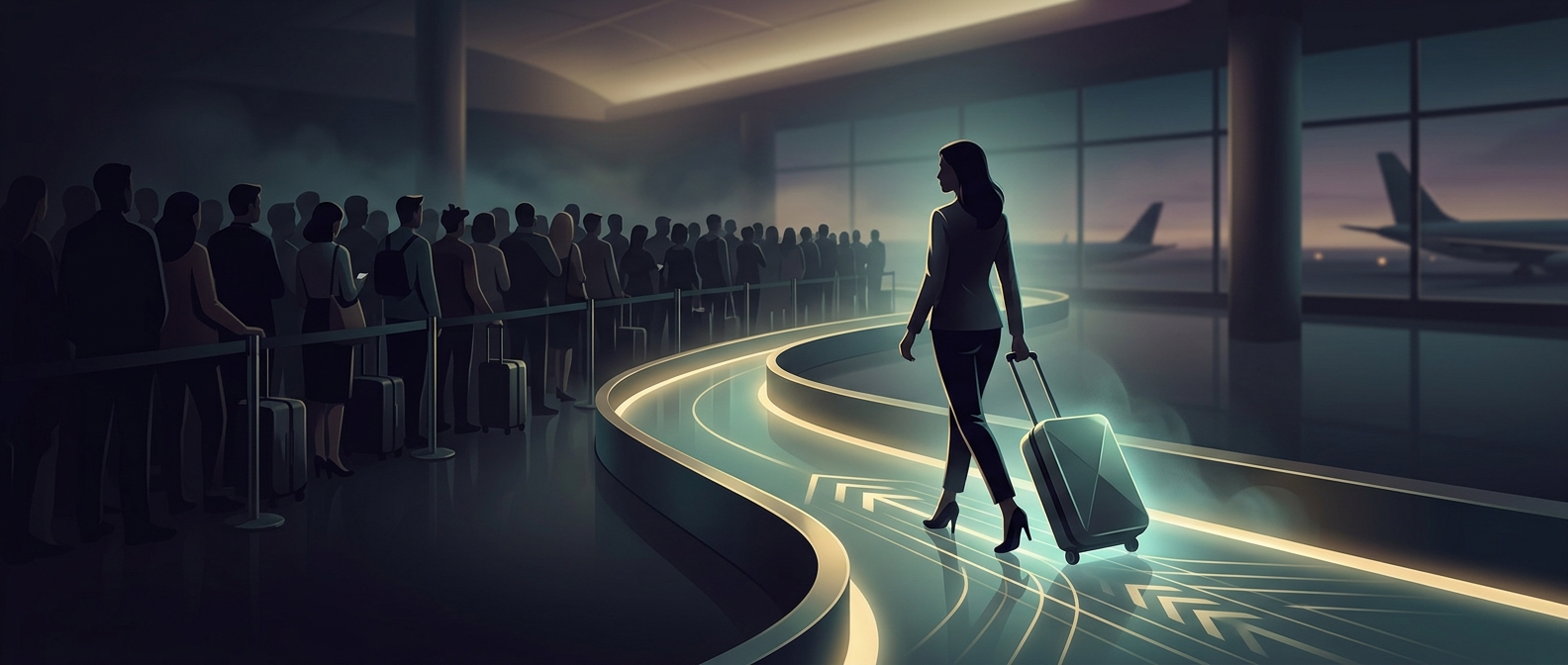
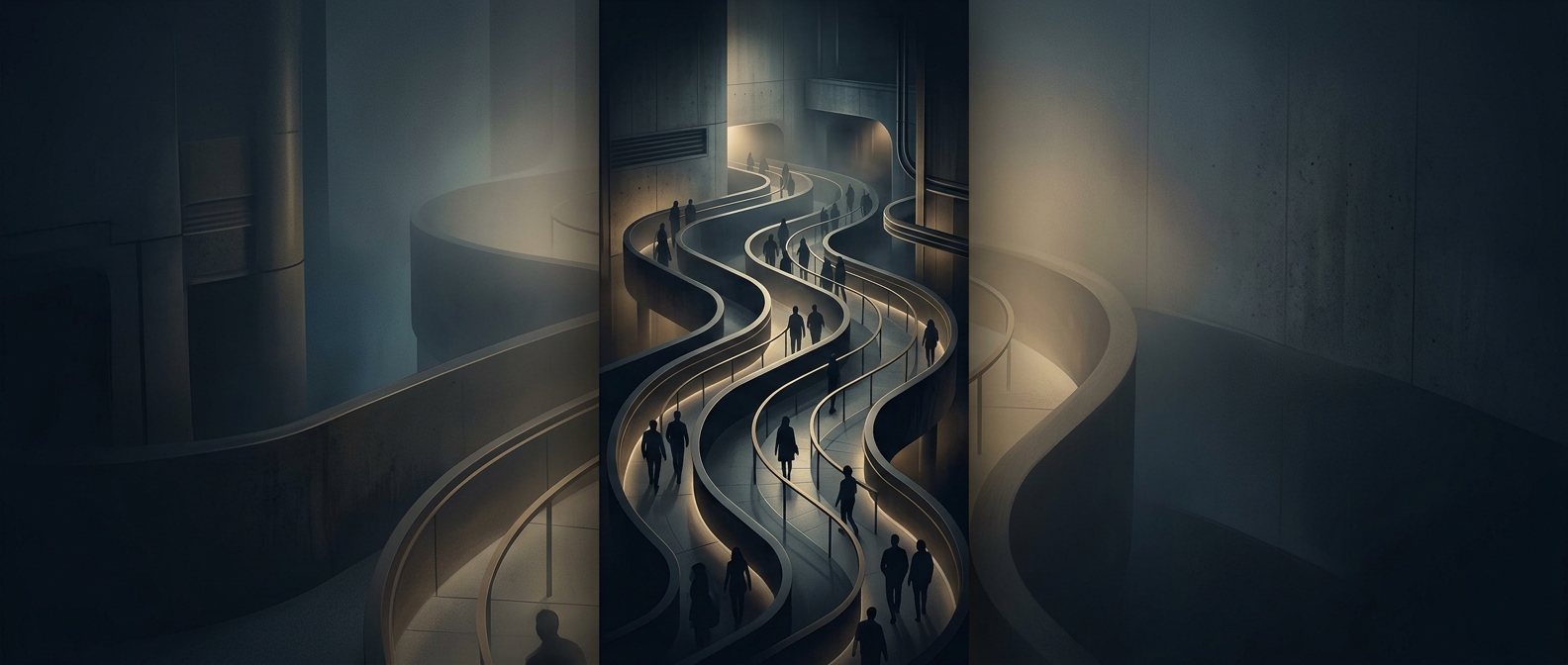
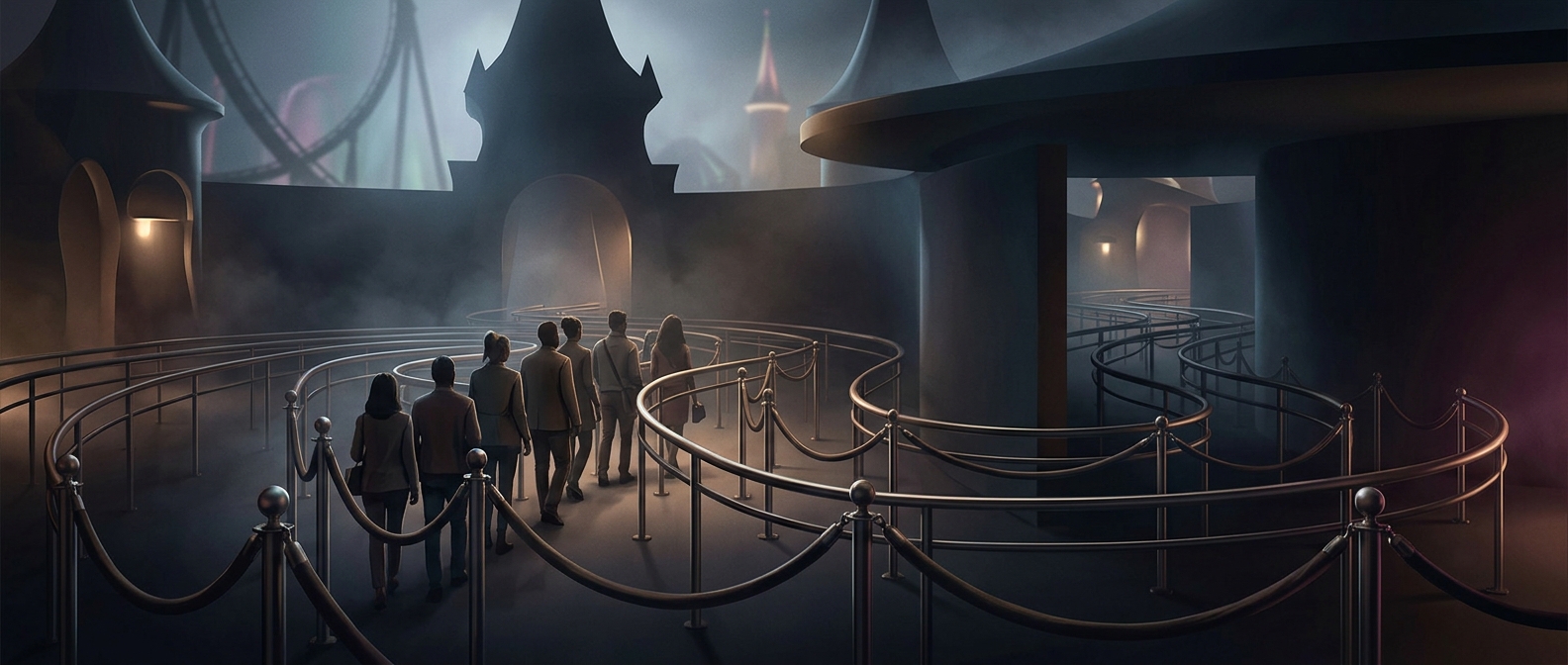
A roller coaster can load only so many riders per hour, so even a moving line can build up before the station catches up. Rather than let that crowd stretch across a walkway, designers route it through switchbacks: repeated turns that pack a long path into a smaller footprint.
The turns also make the wait less legible. From outside the queue, visitors may see only the first stretch, not every row tucked behind it. That can keep the line from looking as daunting as its actual capacity—but it does not make the wait shorter. The ride’s loading rate and the number of people already ahead still determine how quickly the line moves.
The turns shape the waiting experience
Once visitors enter, each bend reveals another section of the queue. Designers can use those sections to guide guests toward the station while keeping the line contained and separated from nearby paths. The result is a practical compromise: the park can hold a crowd close to the ride without displaying the entire queue from the entrance.
That is why a line that appears to end around one corner may continue around several more. The hidden distance is not a trick that changes the ride’s capacity; it is a way to fit the waiting crowd into the space available.