A queue is part of the ride’s operating system
A ride’s line has to do more than hold people until a vehicle arrives. It must fit a large crowd into limited space, keep people moving toward the loading area, and feed riders into the attraction at a pace the operators can manage. A straight line often cannot do all that on a crowded, irregular site.
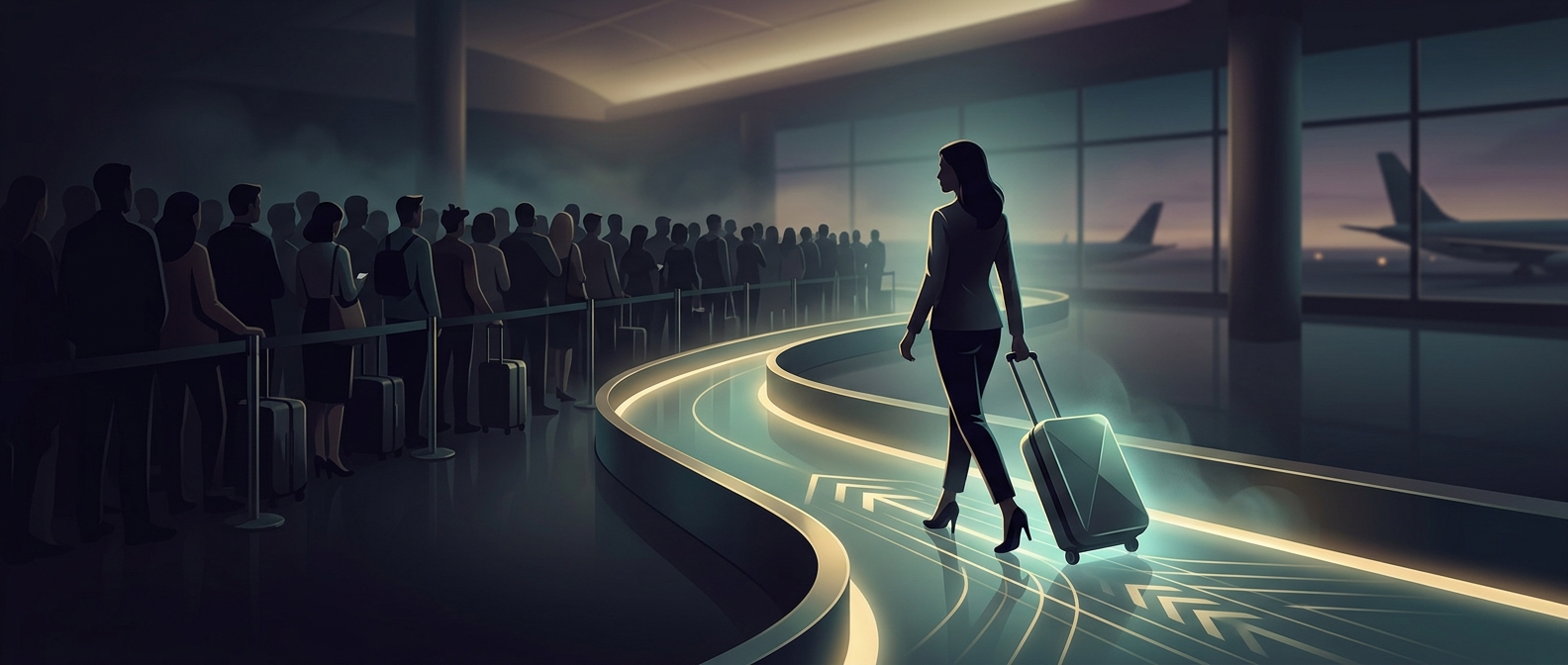
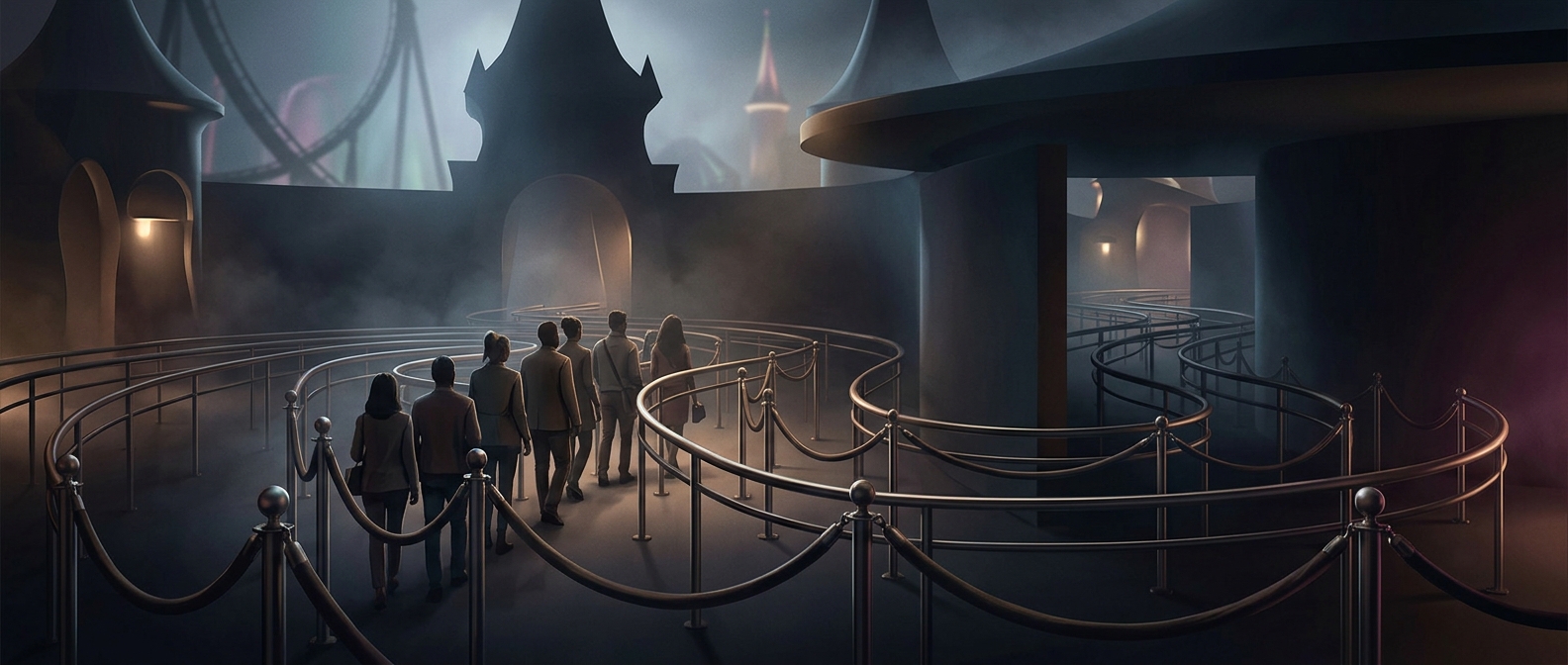
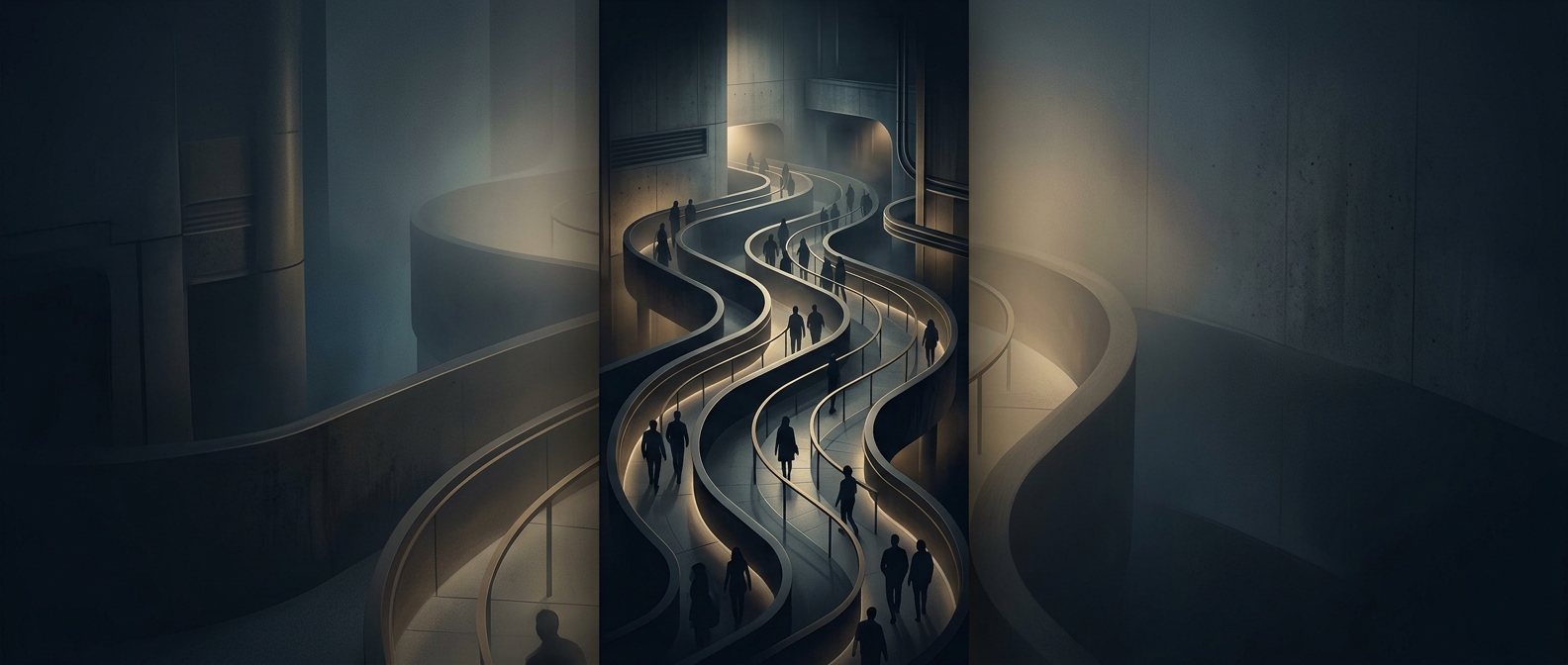
A switchback solves the space problem by folding one long path into repeated turns. Multi-level layouts use vertical space as well, routing guests through different tiers before they reach the ride. These paths turn walkways and waiting areas into a buffer: when arrivals briefly outpace boarding, the line can absorb the difference without spilling as far into surrounding areas.
The merge is where layout becomes logistics
When a faster-entry option joins the regular queue, the design must bring two streams together without blocking either one. The merge point affects how often each stream advances and how smoothly guests reach the loading area. Railings, turns, and separate approach paths can guide people into that point while limiting confusion and crowding.
That makes a queue layout more than a decorative maze. Its geometry can shape capacity, circulation, and the guest’s sense of how the wait is unfolding. A bend may also keep the end of a long line from dominating the view of the park, while a carefully placed opening can reveal part of the attraction and give waiting guests something to watch.
What a queue patent protects
A patent is tied to the particular design or system described in its claims—the features the document says are protected—not to every line that zigzags or uses multiple levels. For parks, that can make a queue’s arrangement a piece of operational design as well as a way to manage space. The path guests barely notice may be doing several jobs at once: storing a crowd, directing its movement, and controlling how it reaches the ride.