Why an airplane suite needs three rooms
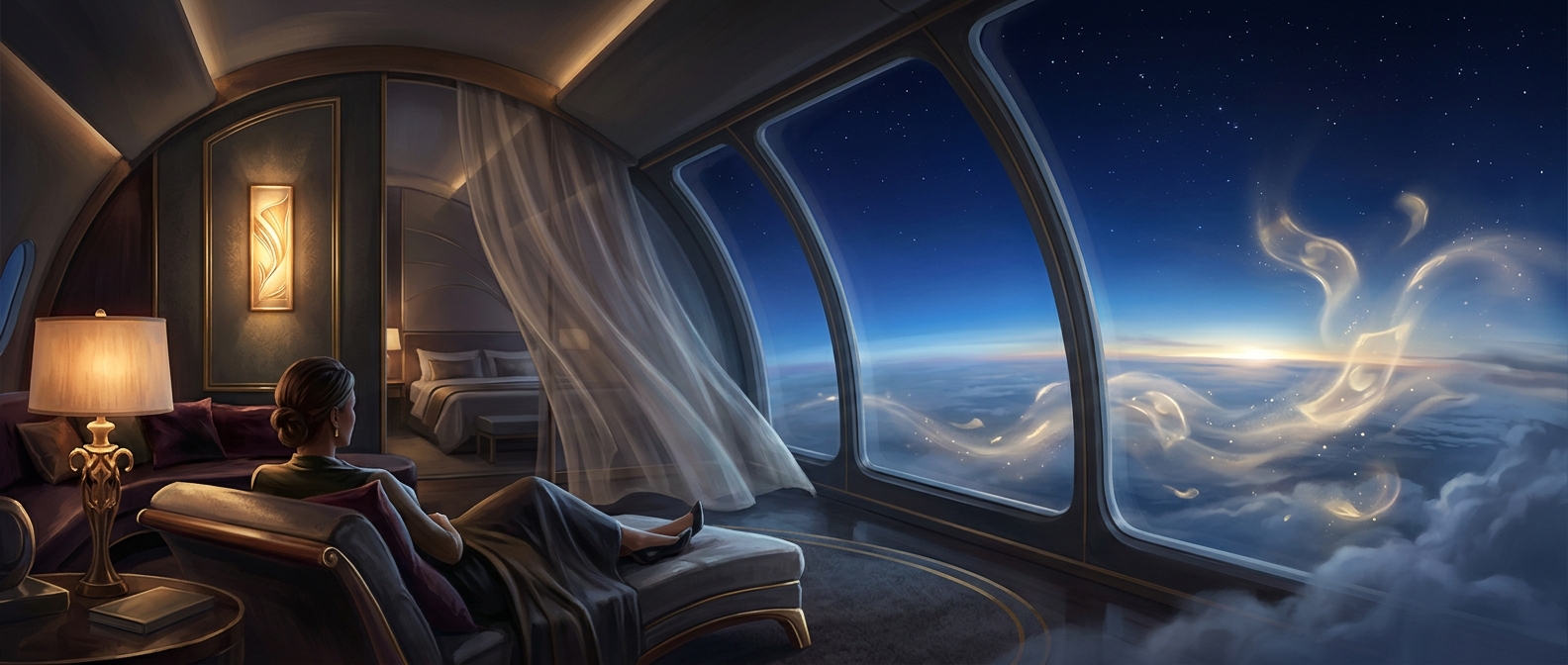
An aircraft cabin is a tightly constrained space: its shape is set by the fuselage, and every private area has to fit around the aircraft’s structure and passenger routes. Etihad’s Residence turns some of that scarce cabin space into separate zones rather than treating the seat as the whole product. That distinction matters on a long flight: sitting, resting, and sleeping can happen in different places without making the bedroom serve as the lounge too.
Space is the luxury—and the tradeoff
A suite spread across multiple rooms uses far more cabin area than a conventional seat, so its value is not simply extra legroom. The buyer is paying for separation and privacy in a setting where most travelers share a cabin. A private butler adds a service layer: instead of fitting every need into the usual seat-and-galley routine, the experience can be organized around one guest’s space.
That design also exposes the basic tradeoff of premium air travel. The aircraft has a finite interior, and space devoted to one expansive suite cannot be used in the same way as space for many seats. The Residence is therefore a deliberately rare kind of cabin product: less about moving the greatest number of passengers and more about making a small part of the plane feel like a private place to live during the journey.