How a name becomes a number
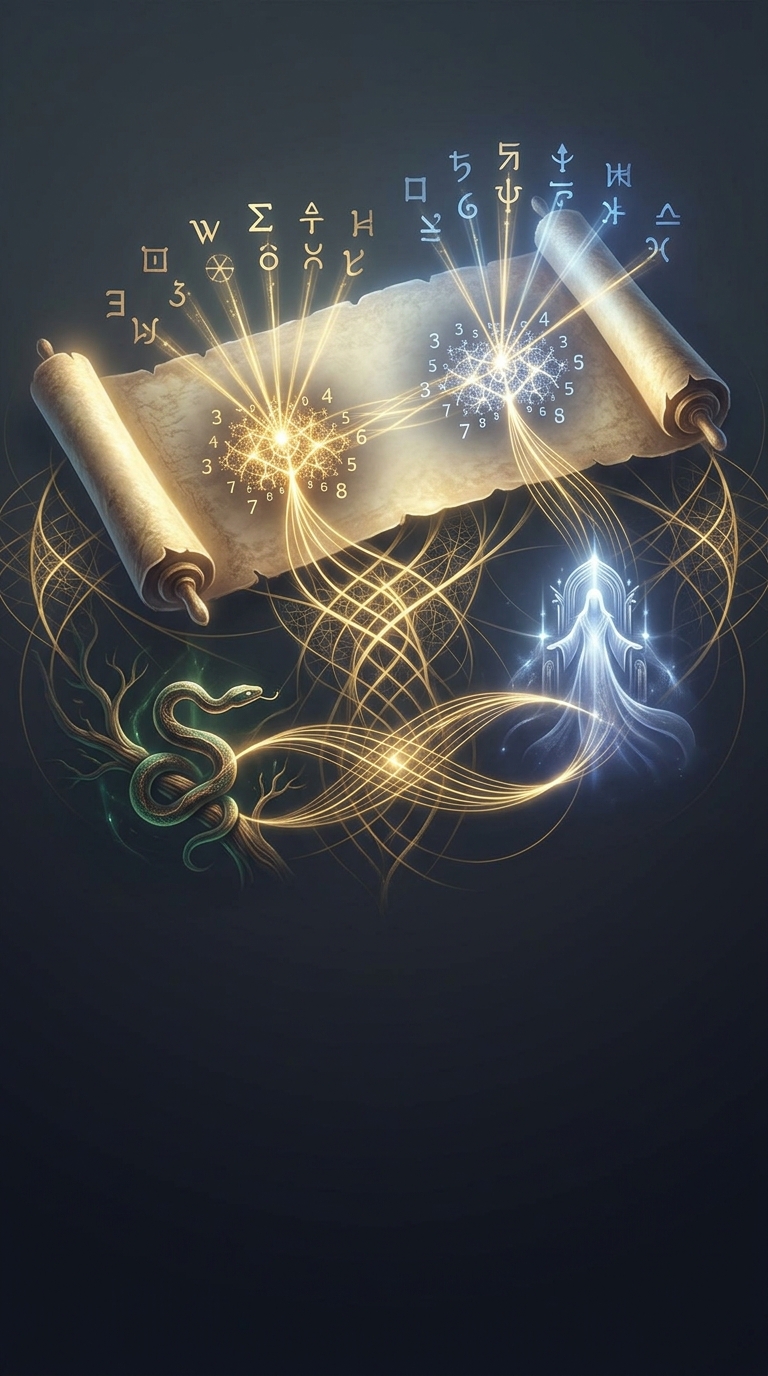
In the ancient world, some writing systems used letters as numerals. Hebrew gematria takes the numerical values of the letters in a name and adds them together. A Hebrew spelling of “Nero Caesar” can be read as 666, making the number a possible way to identify the Roman emperor without naming him outright.
That reading helps explain why the number appears in Revelation as the mark of a beast: the image can be understood as a pointed, disguised criticism of imperial power. In a text written under Roman rule, a numerical hint could let readers recognize the target while keeping the accusation indirect.
Why another manuscript has 616
The puzzle has a revealing wrinkle. Some early copies give the number as 616 instead. The difference fits a change in how Nero’s name was rendered: a form of “Nero” with a final n produces 666 in the Hebrew calculation, while a form without it produces 616. That variation is a clue that the number may encode a human name, rather than function as a free-floating supernatural password.
The identification is a leading interpretation, not a certainty. Revelation’s beast imagery can carry more than one layer of meaning, and readers have interpreted it in different ways across centuries. But the Nero reading links an abstract symbol to a concrete political world: an emperor whose authority could be represented as monstrous.
Why the code keeps attracting new targets
Once a number is treated as a hidden signature, people can search for it in the symbols and systems that feel powerful or unfamiliar in their own time. Barcodes, products, and license plates can then become canvases for suspicion—not because the original calculation proves a connection, but because the old image invites fresh pattern-matching. The striking possibility is that 666 began not as a prediction about future gadgets, but as a coded way to point readers toward a ruler they already knew.