How a word becomes a number
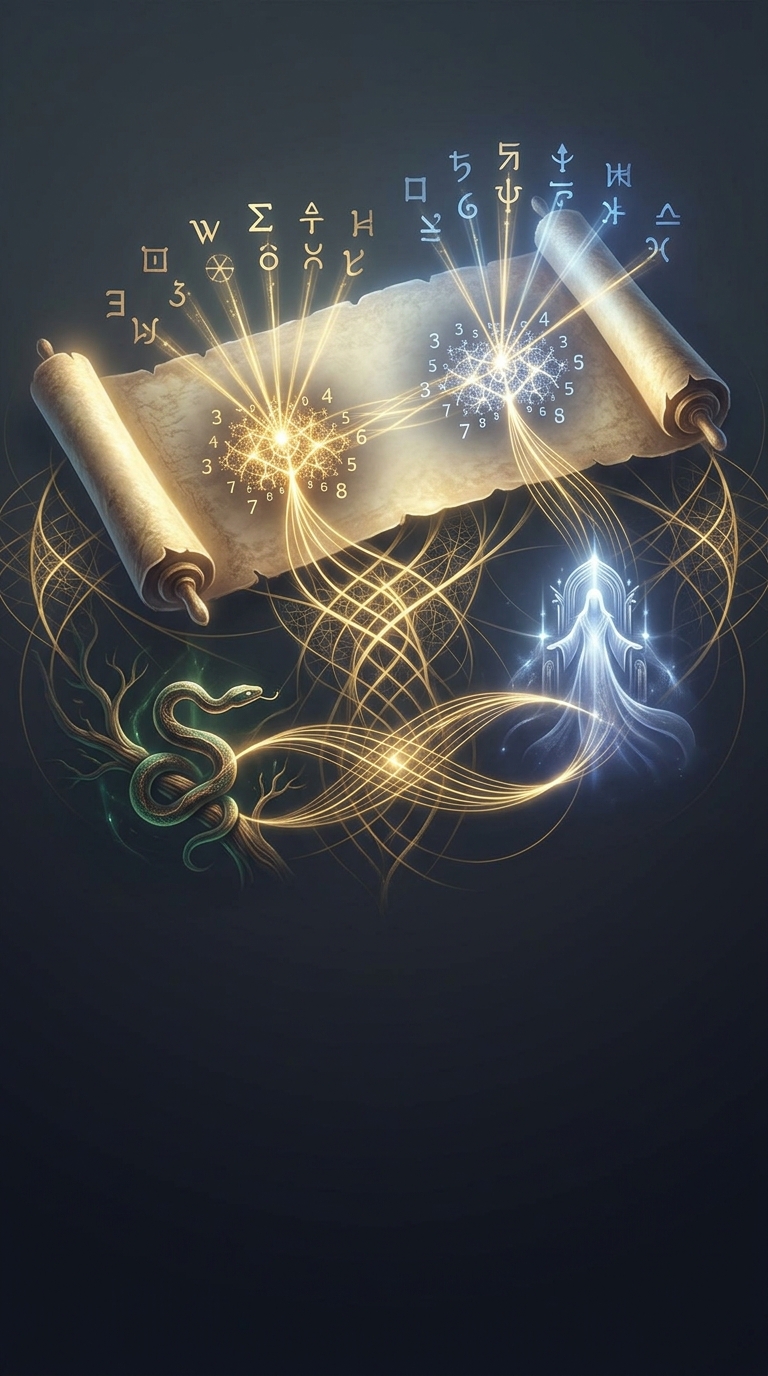
In Hebrew, letters can serve as numerals as well as sounds. Gematria assigns each letter a numerical value; to calculate a word’s total, a reader adds the values of its letters. If two words produce the same sum, an interpreter may treat that match as a reason to consider them together.
The arithmetic is straightforward, but the interpretive choice is not. A shared total does not establish that two words have the same meaning, and many possible matches can arise when a text contains numerous words and combinations. The method depends on a reader’s judgment about which parallels fit the passage.
A clue within a larger reading
For Kabbalists, the Hebrew Bible could carry layers of meaning beyond its surface wording. Gematria offered one way to explore those layers: a numerical echo might suggest a relationship among ideas that ordinary reading would not reveal. It was an interpretive tool, not a code that produced one universally agreed answer.
That distinction matters. The same calculation could prompt reflection, but its significance came from how a practitioner connected it to the surrounding text and religious tradition. The striking result is that a passage’s letters could be read in two registers at once—as language to be understood and as numbers that might point toward another meaning.