A river race built around obstacles
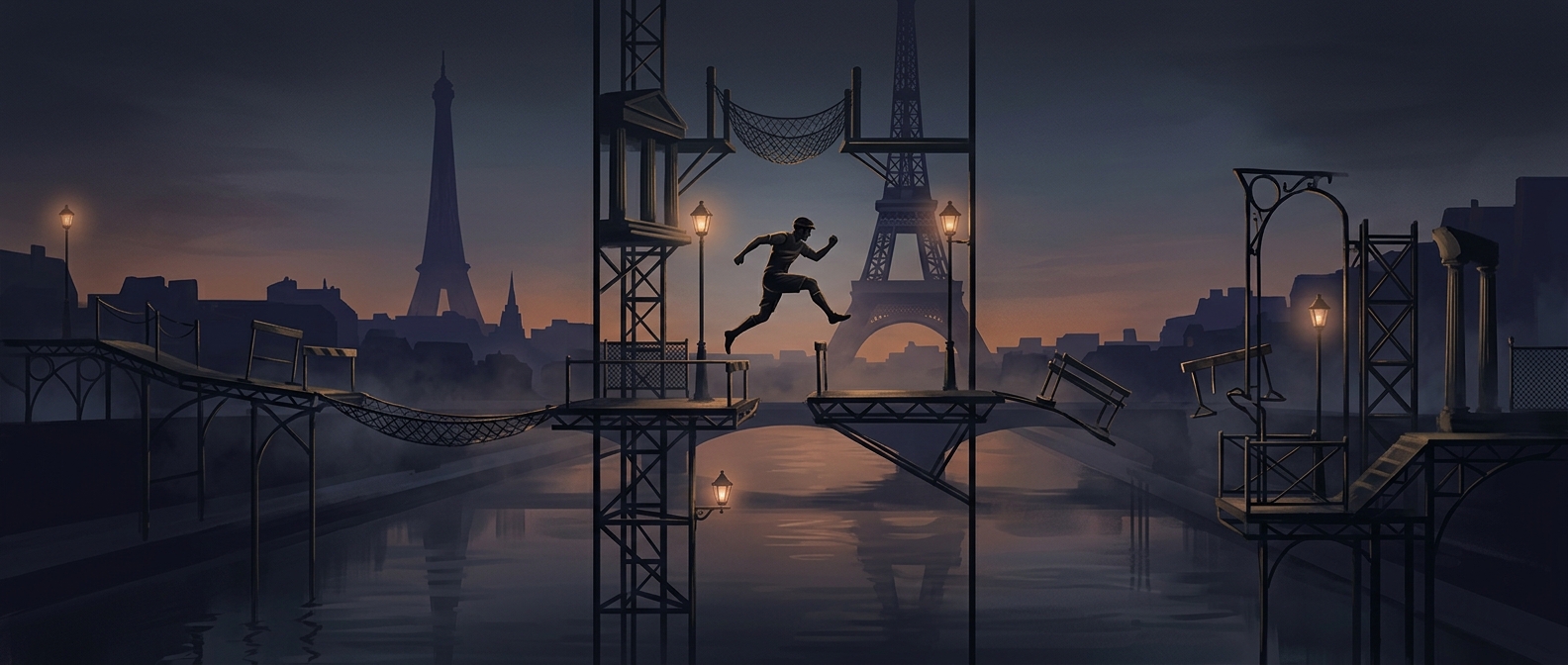
The event was the 200-meter obstacle swimming race at the 1900 Paris Olympics. Unlike a modern pool race, it used the Seine itself as the course, turning the river into both the swimming venue and part of the challenge. Competitors had to change how they moved through the water: swimming speed alone could not carry them through the course.
That made the race a test of transitions as much as endurance. An athlete had to climb out or up, regain momentum, and then return to swimming—while navigating a route crowded with obstacles. The boats and poles were not decorations beside the race; they dictated its rhythm.
An experiment from an expansive Olympic program
The Paris Games were held alongside the 1900 Exposition Universelle, a world’s fair, and their sporting program included events that did not become lasting Olympic disciplines. The obstacle swim was one of them: it appeared only at those Games. Its format was difficult to turn into a repeatable swimming event, because the course depended on a river and a particular arrangement of obstacles rather than a standardized pool.
The race is a reminder that early Olympic competition was still exploring what a sport could look like. In this case, the answer was not simply “swimming, but faster”: it was a race in which every obstacle forced swimmers to stop being swimmers for a moment.