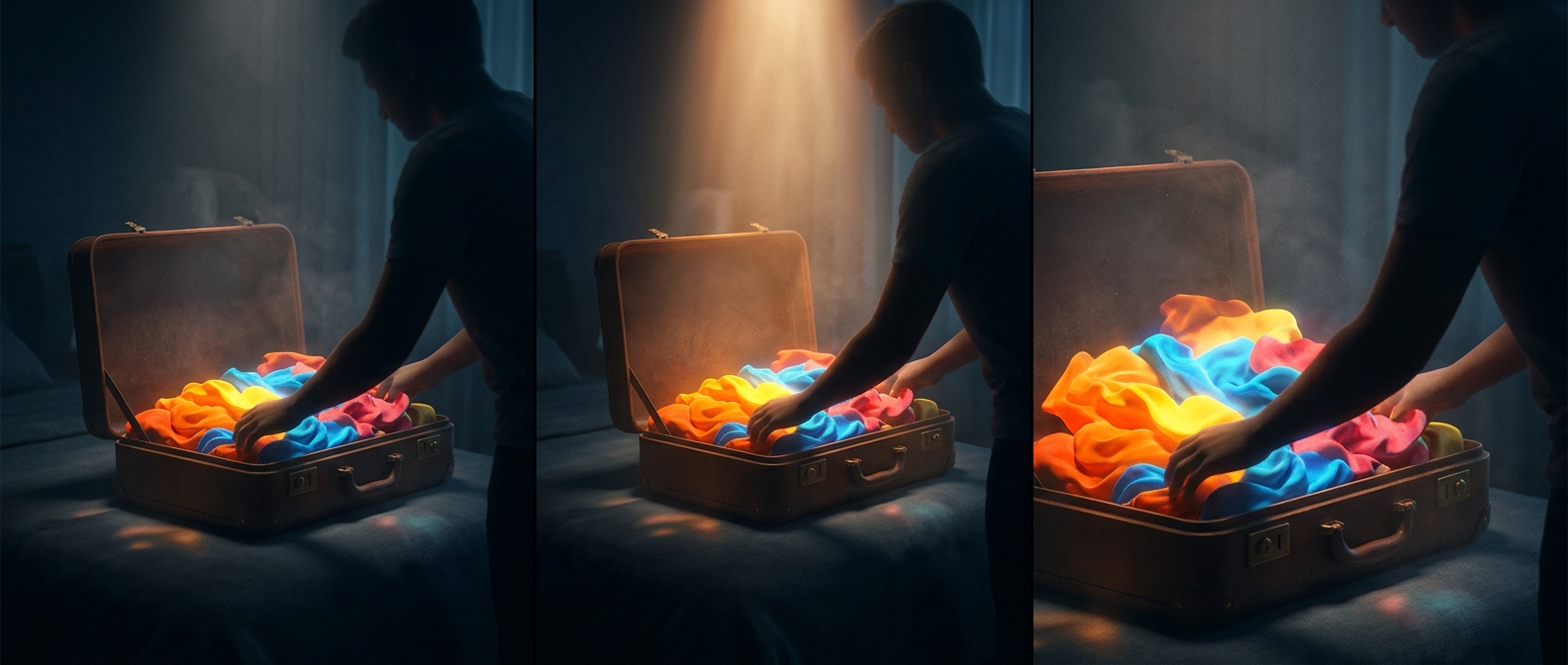
A Souvenir Is Chosen in a Different Frame of Mind
At home, a decorative object has to earn its space: it should suit the room, match other belongings, and feel right day after day. On vacation, those tests can fade. A bright print, oversized hat, or hand-painted bowl is encountered amid unfamiliar colors, street sounds, and the pleasure of being somewhere else. In that setting, its oddness may be the appeal.
The purchase is also tied to a moment, not just to an object. A souvenir can stand for a meal, a market visit, or the feeling of wandering without a schedule. Buying it lets a traveler carry a small piece of that experience forward. The object’s connection to the trip may matter more in the shop than its usefulness in a living room.
Home Changes the Test
Back home, the surroundings provide a new frame. The same vivid bowl now sits beside familiar dishes; the novelty that made it memorable may make it hard to place. A traveler may realize it is too large, too fragile, or simply unlike what they usually choose. That does not mean the decision made no sense at the time: the object was selected for a different purpose, as a tangible reminder of being away.
This is why practical checks can help when a purchase is meant to become part of everyday life: picture where it will go, consider how it will travel, and ask whether it would appeal without the vacation around it. If the answer is no, it may still be a meaningful souvenir—but perhaps a better one to photograph than to pack.