When stones become listeners
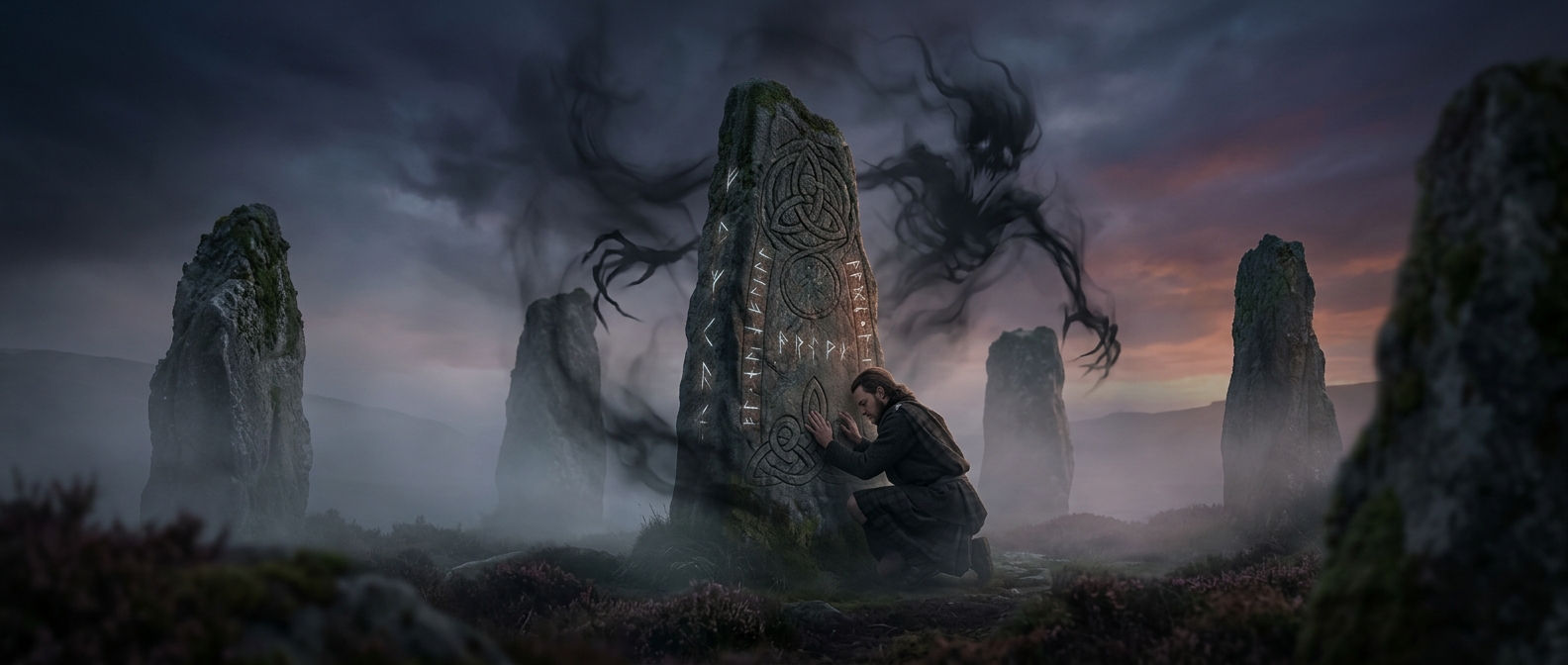
In Scottish folklore, a standing stone can be more than a relic in the landscape: it can be treated as a presence with memory and authority. The idea that stones hear wishes gives an ordinary act—speaking aloud at a lonely monument—the feel of addressing an ancient witness. The warning against mockery sets a boundary: approach with respect, because the place is not merely scenery.
What the fog adds
Fog changes how a stone is seen without changing the stone itself. It softens familiar outlines, hides what lies beyond them, and makes distance hard to judge. A solitary rock can seem to appear and disappear as the mist shifts. In that uncertain setting, the legend’s watchful guardians feel less like decoration and more like a possibility the landscape is asking you to consider.
The story turns a natural feature into a test of conduct. A wish invites trust; ridicule risks disrespect. Whether or not anyone believes the stones can hear, the tale encourages visitors to treat an old, exposed place with care—and gives a bank of fog a memorable reason to feel watched.