Why a descent can make your ears ache
As an airplane descends, cabin air pressure rises. The pressure in the middle ear—the small air-filled space behind the eardrum—may not rise as quickly. That temporary mismatch pushes the eardrum inward, creating pressure, muffled hearing, or pain.
The small passage that balances pressure
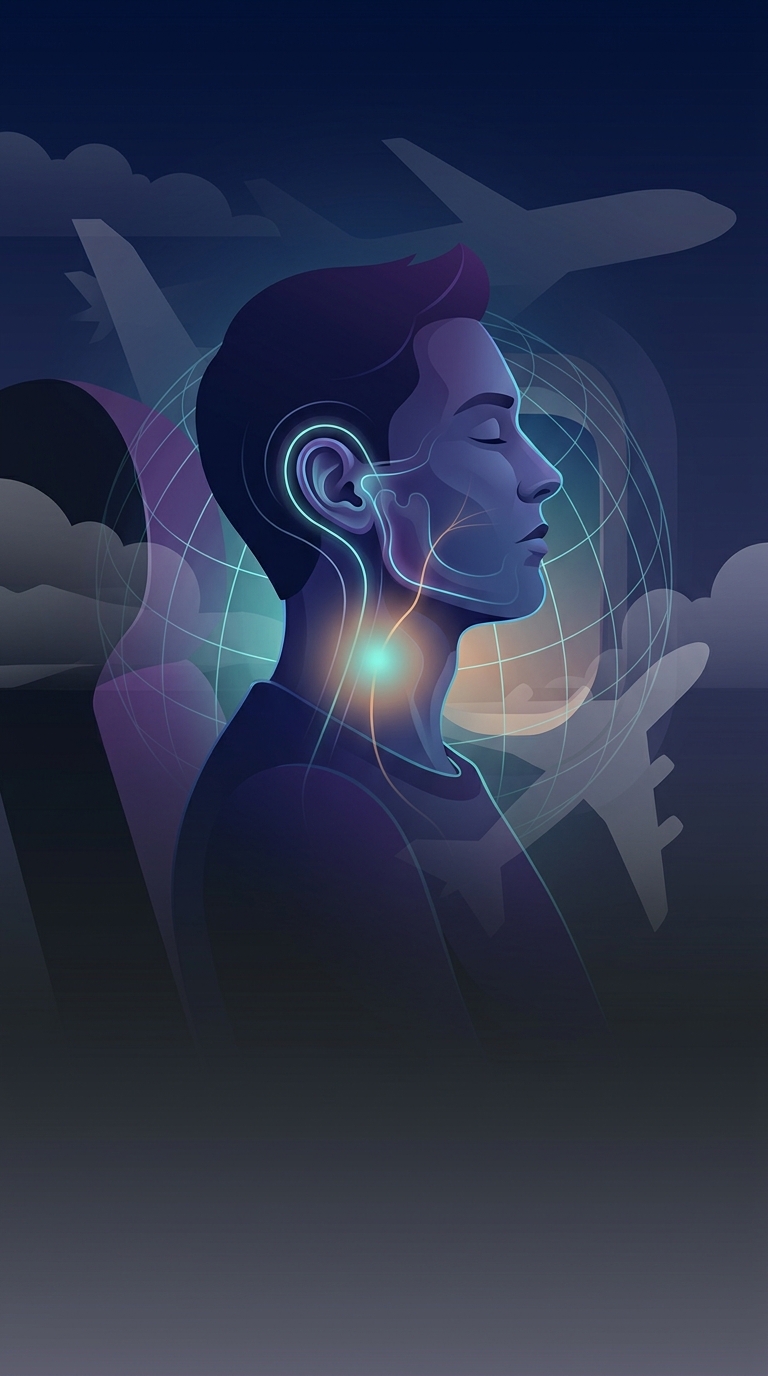
The middle ear connects to the back of the nose and throat through the Eustachian tube, a narrow passage that is usually closed. It opens briefly when you swallow or yawn, letting air move into or out of the middle ear and bringing its pressure closer to the cabin pressure.
Chewing gum does not force air through the tube directly. Its repeated jaw movement encourages swallowing, and each swallow can briefly open the passage. That is why gum may ease the pressure during descent: it makes those pressure-balancing moments more frequent.
Why it does not always work
The tube may be harder to open when its lining is swollen from a cold, allergies, or congestion. In that case, swallowing may not equalize pressure quickly enough, so the ears can remain blocked or uncomfortable. The key action is the swallow—not the gum itself—so yawning or swallowing without gum can prompt the same mechanism.