How the Sephirot Make the Infinite Thinkable
In Jewish mysticism, sephirot are ten attributes or modes through which the unknowable divine, often called Ein Sof (“without end”), is understood to relate to creation. They are not usually imagined as ten separate gods or physical objects. The framework offers a way to speak about how a reality beyond human limits can be associated with a world of change, relationship, and material form.
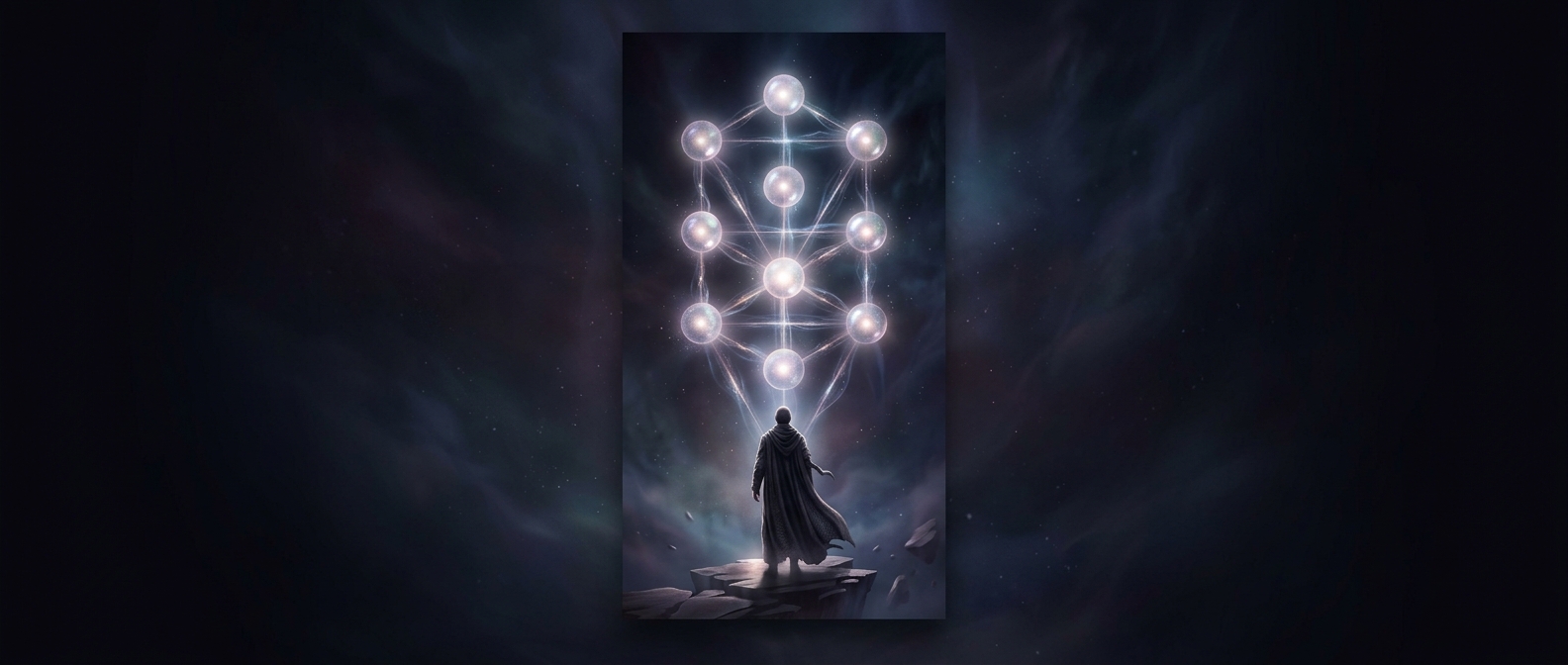
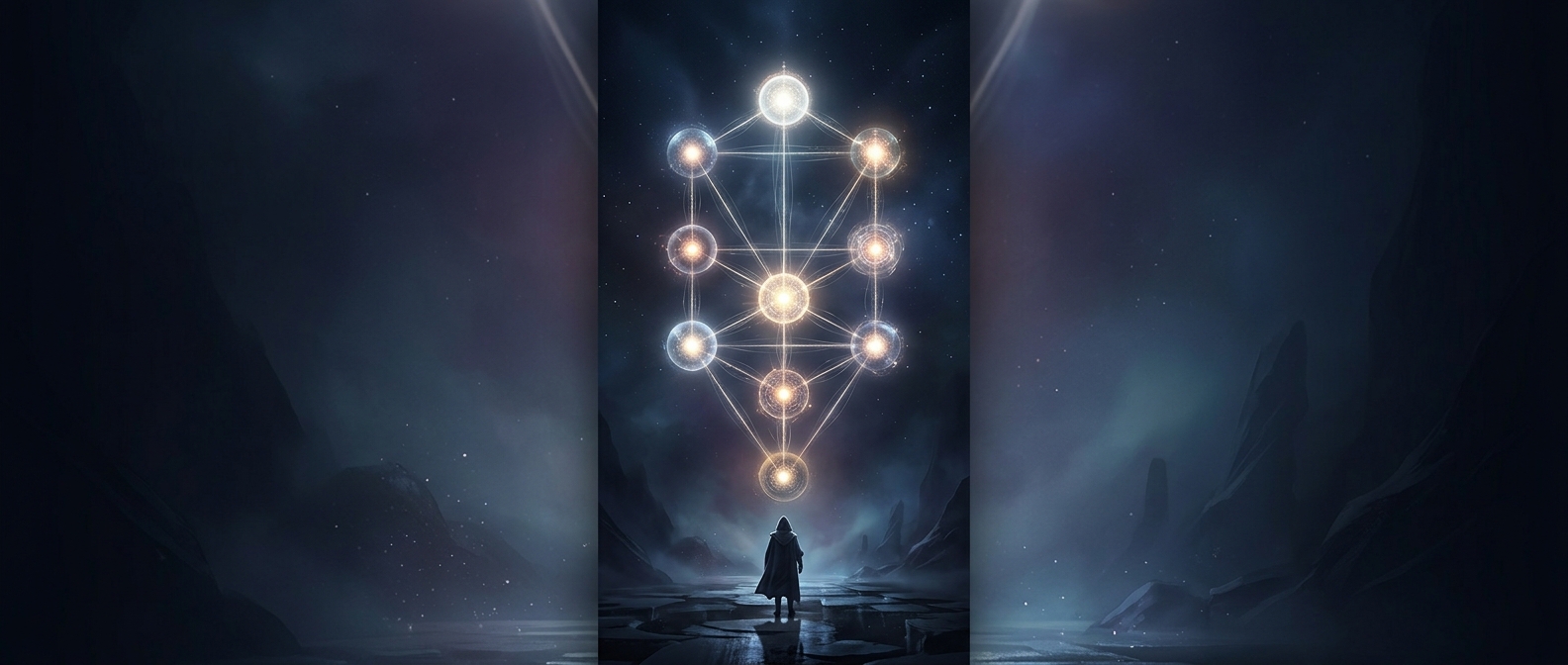
The idea is often pictured as the Tree of Life: ten points linked by paths. The diagram is a map for contemplation, not a literal picture of a heavenly machine. Each sefirah names a different quality—such as wisdom, understanding, loving-kindness, judgment, or beauty—and the connections suggest that these qualities work in relation to one another.
A Pattern of Giving and Limiting
The structure matters because creation is understood as requiring both flow and form. Loving-kindness, for example, suggests unbounded giving; judgment suggests measure and restraint. Read together, they show why neither quality alone would make a balanced world. Other sephirot describe stages or aspects of that unfolding, from insight and relationship to the presence of the divine within the created world.
The scheme also became a way to think about human conduct. A person could use its qualities as a guide to balancing generosity with fairness or emotion with understanding. In this sense, the Tree of Life links a cosmic account of creation to everyday choices: the same pattern that makes the world intelligible can serve as a vocabulary for how to live within it.