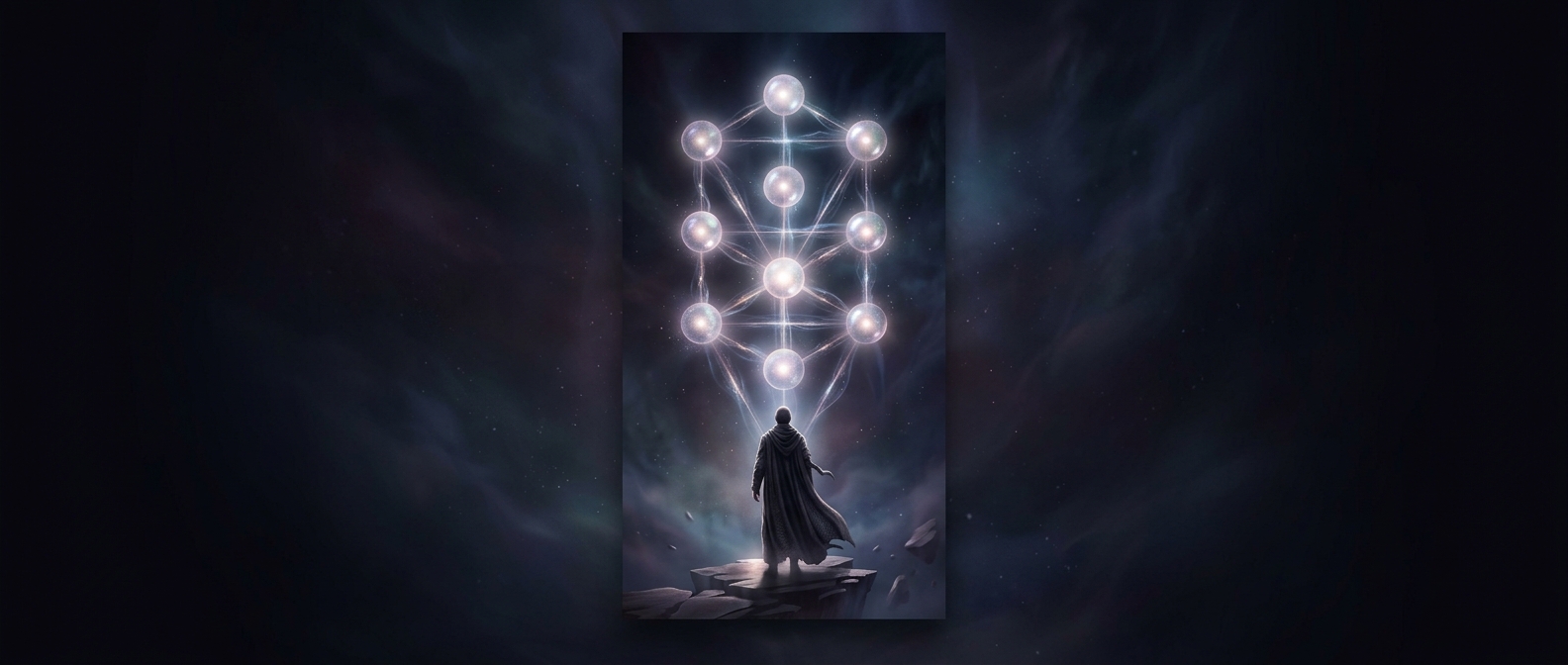
The Sephirot Describe How the Divine Is Expressed
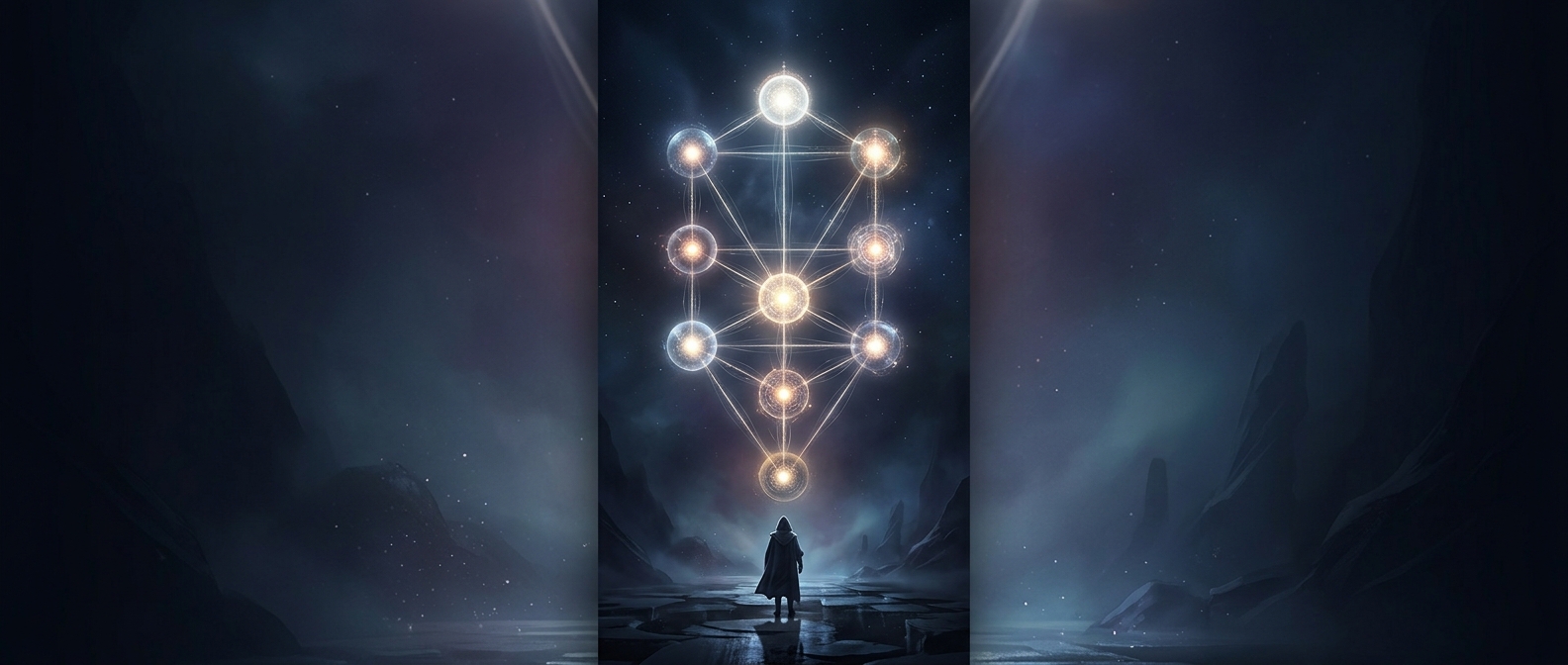
In Jewish mysticism, the Sephirot (singular: sefirah) are ten interrelated aspects through which the infinite divine is understood to relate to the finite world. They are not planets, rooms in heaven, or stages a traveler could visit. The familiar Tree of Life diagram arranges them spatially to show relationships, not geography.
The idea addresses a central puzzle: if God is infinite and beyond ordinary description, how can people speak about divine action in a world of particular things? The Sephirot provide a symbolic vocabulary for that connection. They are often described as emanations—ways divine presence becomes expressed or perceptible—not as separate gods or pieces of a physical substance.
A Map of Qualities and Relationships
Each sefirah is associated with qualities or functions. Chesed is commonly linked with loving-kindness or generosity; Gevurah with strength, restraint, or judgment; and Yesod with foundation or connection. These are not isolated traits. The diagram’s paths and arrangement suggest how qualities balance and influence one another: generosity without limits, for instance, differs from generosity tempered by judgment.
The symbolism also makes the Tree of Life a framework for reflection. Readers may use its pattern to consider divine attributes, the structure of creation, or human conduct. That does not make the diagram a map of hidden physical territory; its spatial form gives abstract relationships a shape people can study and remember.
Why the Distinction Matters
Treating the Sephirot as places changes the meaning of the system. Their significance lies in the relations among qualities and in the way those qualities are understood to connect the unknowable divine with lived reality. The Tree of Life is therefore less a route through another world than a compact diagram of how mystics make that connection intelligible.