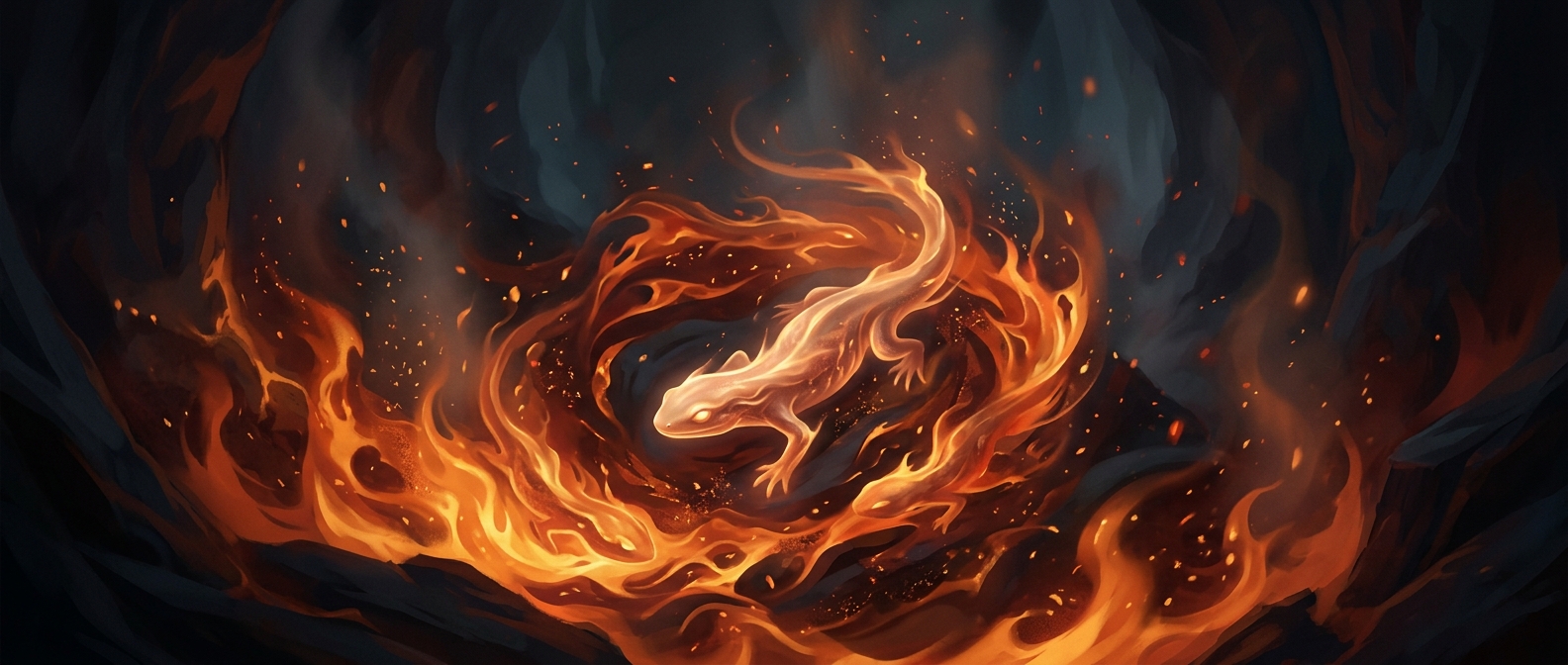
How salamanders became creatures of fire
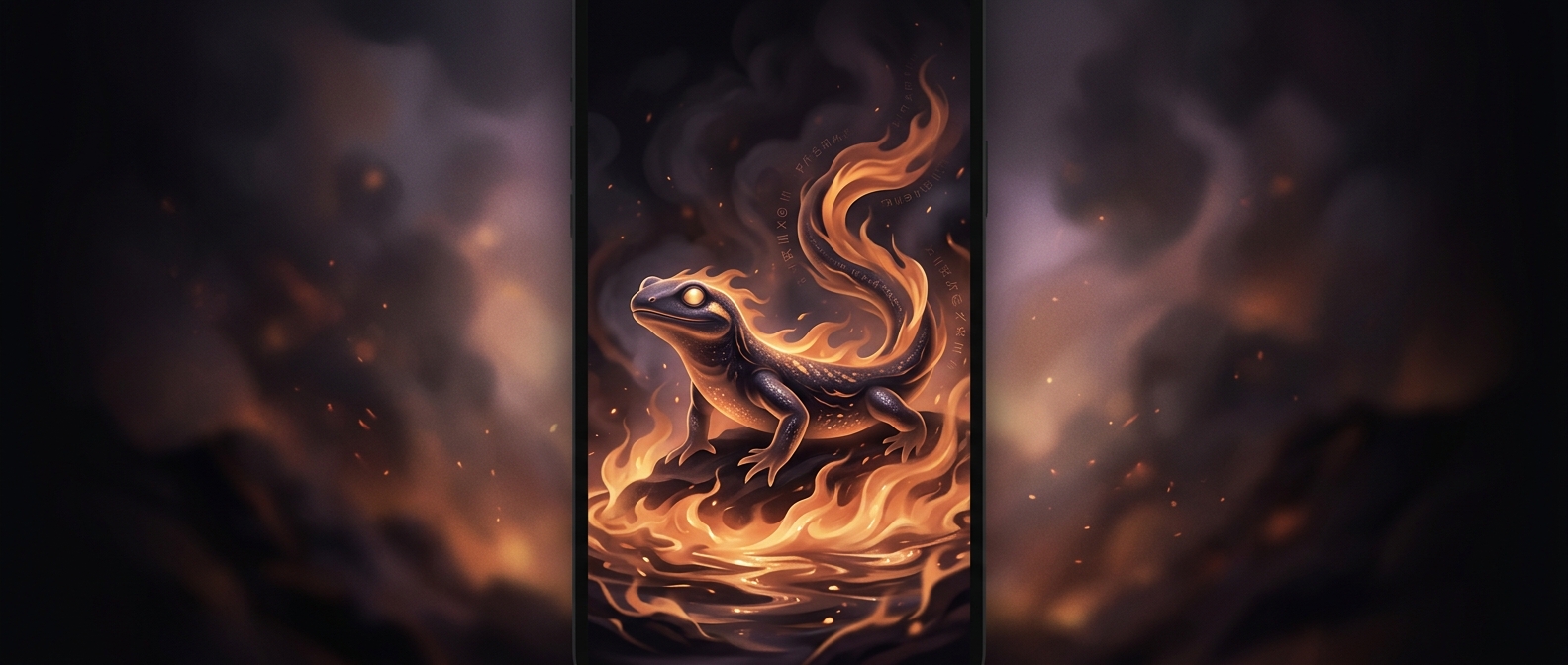
The salamander’s association with fire grew from a real animal’s startling behavior. Many salamanders favor cool, damp places and hide beneath logs or stones. When people gathered firewood and tossed a salamander’s hiding place onto a hearth, the animal might scramble out as the wood heated and flames appeared. To an observer, it could seem as if the salamander had emerged from the fire itself.
That encounter became a story about the animal’s nature. Ancient and medieval writers described salamanders as able to withstand or even put out flames, sometimes imagining their bodies as cold enough to quench a blaze. The tale turned a fleeting escape from burning wood into a supernatural power.
From legend to “fireproof” cloth
The myth also shaped claims about a material said to come from salamanders. Sellers promoted “salamander hair” as fireproof, but it was not hair from an amphibian. The name was applied to asbestos, a naturally occurring mineral fiber that can be woven into cloth and resists burning. Its unusual properties gave the old creature story a convincing-looking product to attach to.
The distinction matters: salamanders are not fireproof, and they cannot live inside a blaze. The legend arose from an animal fleeing heat, then endured because an unrelated fire-resistant material seemed to confirm it. A creature that was simply trying to escape a burning log became, in folklore, the very thing that could master fire.