A Storm as a Divine Intervention
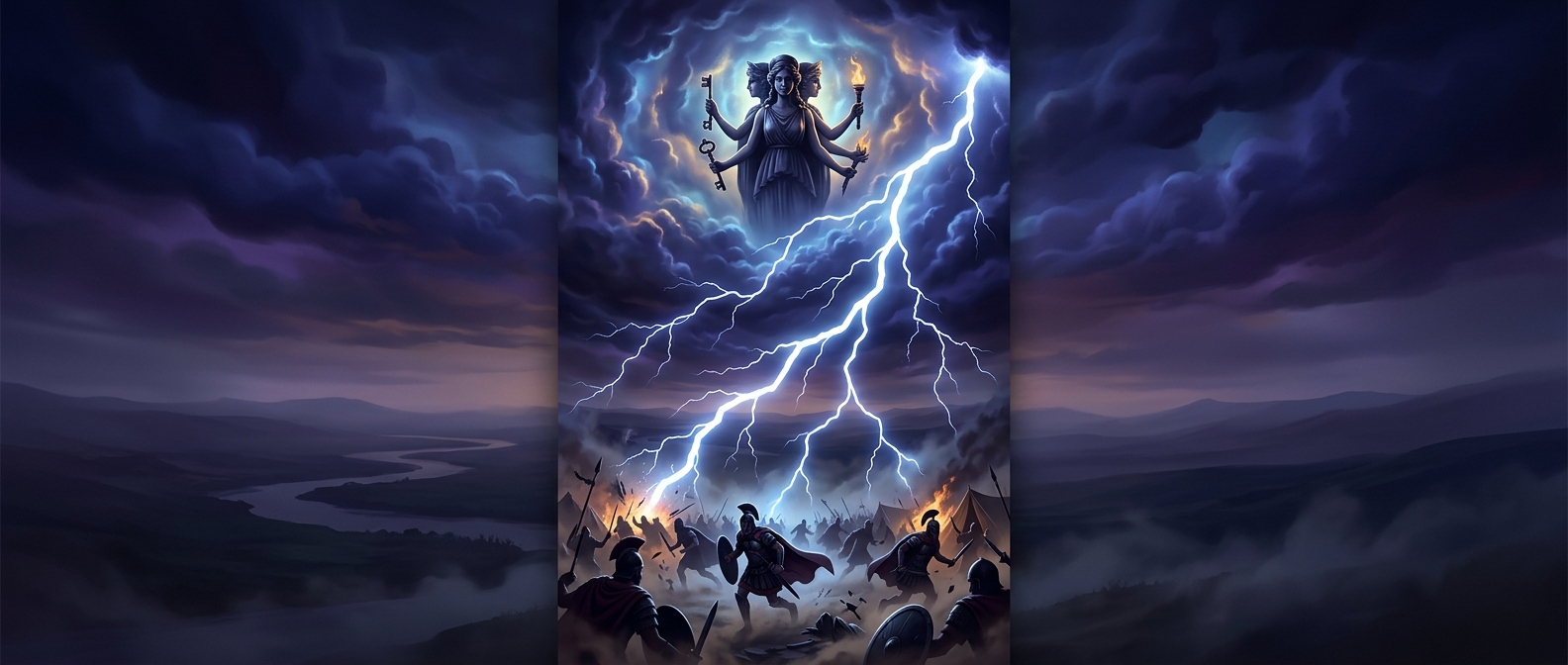
The story gives a battlefield crisis a supernatural turning point: a Roman force is trapped without water, and Julian the Theurgist performs a rite that calls on Hekate. Rain answers the soldiers’ immediate need, while lightning turns the storm against their enemies. In this account, weather is not merely a change in conditions. It is the visible sign that a divine power has entered the battle.
That interpretation made sense within ancient religious traditions in which gods could act through natural events. A storm could be read both practically—as water falling from the sky—and symbolically, as evidence of divine favor or punishment. The story joins those meanings in a single event: the same storm that saves the Romans also harms the opposing army.
What “Theurgy” Meant
Theurgy means ritual practice intended to establish contact with, or draw aid from, divine powers. It was not simply a claim that a magician could command nature at will. In the story, Julian’s importance lies in his supposed ability to perform a rite that brings a god’s power into the human crisis. Hekate, a goddess associated with magic and the unseen, makes a fitting figure for that role in the tale.
The episode survives as a story about the war, not as a verifiable account of how the storm formed or what caused the lightning. Its force comes from the way it transforms military desperation into a contest of divine allegiance. For the Romans, the sudden rain could mean more than survival: it could be remembered as proof that the gods had not abandoned them.