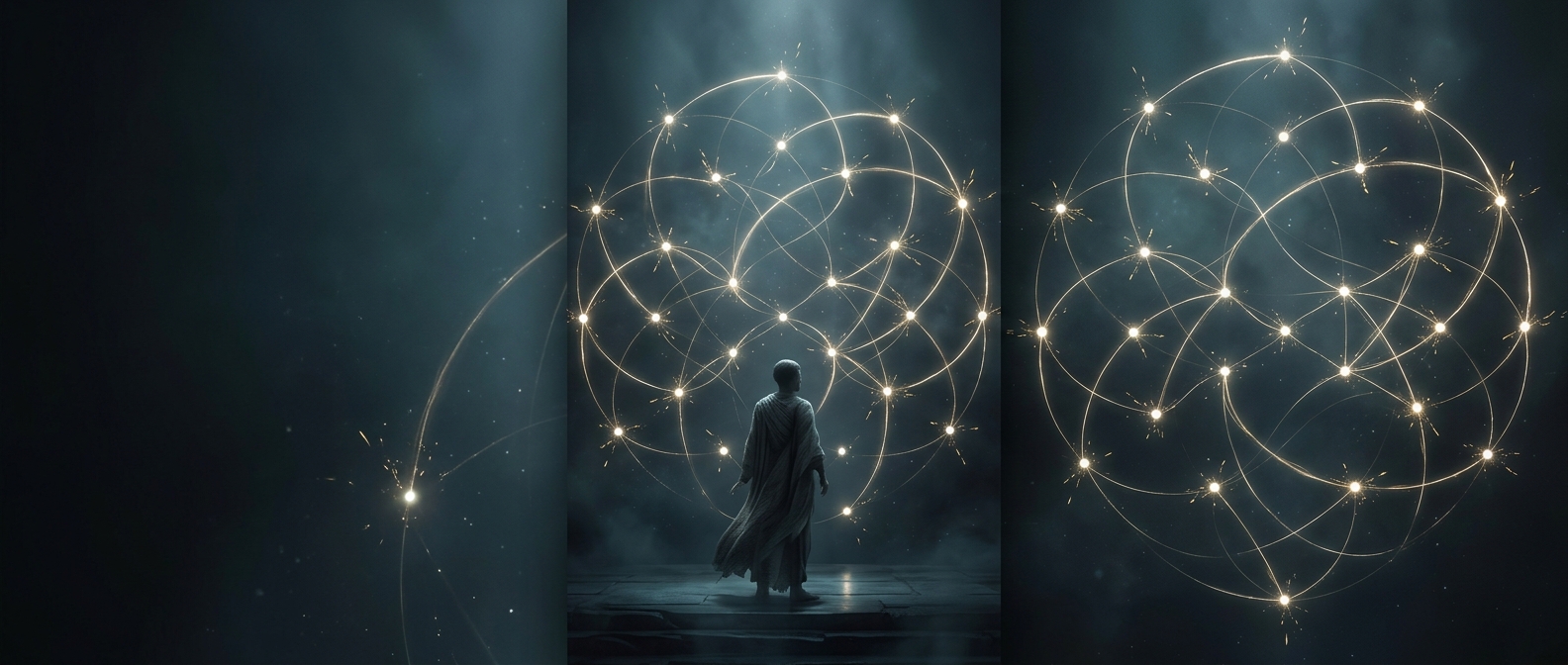
What “nondual” means in practice
Nondual realization is a spiritual understanding in which the usual division between “me” and “other” is no longer experienced as ultimate. The body, personality, and individual point of view still exist, but they are seen as part of a larger whole rather than as completely separate selves. Different traditions describe this insight in different ways; it is a matter of spiritual interpretation, not a claim established by science.
That shift changes how conflict is framed. Someone who interrupts or irritates you may still be behaving badly, but they are no longer viewed as wholly separate from the life you yourself belong to. The idea asks for a change in perspective, not necessarily a feeling of affection.
Why the family dinner is difficult
In an abstract moment, unity can feel expansive. At a crowded table, attention is pulled toward specifics: a cutting remark, an old grievance, the effort of staying polite. The mind naturally organizes experience around a self that has been slighted and another person who caused it. A spiritual insight may not erase that fast, practical response.
Nor does seeing another person as part of the same whole require accepting every action. A sense of connection and a clear boundary can coexist. You can decline an argument, leave the room, or tell someone their conduct is hurtful without treating them as an enemy in some ultimate sense.
The tension is part of what makes the idea demanding. It is easy to affirm unity when no one is testing your patience; the harder question is whether that view can influence your response without denying what happened. At dinner, it might mean pausing before retaliating—not pretending the remark was harmless, but refusing to let one frustrating moment define the other person completely.