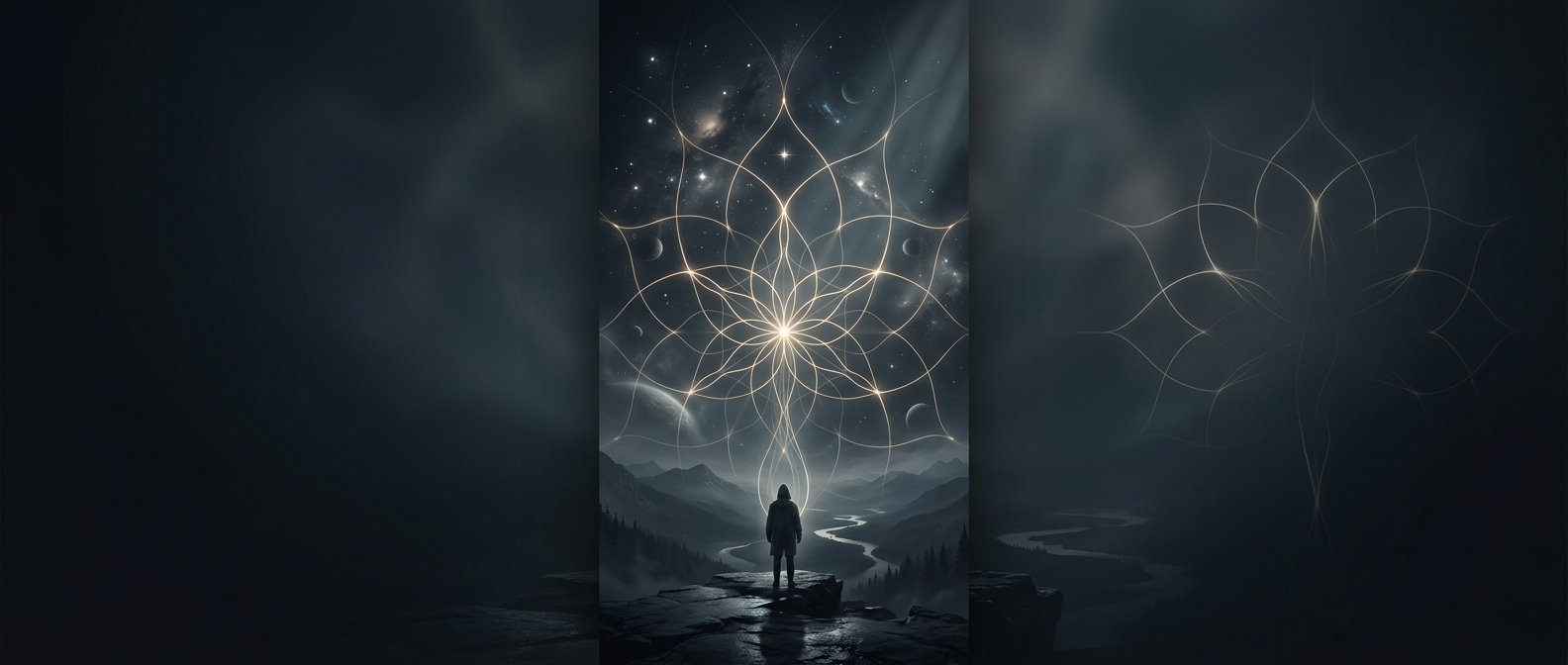
The idea behind unus mundus
Unus mundus is Latin for “one world.” In the tradition associated with psychologist Carl Jung, it names a proposed reality in which the divisions people ordinarily rely on—mind and matter, inner experience and external event—have not yet separated. The term does not mean that those distinctions are unreal in daily life. It imagines them as different expressions of something more fundamental.
The image is one of potential before differentiation: not a hidden physical object waiting to be discovered, but a way of thinking about how apparently separate kinds of reality might share a common origin. Jung drew on ideas found in alchemy, where transformation could be understood as involving both material change and changes in the human spirit.
Why the idea matters
This framework offered Jung a way to connect psychological experience with events in the outer world without treating one as merely a metaphor for the other. It also helped shape his interest in synchronicity: meaningful coincidences that seem connected by significance rather than by an obvious chain of cause and effect.
That connection is a matter of interpretation, not an established scientific account of how the universe works. The lasting force of unus mundus lies in the question it poses: could mind and matter be distinct at the level of experience, yet related at a deeper level?