When the Seer Disappears
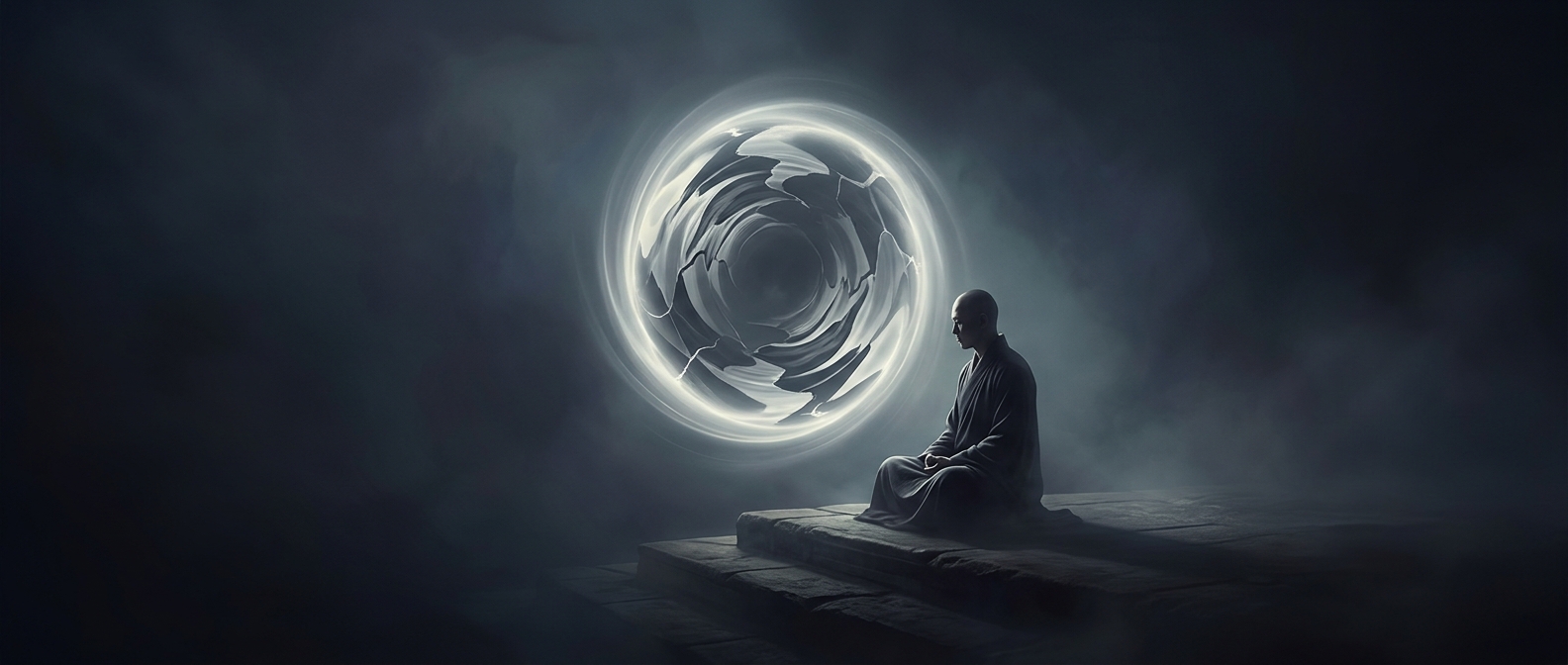
A mirror normally depends on a separation: something stands before it, and the mirror reflects that thing. Allama Prabhu’s image of a mirror eating itself turns that familiar arrangement into a paradox. If the mirror consumes itself, there is no longer a reflective surface set apart from what it shows.
That impossibility points to a change in how awareness is understood. In ordinary experience, a person feels like a watcher inside, looking out at thoughts, sensations, and the world. The image suggests that enlightenment is not simply the watcher gaining a clearer view. It is the collapse of the boundary that makes “watcher” and “watched” seem like two separate things.
Why the Image Is Paradoxical
The metaphor does not describe a physical event or offer a step-by-step method. Its force comes from making self-observation undo its own starting point: the mind tries to look at itself as an object, but the supposed observer is part of what it is examining. The mirror cannot stand outside itself to complete the act.
So the image offers no final picture of enlightenment to inspect. It points instead to the moment when the division between the one who sees and what is seen no longer holds—a transformation difficult to describe precisely because description usually puts a subject on one side and an object on the other.