Why Rumi’s Poetry Reaches for Wine
Wine offered Rumi a vivid way to describe an experience that ordinary language struggles to contain. In his poetry, spiritual love can unsettle a person so completely that familiar judgments and self-control seem to fall away. Calling that state “drunkenness” makes the intensity legible: the lover is overwhelmed, no longer moving through the world by ordinary calculation.
The image is metaphorical, not an invitation to drink. Alcohol is prohibited in Islamic teaching, which gives wine poetry its charge: the poet borrows the language of a forbidden pleasure to evoke a different kind of surrender. The apparent contradiction draws attention to the difference between bodily intoxication and the inward transformation the poem is trying to describe.
What the Metaphor Changes
“Drunkenness” also reverses the usual idea that clear-headed reason is always in control. In this mystical register, the self’s confidence in its own logic can become an obstacle to recognizing divine love. To be intoxicated is to have that certainty shaken—not to prove a supernatural claim, but to give readers a felt image for devotion that exceeds neat explanation.
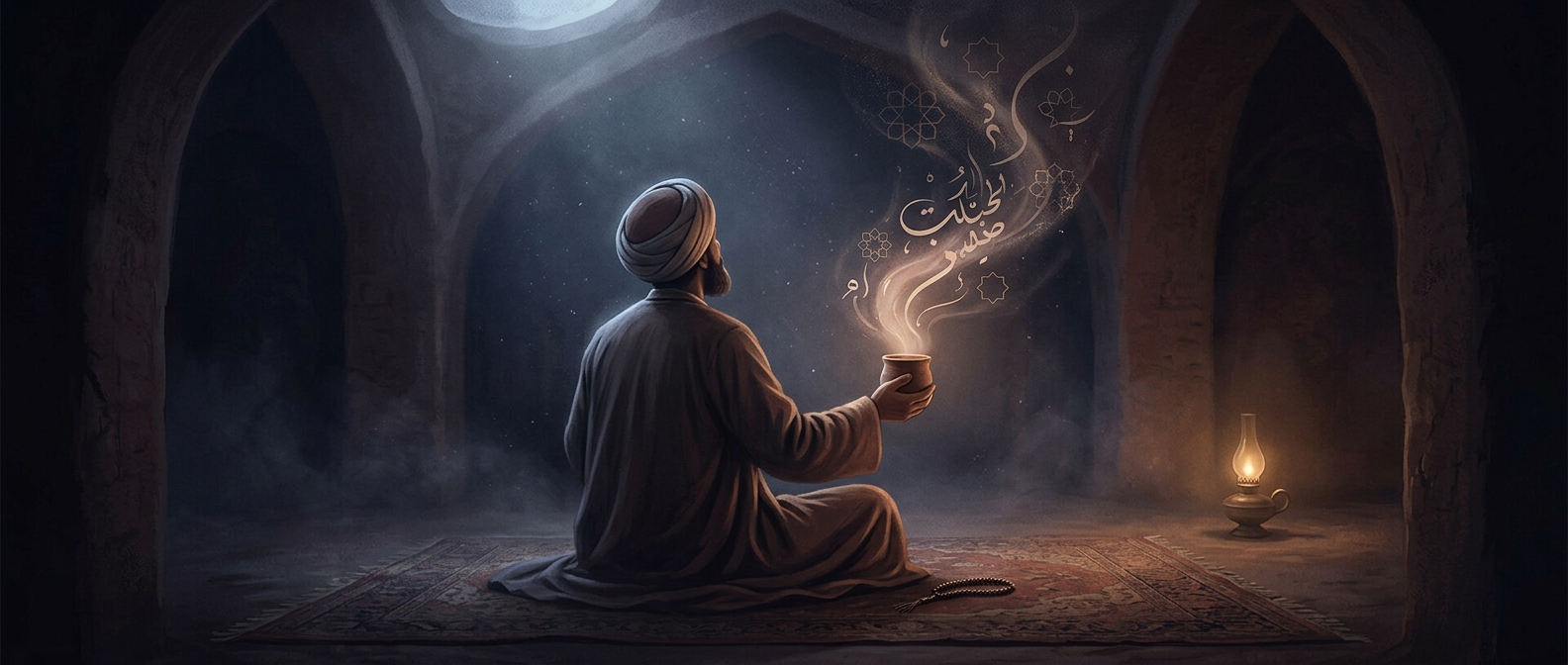
That is why the wine imagery can sound both ecstatic and unsettling. It depicts love not as a calm opinion, but as a force that rearranges the lover’s sense of self. The cup in Rumi’s poem is a figure for being overtaken by that change, not a report of a night out.