Reading the cat beyond the household
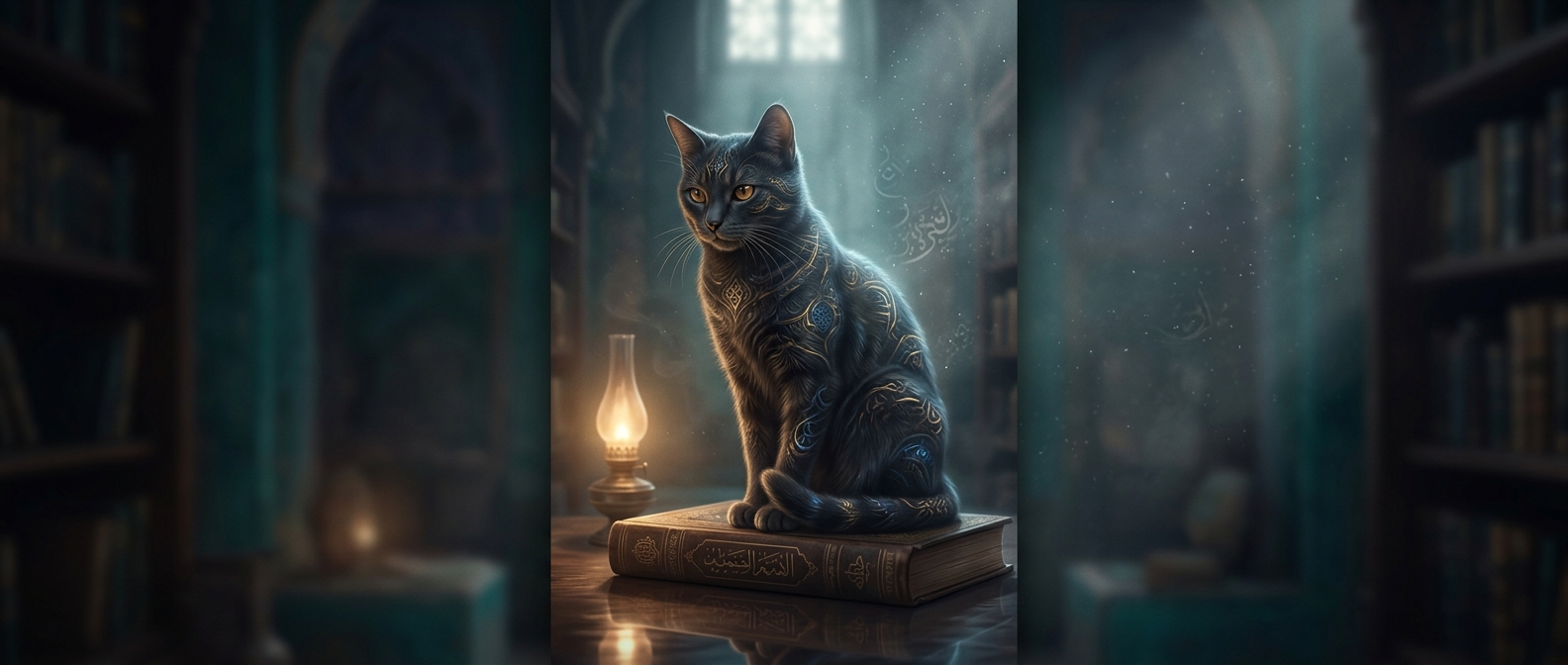
A cat in Islamic writing could be more than a useful hunter of mice. Annemarie Schimmel, a scholar of Islamic mysticism, drew attention to the spiritual meanings that familiar animals could carry in religious lore. In her reading, cats could suggest divine grace and contemplation—qualities expressed through an ordinary creature rather than through abstract theological language.
That shift matters because mystical writing often asks readers to look twice: first at the visible thing, then at what it might disclose about the unseen. A cat’s quiet, watchful presence could invite reflection, while its place in stories and everyday life gave the image an immediate point of entry. The animal did not need to stop being a cat for it to take on a spiritual resonance.
Meaning depends on the story
Such symbolism is not a fixed code in which every cat always stands for the same idea. Its meaning depends on the text and the interpretive tradition around it. Schimmel’s approach was to follow those associations through Islamic lore rather than reduce the animal to its practical role or treat it as decoration.
The result is a different way of noticing religious imagery: a creature encountered in ordinary life can become a prompt for thinking about inward attention and divine generosity. The next time a cat appears in a mystical tale, its stillness may be part of the message, not merely a detail of the scene.