What the Whirling Means in a Mevlevi Ceremony
For Mevlevi Sufis, turning is not a performance added to prayer; it is a way of embodying devotion. The ceremony is called sema, a word associated with listening. Music, including the reed flute known as the ney, accompanies a carefully ordered ritual in which the dervishes turn as part of a larger act of remembrance and worship.
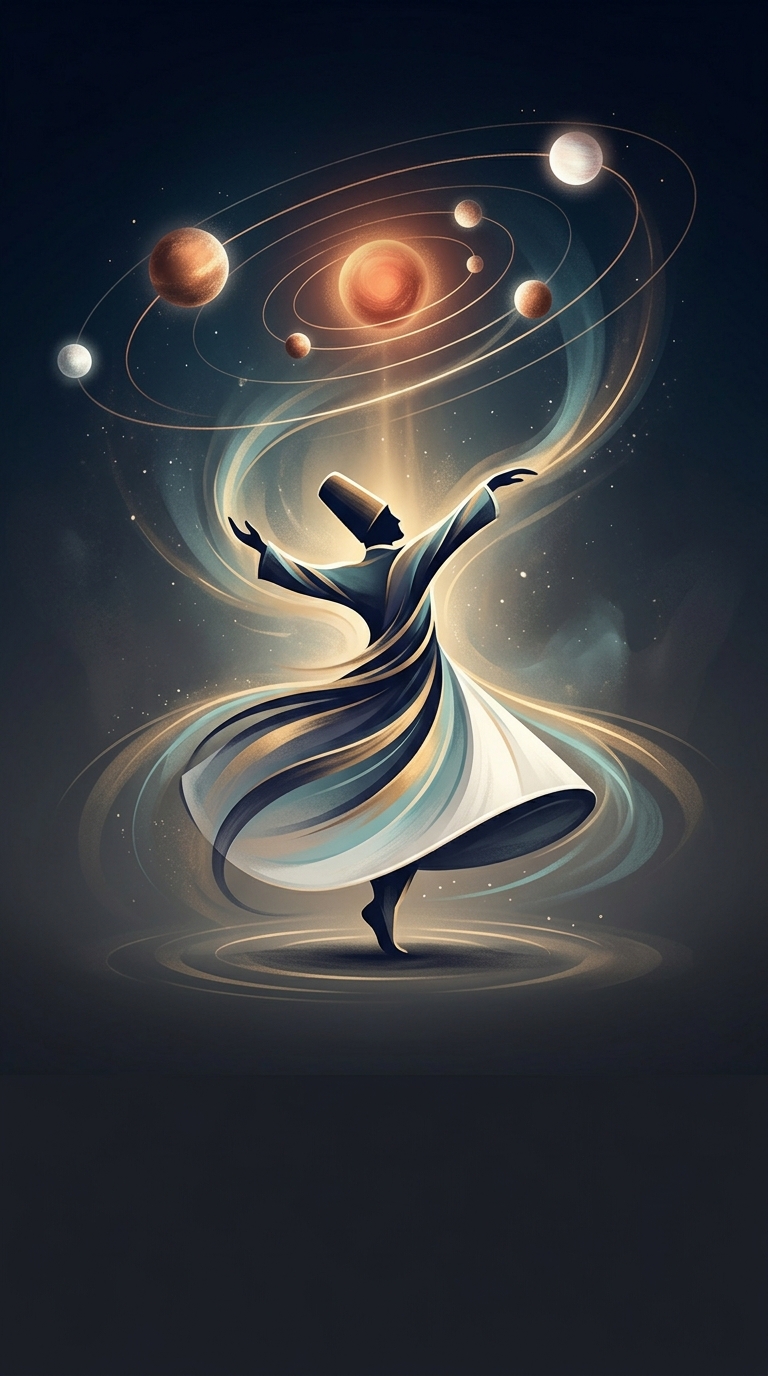
The movement carries layers of meaning. A whirler’s raised right hand is commonly understood as receiving divine grace, while the lowered left hand passes it toward the earth. The turning also evokes the motion of the heavens. The familiar image of planets orbiting the Sun is a modern shorthand for that cosmic symbolism, not a literal diagram of how the ceremony works.
How the Turn Is Sustained
A trained whirler does not simply spin as fast as possible. The dancer pivots on one foot while the other helps drive and regulate the turn, keeping the body upright and the movement controlled. Practice develops balance and coordination; musicians and ritual leaders also shape the ceremony’s pace. The aim is not to force a dizzy, uncontrolled state, but to maintain attention within a demanding, repeated movement.
The tall felt hat and flowing white skirt are meaningful parts of the ritual dress. The hat is often interpreted as a symbol of the ego’s tomb, while the skirt’s spreading motion makes each turn visible. As the cloth opens, it catches air and sweeps around the dancer, turning an inward devotional practice into a striking public image.
Discipline, Not an Endurance Contest
Sema can be physically taxing, but its significance lies in the ceremony’s combination of music, movement, symbolism, and spiritual focus—not in spinning for the longest possible time. The discipline is what makes the turning legible as worship rather than spectacle: every controlled rotation belongs to a ritual with a beginning, a structure, and a purpose.