Why Silesius made God depend on humanity
Angelus Silesius’s startling claim is best read as a mystical paradox, not as an argument that a human being created the universe. In his short, tightly balanced couplets, he pushes against the picture of God as wholly distant from creation: if no one could know or experience the divine, what would “God” mean as a presence known and loved?
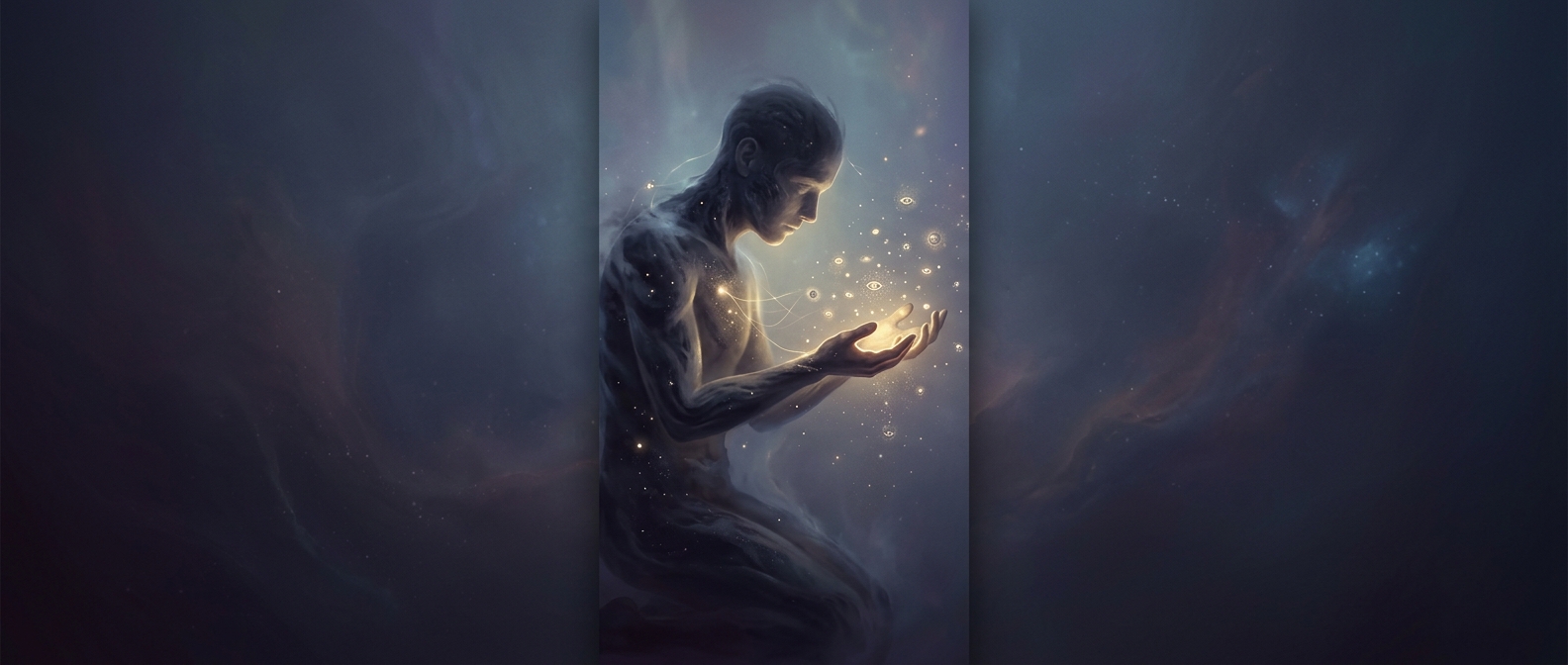
The claim turns on two senses of existence. God may be understood as eternal and independent in himself, yet God-as-revealed—to a person, in the world, through awareness—depends on a witness. Humanity does not manufacture the divine; human perception is where the divine becomes present as something encountered.
A paradox meant to unsettle the self
Silesius wrote within Christian mysticism, a tradition concerned with direct experience of God and the soul’s union with the divine. Its language often strains ordinary logic. A couplet can place God and the human soul in mutual dependence not to provide a literal account of creation, but to unsettle the boundary between the one who sees and what is seen.
That does not make the human being a rival creator. The dependence is reciprocal in a particular sense: a person’s spiritual life is oriented toward God, while God’s presence in human experience requires someone capable of recognizing it. The poem gives that relationship its most provocative possible form.
What the claim changes
The consequence is a reversal of scale. Instead of treating people as insignificant spectators beneath an all-sufficient heaven, Silesius makes human awareness matter to the way divinity appears in the world. His couplets ask readers to consider whether knowing God is merely observing something separate—or participating in the encounter that gives that presence meaning.