Why Plotinus resisted being pictured
The story comes from Porphyry, a student of Plotinus who later wrote his teacher’s biography. Porphyry says Plotinus would not give his birth date or sit for a portrait. The refusal was not simply modesty: Plotinus reportedly objected that a portrait would make a copy of a body that was itself only a secondary likeness of a deeper reality. A painter eventually made an image of him from memory, according to the account.
The body was not the self
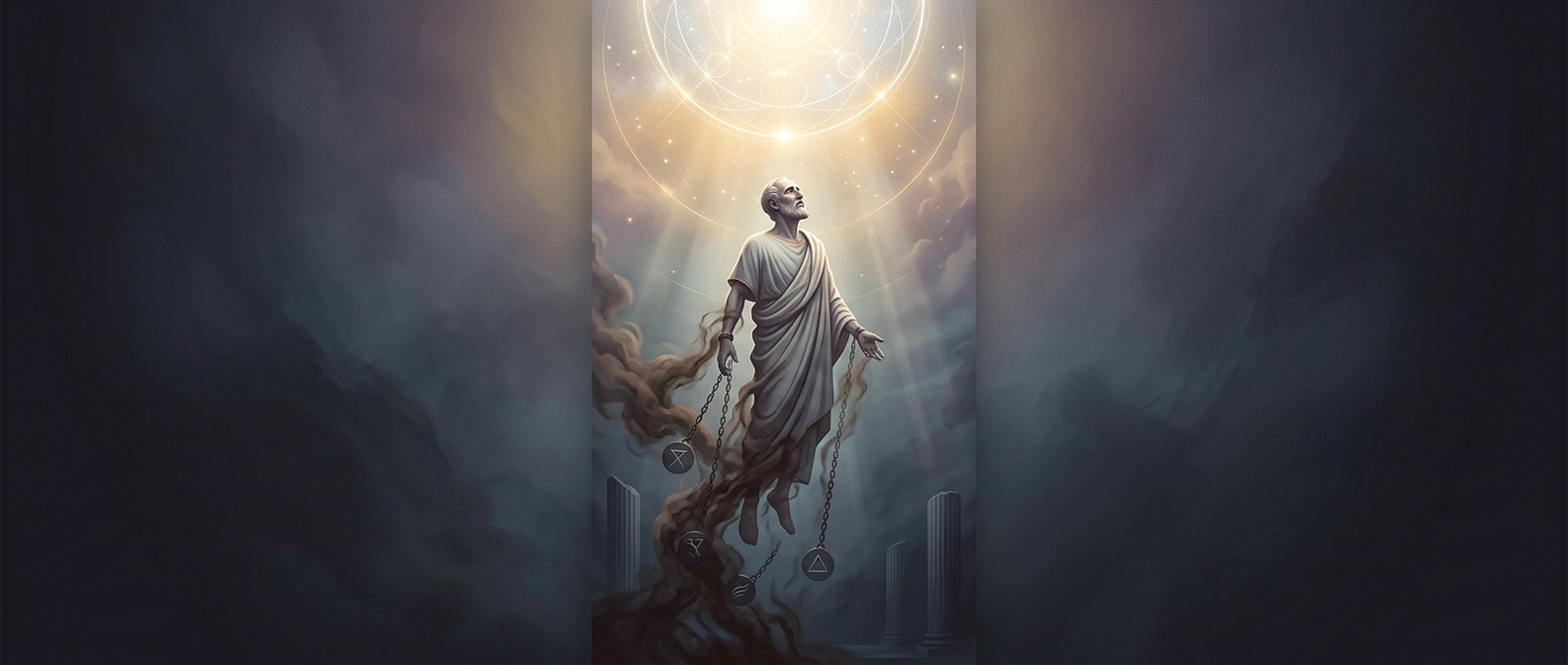
Plotinus’s philosophy placed reality in levels. At its highest was the One, the source of all being; below it came Intellect, the realm of intelligible forms, and then Soul, which gives life and order to the world. Physical things were real, but less fundamental than the realities they expressed. A person’s body, on this view, did not capture what mattered most about that person: the soul’s capacity for thought and its relation to Intellect.
That distinction helps explain the birthday story, too. A birthday marks the beginning of a bodily life. Plotinus was said to have treated that event as a poor measure of a person whose deepest identity was not reducible to a particular body or date.
An inward turn, not mere self-disgust
Calling Plotinus embarrassed by being physical can make his attitude sound like simple hatred of the body. The deeper point was about attention: he urged people to turn inward, away from the changing surface of things and toward the mind’s more lasting objects. His resistance to portraits made that priority visible. He did not want an image of his appearance to stand in for the person he believed was most real.