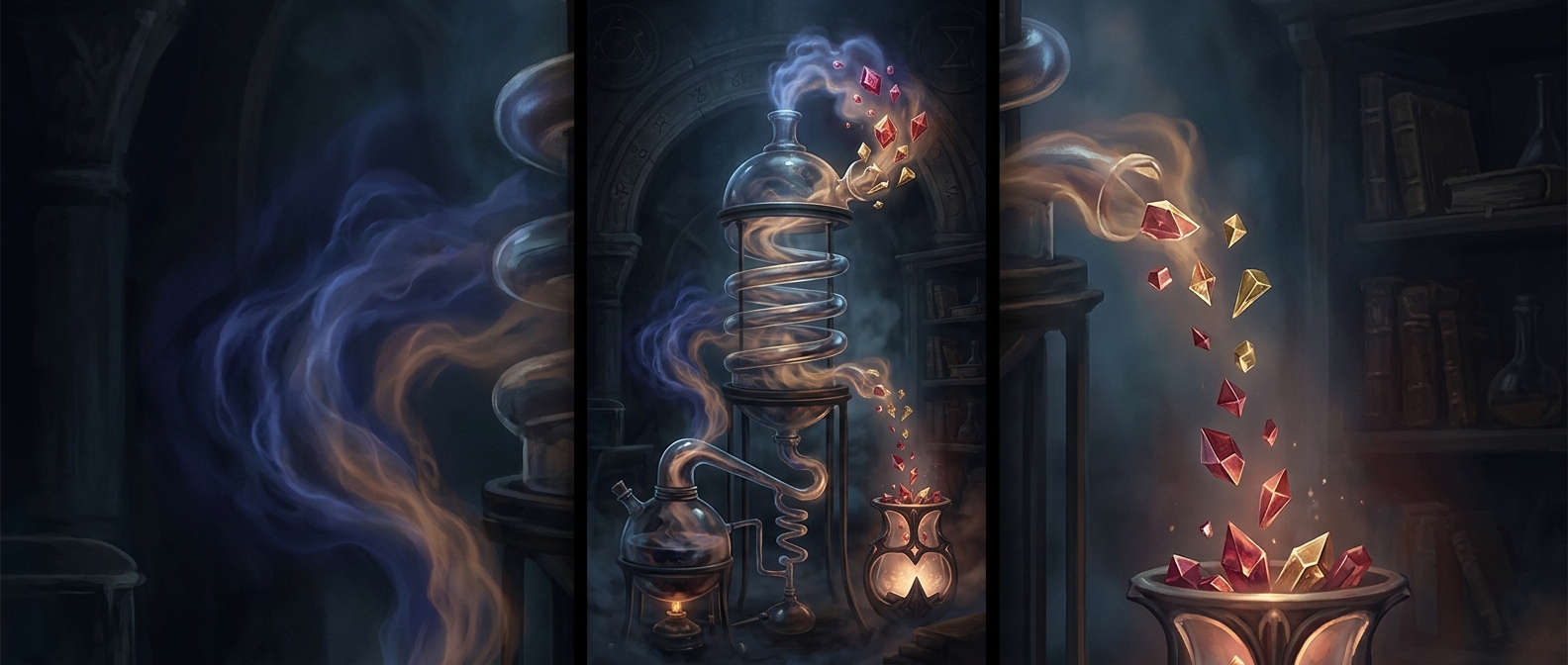
From Dissolution to Form
In alchemical writing, coagulation names a movement from looseness toward solidity: what has been separated, softened, or dissolved is gathered into a more definite form. The word also points to material work. A liquid mixture might leave a deposit, form crystals, or thicken as its components changed under heat and other treatments. Such visible transformations gave alchemists a vocabulary for thinking about change more broadly.
A Symbol for Making the Hidden Tangible
The same sequence could describe an inner or spiritual process. Dissolution suggested breaking down an established condition; coagulation suggested that something newly understood—or long held as a possibility—had become stable enough to embody in action. In that reading, a desire is not merely imagined: it takes shape as a commitment, discipline, or created thing.
Alchemy was not one uniform system, so coagulation did not carry a single fixed meaning in every text. Its enduring force comes from the concrete contrast it offers: a substance that once flowed can be handled, and an intention that once remained vague can acquire consequences. The metaphor’s test is whether the new form holds.