Why bismuth passed for lead
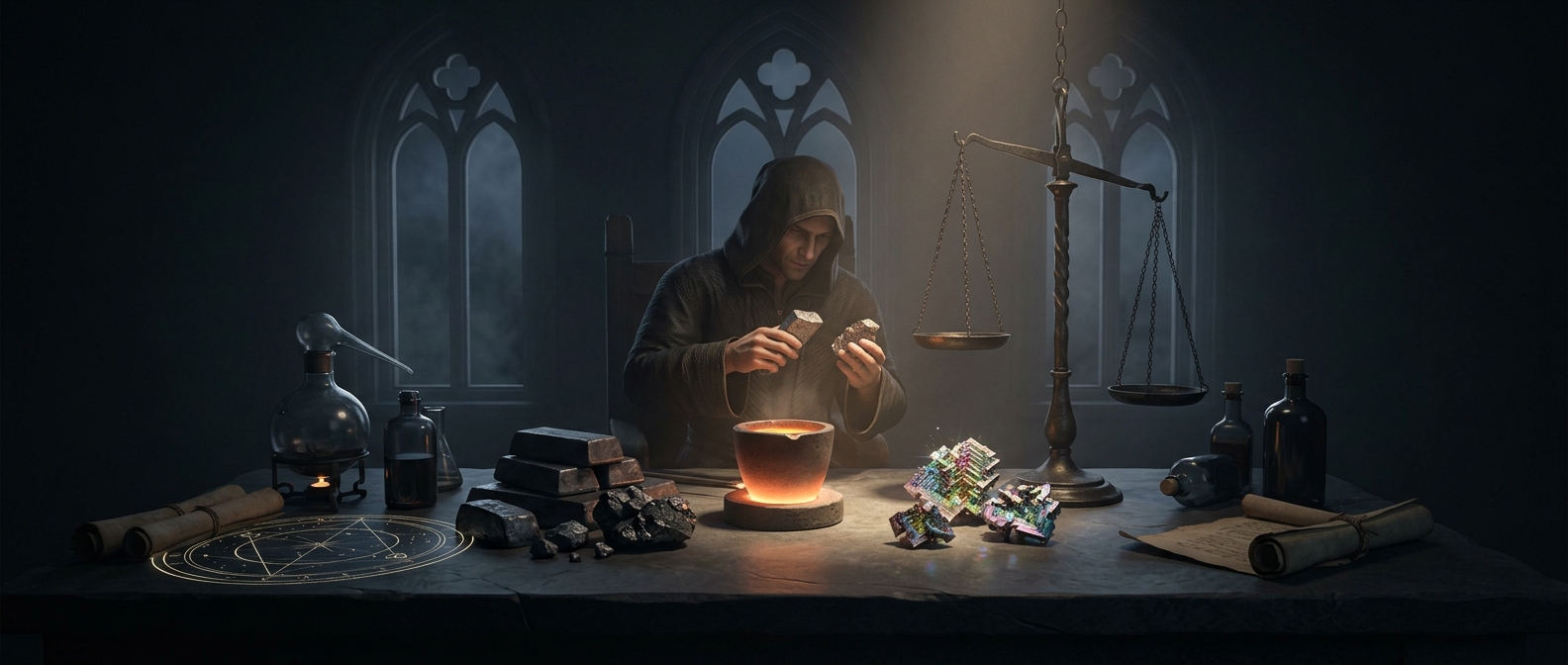
To an early metalworker, bismuth and lead could look like versions of the same material: both are dense, gray metals that can occur in mineral ores. Before chemical tests could reliably identify substances, appearance and practical behavior carried much of the weight. A metal that resembled lead and appeared alongside lead-bearing minerals could readily be treated as a variety of lead rather than a separate substance.
Alchemy also organized materials through categories that did not match modern chemistry. Writers described metals by their visible qualities and transformations, and they did not yet have the modern concept of an element as a distinct kind of matter. So an account of “lead” might include a material that later chemists would classify separately.
Small differences revealed a separate metal
Bismuth behaves differently under handling and heat. Unlike relatively soft, malleable lead, it is brittle and breaks rather than bending readily. It also melts at a lower temperature. Those contrasts offered clues, but noticing a difference was not the same as establishing a new element: that required repeatable ways to distinguish and prepare the substance.
The mix-up therefore reflects more than a simple mistake of eyesight. When substances were identified mainly by resemblance, a metal could remain hidden inside another metal’s category. Bismuth’s story shows how chemistry advanced by turning familiar-looking materials into testable, separate substances.