A Warm Bed for Slow Experiments
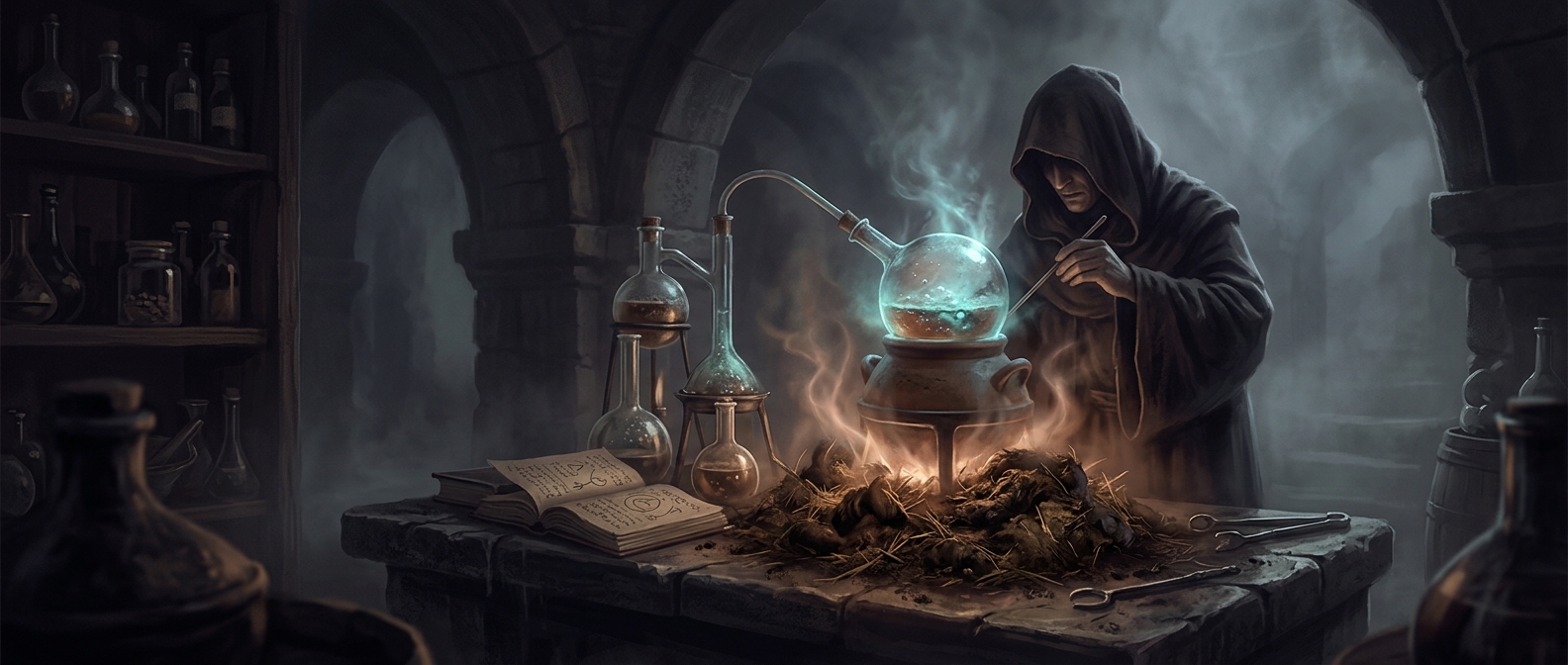
An open flame can heat a flask unevenly: the glass nearest the fire gets hot first, while the rest of the vessel stays cooler. For experiments that needed gentler, steadier warmth, alchemists could nestle a flask in horse manure as it decomposed.
The heat came from microbes breaking down the manure’s organic material. Their activity released warmth throughout the pile, while the surrounding mass helped soften temperature swings. Burying the flask therefore turned the manure into a crude incubator—not a source of precise, thermostat-controlled heat, but a way to avoid the sharp bursts of a direct flame.
Heat Without a Furnace
The method depended on biology rather than a carefully regulated fire. A large, active pile could stay warm as decomposition continued, making it useful for processes meant to proceed slowly. The flask’s contents were warmed indirectly, with manure between the glass and any hotter spot.
That tradeoff mattered: the heat was comparatively gentle, but it was not exact. The alchemist had to work with a living, changing heat source instead of dialing in a temperature. The striking part is how practical the arrangement was: a farmyard material could serve as an early incubator for delicate laboratory work.