When craft became forbidden knowledge
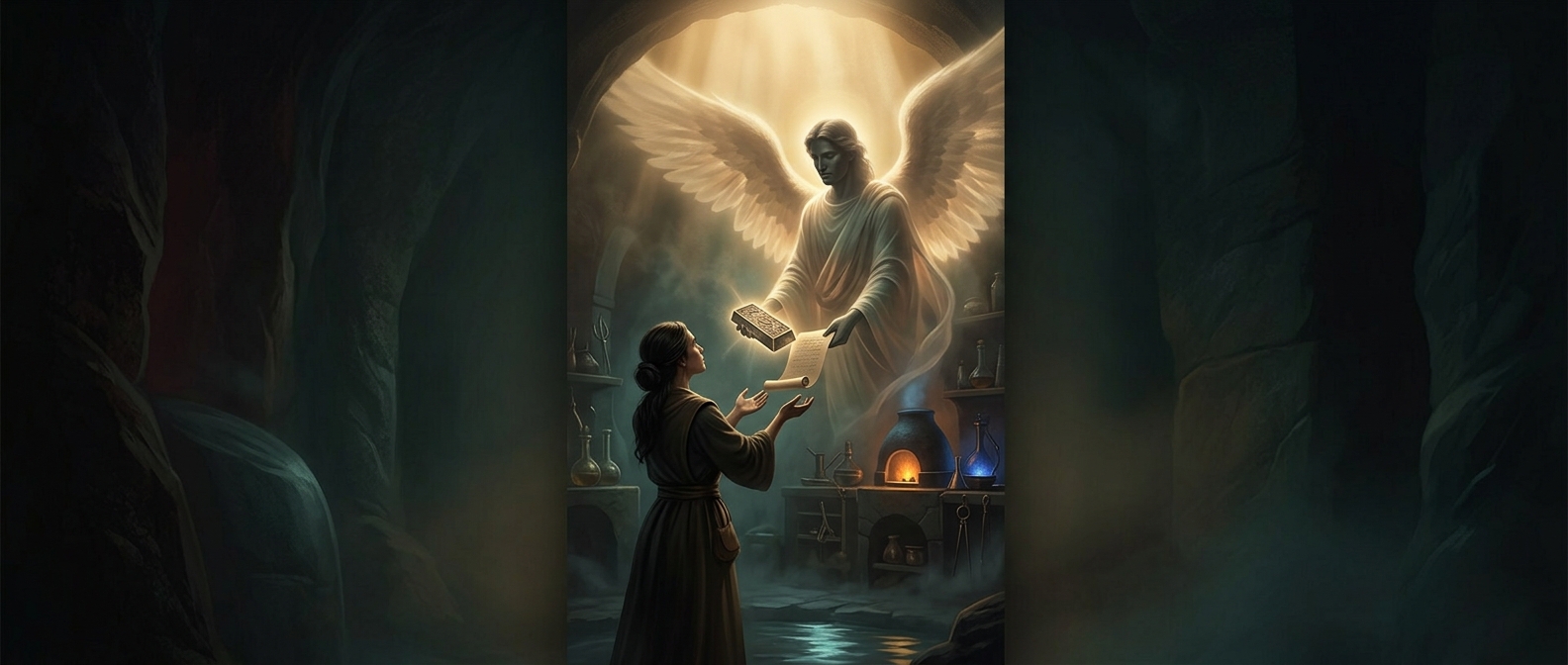
For Zosimos of Panopolis, metallurgy was more than a set of workshop skills. In late-antique alchemy, techniques for heating, mixing, and changing materials could also carry spiritual meaning: transforming matter offered a way to think about transformation itself. A story about fallen angels teaching women therefore gave metalworking an origin that was both powerful and perilous.
The tale belongs to a wider tradition about the Watchers, angels who descend to earth and cross a boundary between the divine and human worlds. In that tradition, their unions with women are linked to the transmission of arts and knowledge, including metalworking. Zosimos drew on this mythic framework; he was not recording a verifiable account of how people first learned to work metal.
Why the story mattered to an alchemist
The myth cast technical knowledge as something acquired through a transgression. Metallurgy could produce useful objects and striking changes in matter, but the story associated those abilities with desire, disobedience, and consequences. That made the craft morally charged: human skill was not simply progress, but knowledge with a dangerous history.
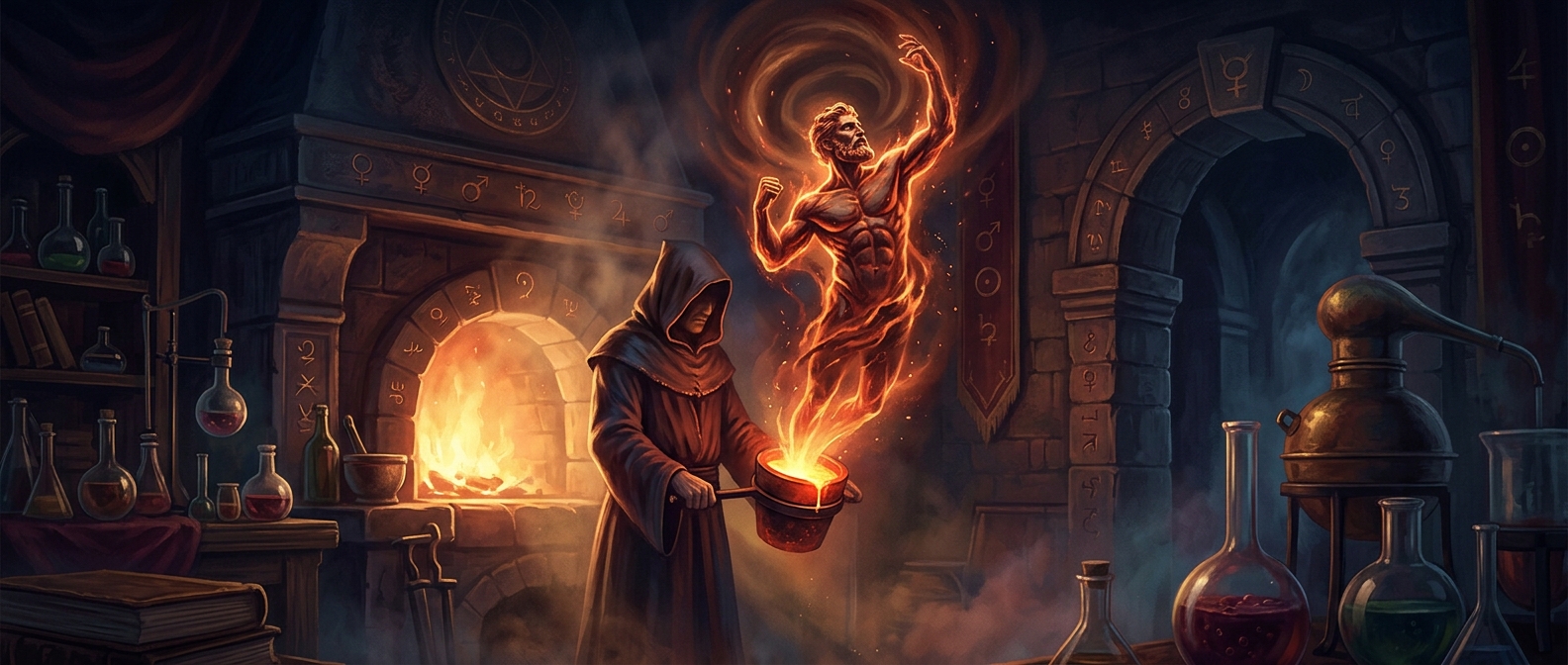
This framing suited alchemy’s blend of practical work and religious imagination. A furnace and its materials could be real, while the explanation for their power drew on sacred history and symbolism. The result is a glimpse of how some ancient writers made sense of technology—not as an isolated invention, but as a force bound up with the limits humans were believed to cross to obtain it.