Why Iron Could Be Read as Masculine
In some alchemical traditions, a metal’s “gender” described its symbolic character, not a belief that the material was literally male or female. Iron’s association with masculinity drew on qualities people could see in its uses: it was hard, durable, and fashioned into tools and weapons. Its capacity to wound made it seem forceful and aggressive.
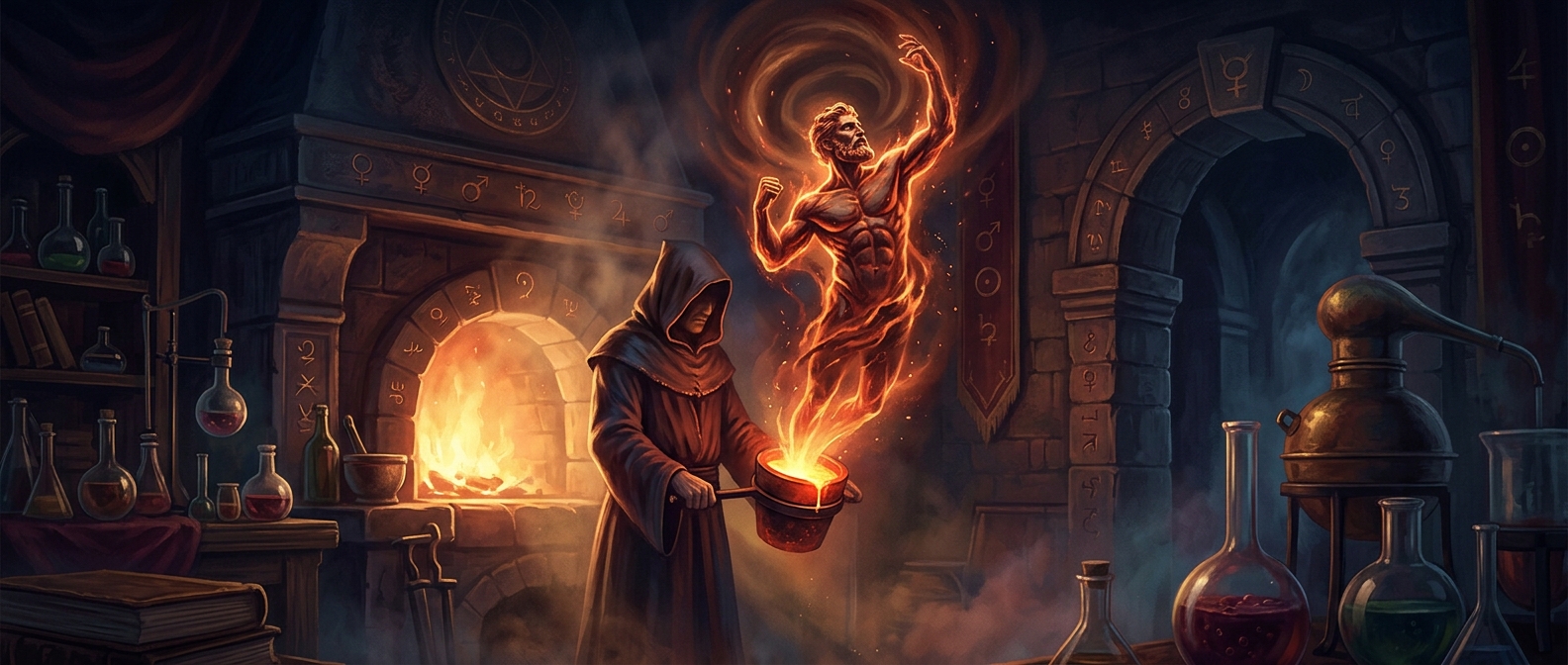
These qualities also connected iron with Mars, the Roman god of war. In the system of planetary correspondences used by many alchemists, iron was linked to Mars, giving the metal a place in a larger symbolic network that joined planets, materials, and human traits.
A Symbolic Contrast, Not a Universal Rule
Copper offered a different image. Its association with Venus, a goddess linked with love and beauty, could make it seem gentler or more receptive by comparison. The contrast between masculine iron and passive copper was therefore part of an interpretive scheme—not a claim shared by every alchemist, or a scientific classification of metals.
Such labels helped practitioners describe how materials seemed to behave and fit them into broader theories of nature. Iron’s gender came from the meanings attached to its strength and martial uses, not from anything biological in the metal.