When the Volatile Became “Fixed”
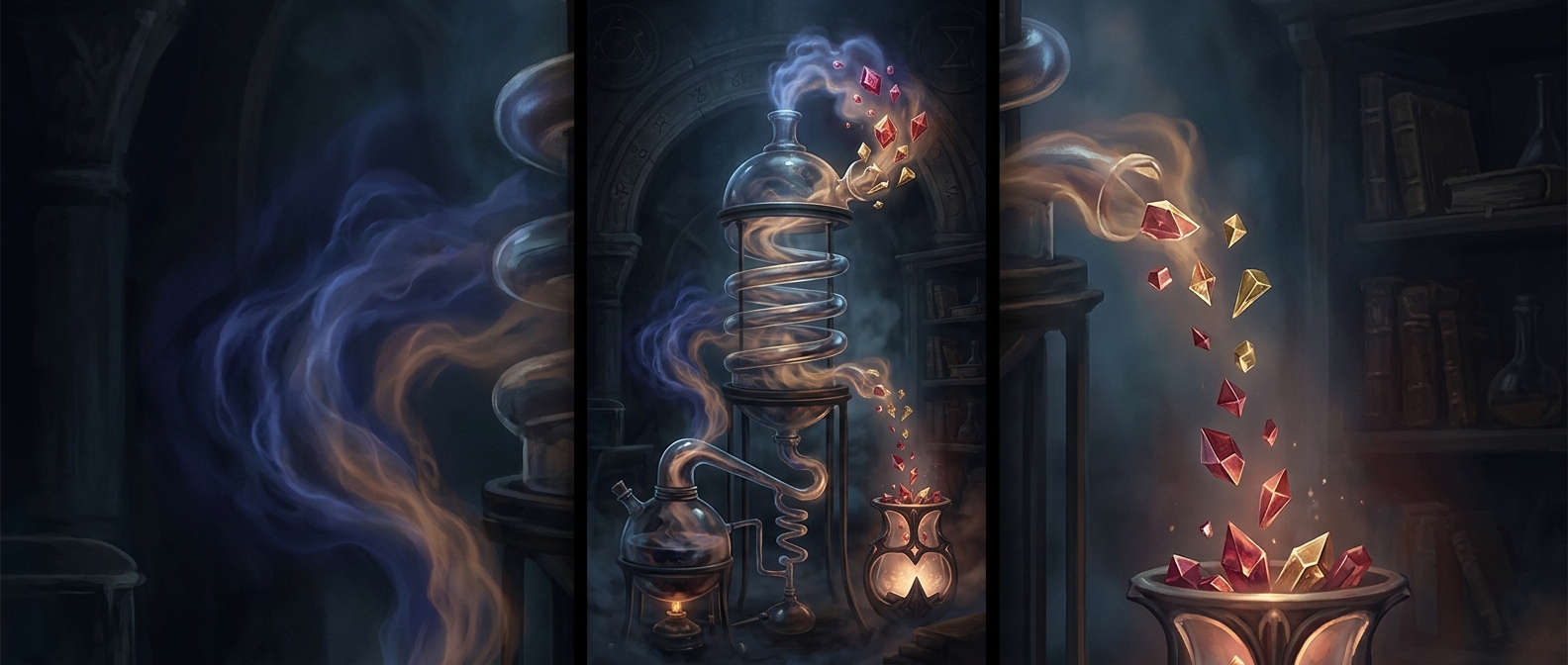
In alchemical language, coagulation meant making something fluid or vaporous solid again. The word described more than a change of physical state: it suggested that a substance had been gathered, stabilized, and made less likely to escape. Alchemists often treated such operations as stages in a larger work of breaking matter down and recombining it.
The contrast was between the volatile—what could rise, disperse, or vanish—and the fixed—what remained. Turning vapor back into a solid therefore offered a powerful image of completion: what had been loosened and transformed was now made enduring. The hoped-for product was not merely a lump of material, but matter believed to have been purified through the process.
A Material Process With a Larger Meaning
Alchemical writings joined hands-on work with symbolic interpretation. A solid forming from vapor could be understood as a real laboratory event and, at the same time, as a model of transformation: scattered or unstable qualities brought into a settled form. “Purified” and “enduring” express the practitioners’ hopes, not a guarantee that the resulting substance had acquired extraordinary properties.
That double meaning made coagulation a fitting final image for the great work. Its promise was that transformation need not end in dissolution: the matter could return, changed and made firm.