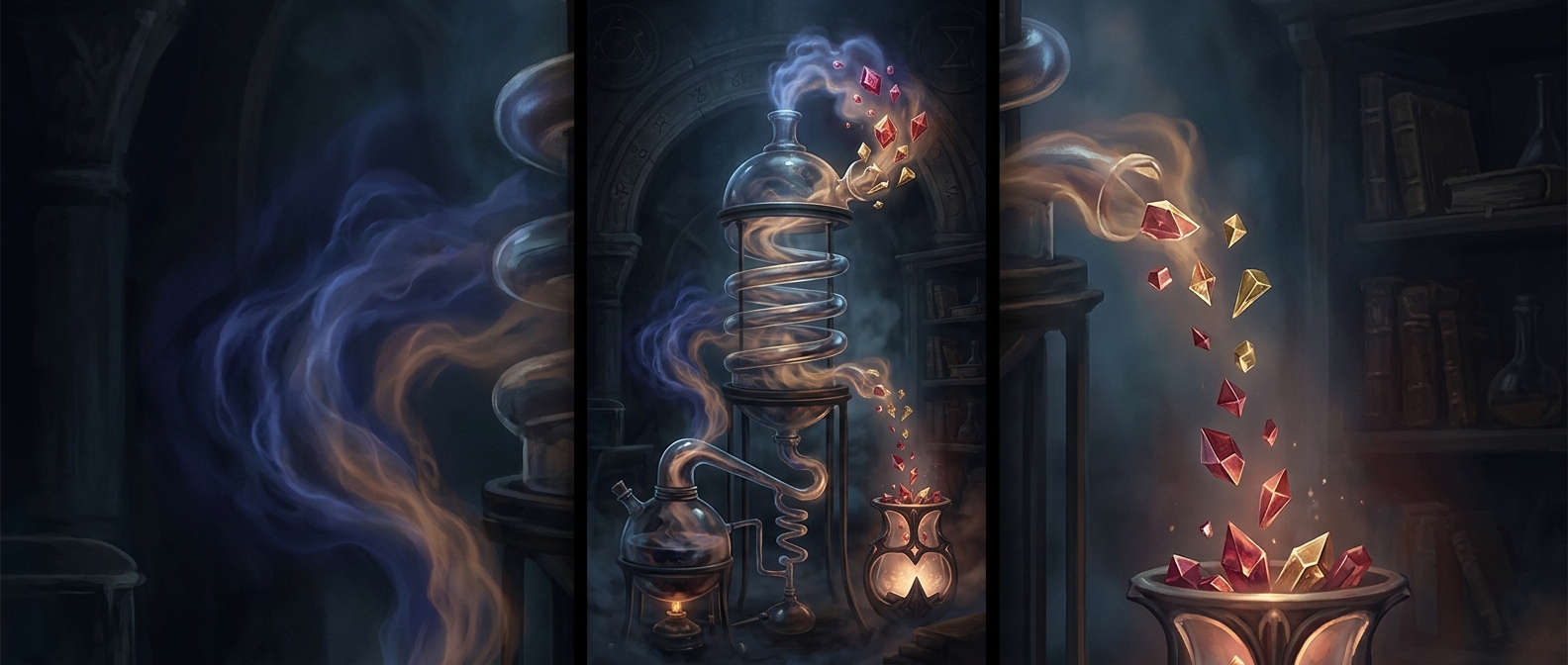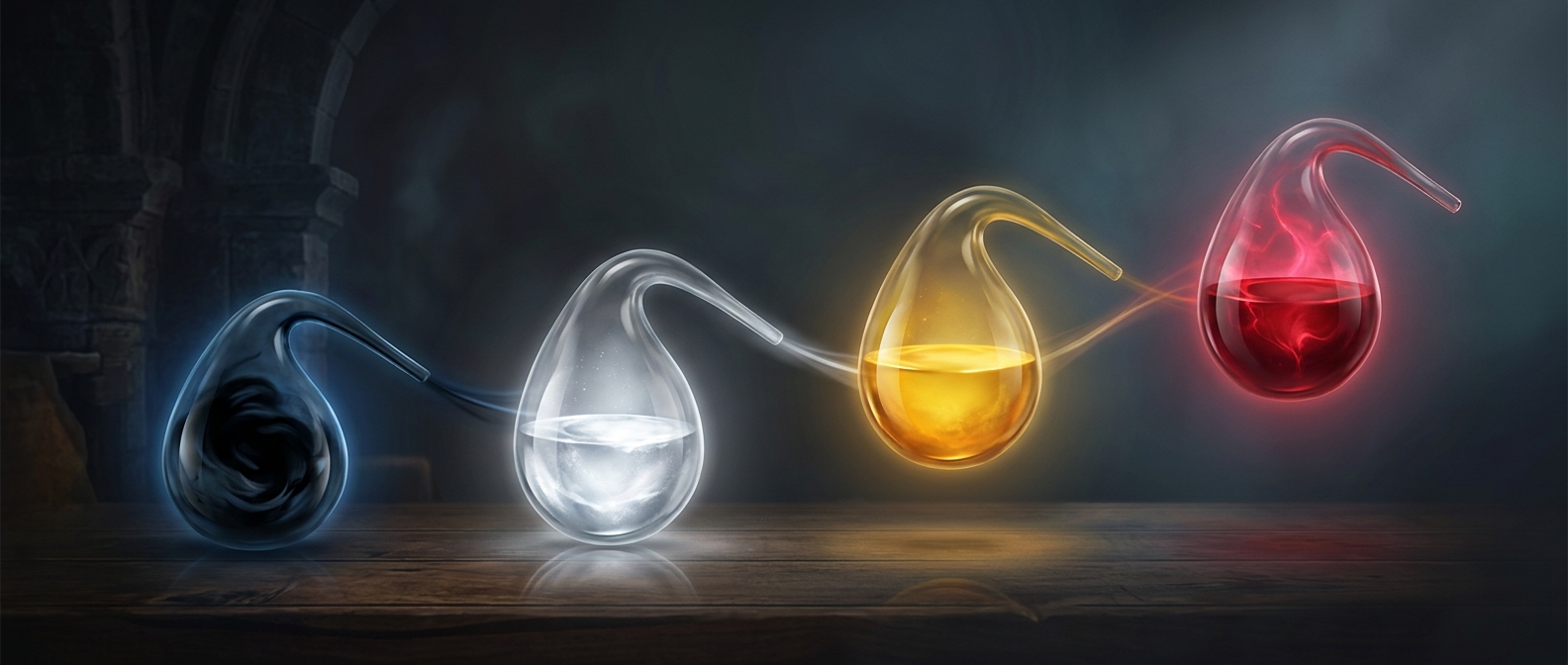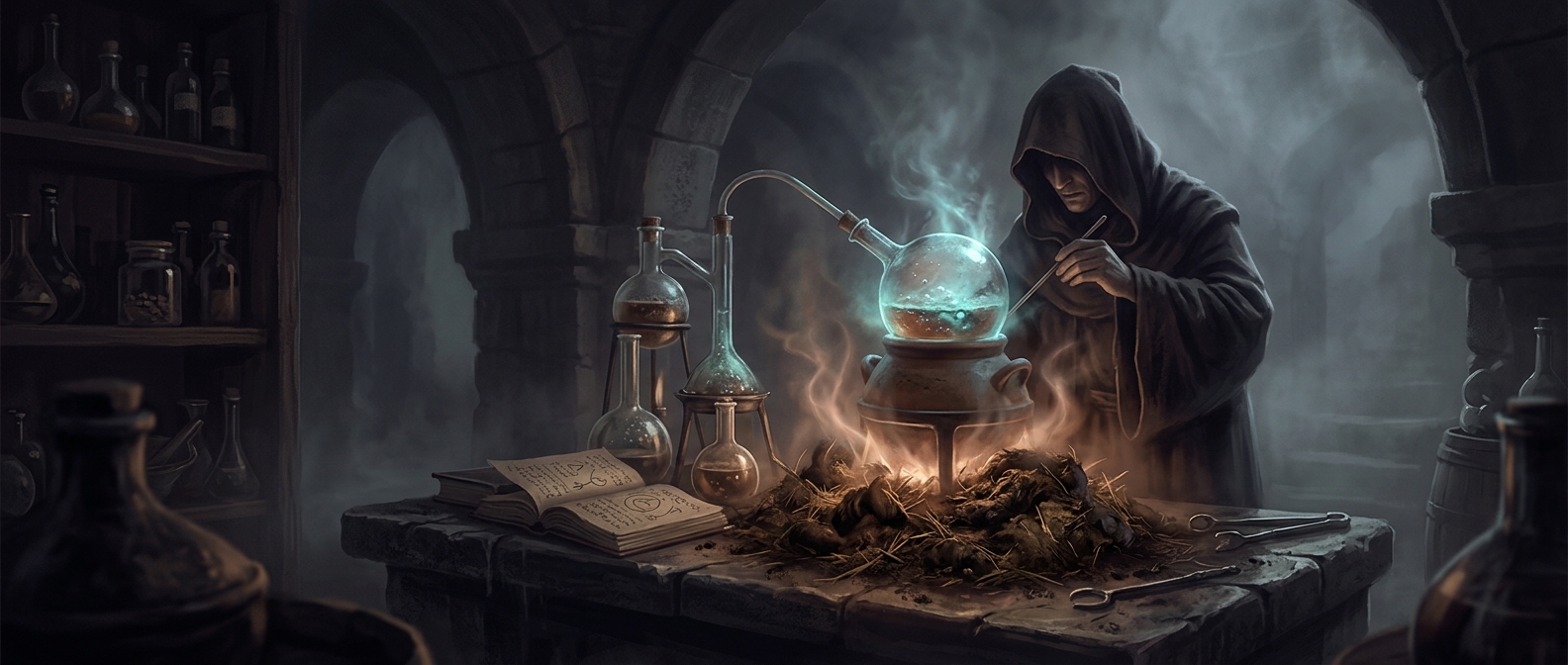
A mixture could be read as a miniature universe
For some early experimenters, a cloudy material was more than a practical puzzle. Its visible disorder suggested a world containing opposed or conflicting forces. Separating the mixture into parts could therefore serve two purposes: it changed a substance, and it offered a way to think about hidden spiritual qualities becoming distinct.
The procedure was concrete. In filtration, liquid passes through a porous barrier while larger solid particles are trapped. The clearer liquid and the residue can then be examined or worked with separately. That did not reveal spiritual traits in a modern scientific sense; within this way of thinking, however, the physical division could represent a deeper ordering of nature.
Practical skill and spiritual meaning overlapped
Such work also demanded close attention to materials: which parts stayed behind, which passed through, and how the result changed. Those observations belong to the beginnings of hands-on chemistry, even when experimenters interpreted them through spiritual ideas rather than today’s concepts of matter.
The same act could thus be both a manipulation of a real substance and a symbolic lesson: separation made invisible conflict appear as distinct, observable parts.