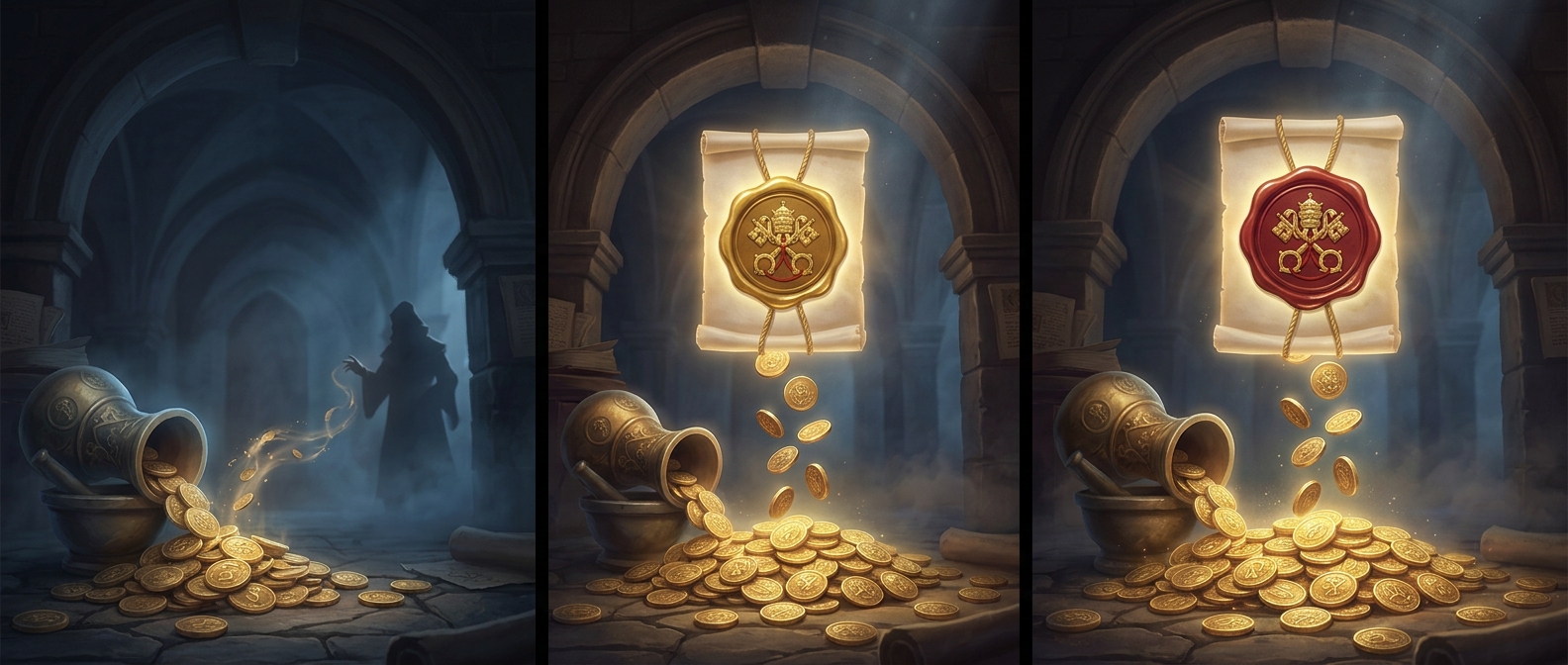
Why a Medieval Pope Targeted Alchemy
In 1317, Pope John XXII issued a papal bull—a formal decree from the pope—condemning fraudulent alchemy. The concern was not simply that alchemists pursued the supposed art of turning base metals into precious ones. It was that claims of transformation could be used to deceive people and, in particular, to make counterfeit gold or silver coinage seem genuine.
From False Promise to Monetary Fraud
A coin’s value depended partly on its metal. If someone could pass off cheap metal as gold or silver, the trick threatened more than an individual buyer: it could undermine confidence in the coins people used to trade and pay debts. Alchemical claims offered a plausible cover for that deception, because a seller could present an imitation as the product of a secret transformation rather than an ordinary forgery.
The bull’s title, Spondent quas non, refers to promises that are not fulfilled. Its focus was the gap between alchemists’ claims and what they could actually deliver—a gap that could be exploited for profit. The target was fraud dressed up as extraordinary expertise.
Why the Decree Mattered
The episode shows how a belief in alchemy could have practical consequences even for people who never tried to make gold themselves. When claims about transforming metals entered the market, they touched the reliability of money. By condemning deceptive alchemy, John XXII addressed a problem at the boundary of wonder and commerce: a supposed marvel could become a counterfeit coin in someone else’s hand.