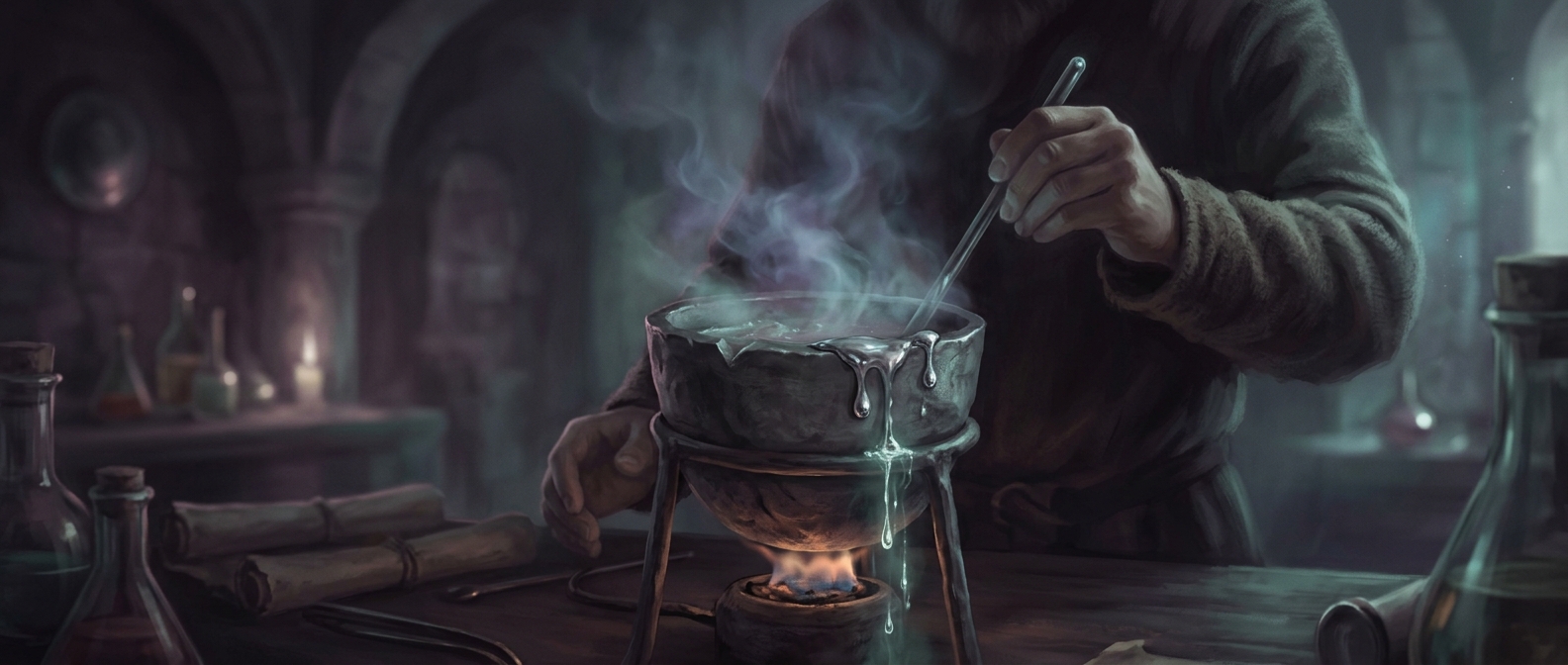
Gentle heat and the Hermetic Egg
The vessel associated with Maria the Jewess used one container nested inside another: water in the outer pot warmed a smaller vessel holding the material being worked on. This indirect heating—later known as a double boiler—softened the force of the flame. Instead of scorching a substance with direct heat, the alchemist could warm it gradually and steadily.
That practical restraint carried symbolic weight. In alchemical thought, transformation was not merely a matter of mixing ingredients; it could be imagined as a difficult passage through stages of breaking down, cleansing, and becoming something new. The Hermetic Egg offered a picture for that process: a closed, womb-like space in which change could unfold toward rebirth.
An apparatus that made the metaphor tangible
A vessel that held material within a controlled, enclosed process gave the image a physical counterpart. Gentle heat could encourage liquids to evaporate and condense, separating and recombining substances over time. The work’s slow, cyclical character made it easy to read as an analogue for spiritual purification: the material endured heat and change, while the practitioner sought a refined result.
Maria’s apparatus is known through accounts that attribute alchemical devices to her, so the symbolic interpretation belongs to that tradition rather than to a securely documented personal statement from Maria. Still, the connection captures an important alchemical habit of mind: a tool could be both an instrument for changing matter and an image of inner transformation. The double boiler’s lasting usefulness comes from its controlled heat; its memorable place in alchemical lore comes from the larger rebirth its enclosed vessel could suggest.