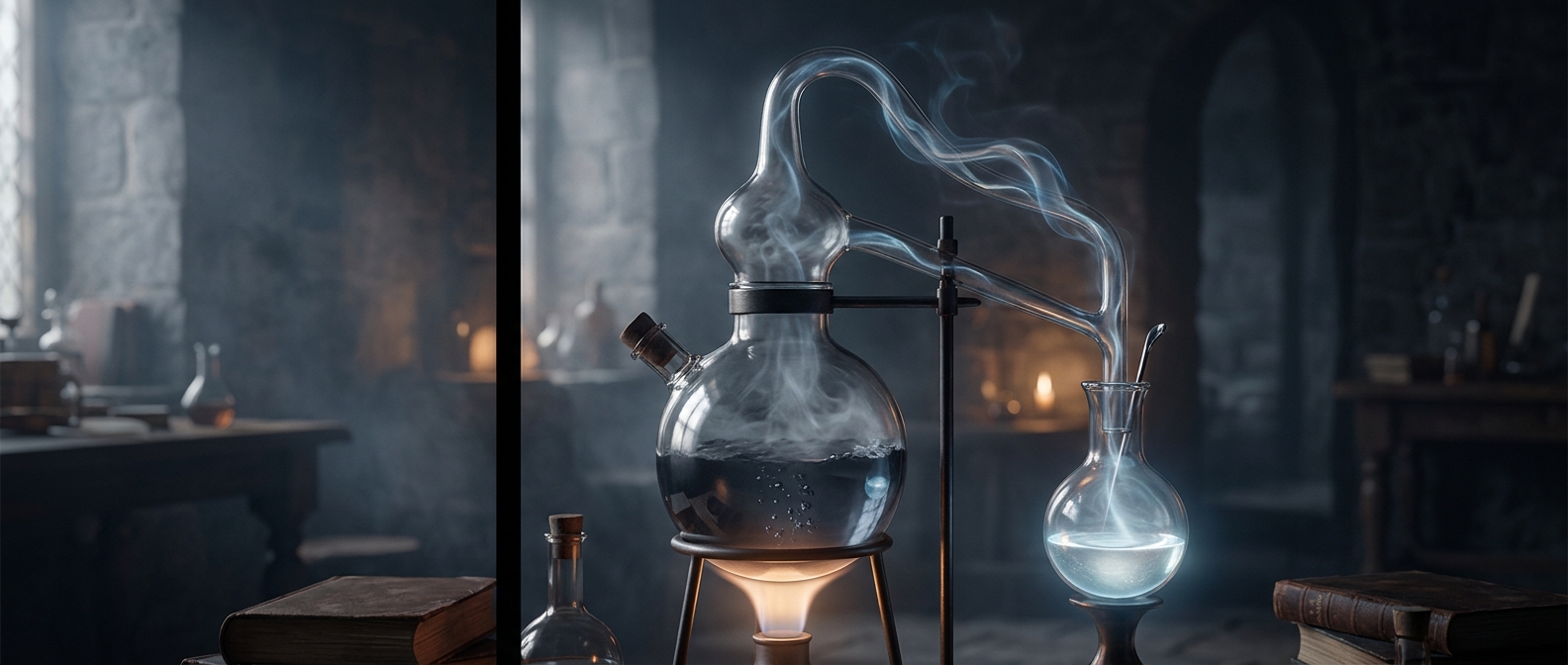
Why Distillation Seemed to Release a Liquid’s “Spirit”
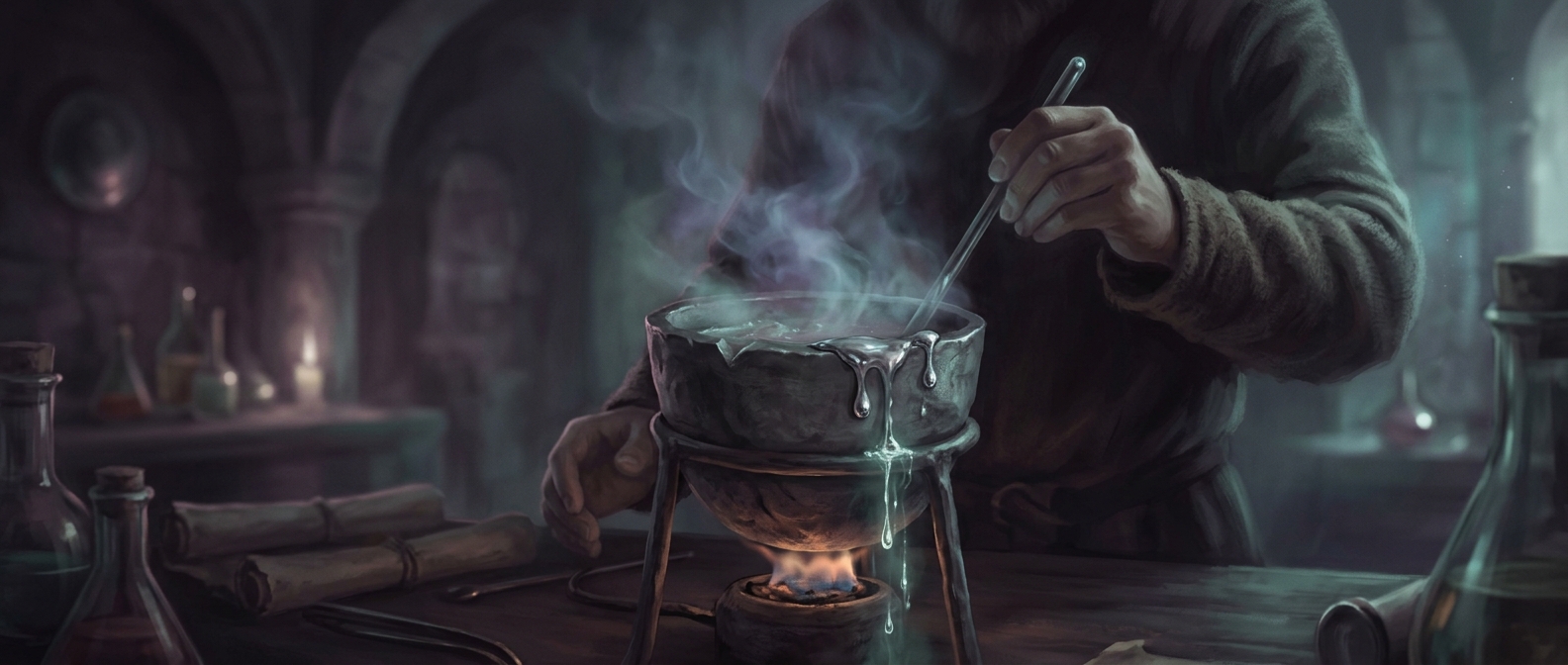
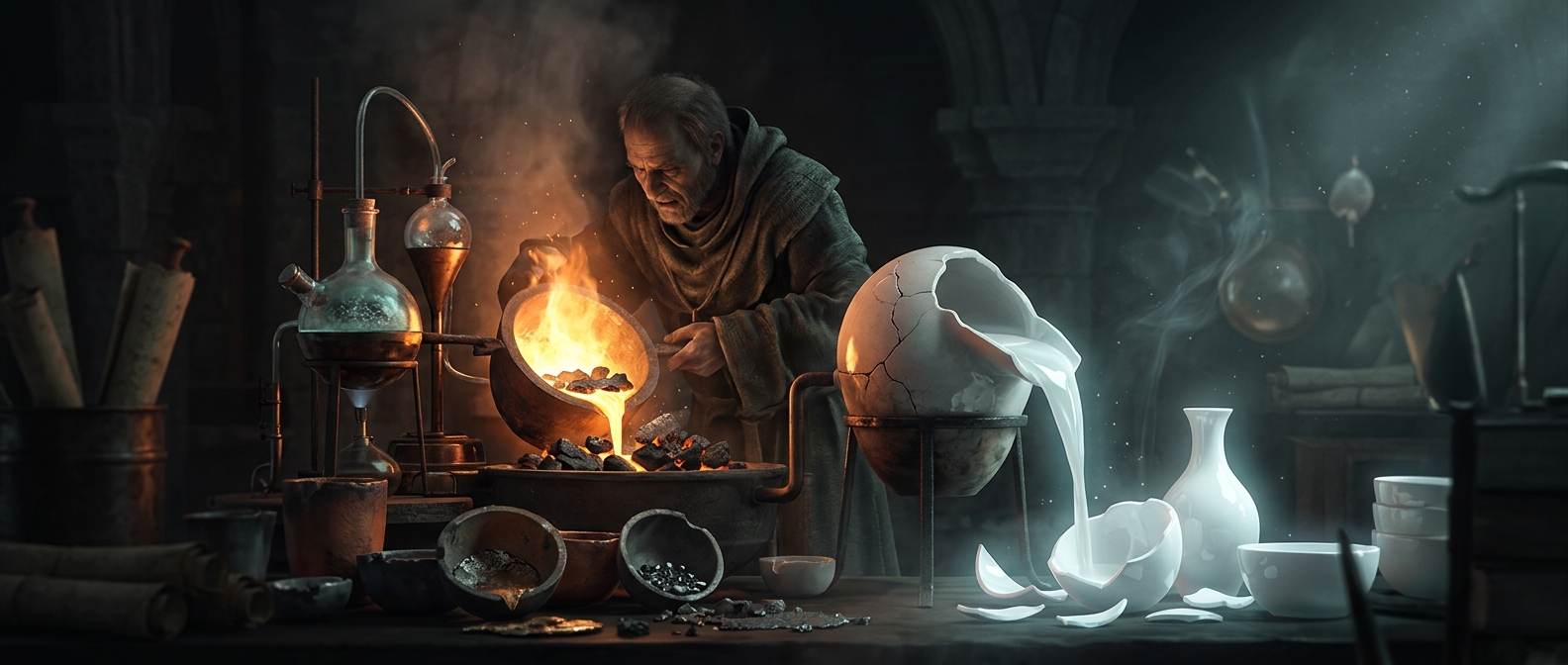
In a distillation vessel, a mixture is heated until some of its components turn into vapor. That vapor travels into a cooler part of the apparatus and condenses back into liquid, often separated from substances that do not evaporate as readily. The result can be a concentrated or purified portion of the original mixture.
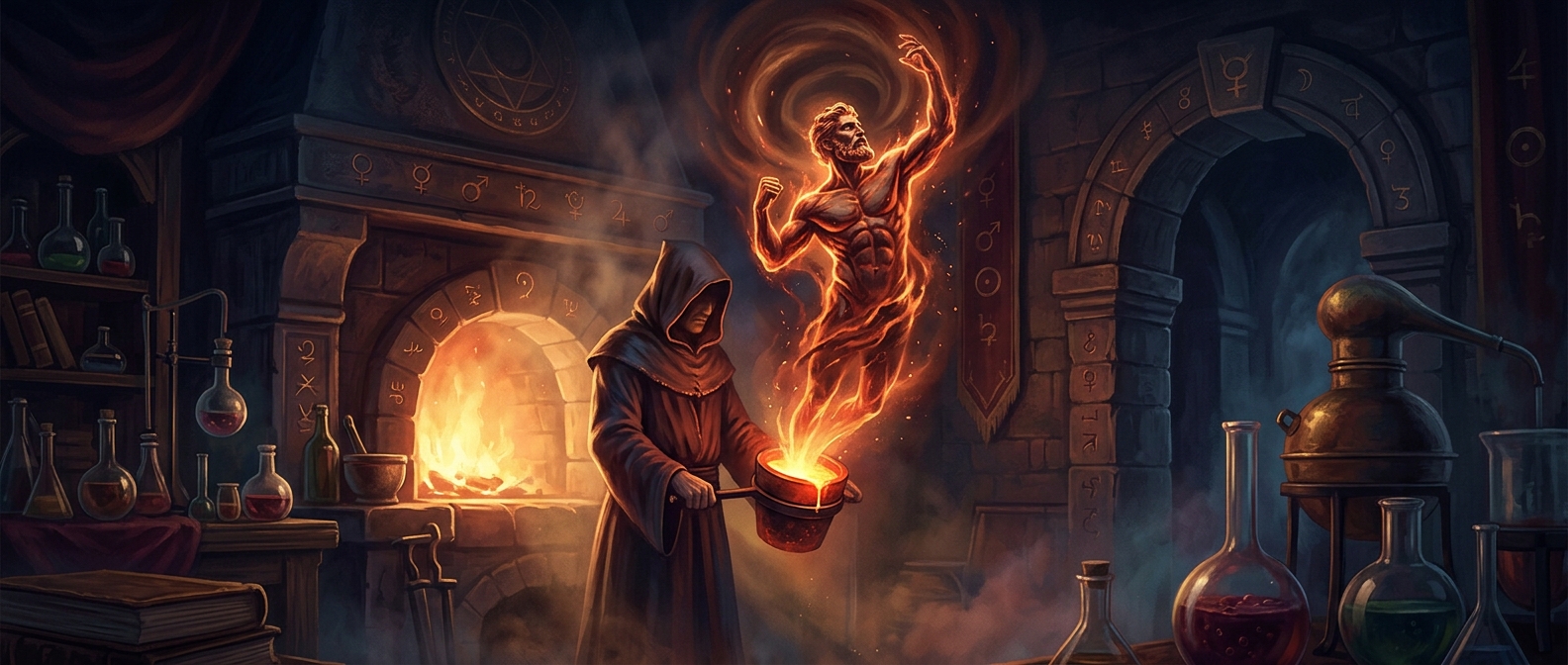
To an alchemist, this visible transformation offered more than a practical separation. The rising vapor seemed to carry the liquid’s most active, subtle character away from its heavier residue. They called this elusive part its spirit—a term for a volatile essence, not a soul in the modern religious or psychological sense.
A metaphor built into the apparatus
Distillation made the idea tangible: heat drove something invisible upward, and cooling made it visible again as drops. Because the collected liquid could differ in smell, strength, or behavior from what remained in the vessel, it seemed to preserve a concentrated quality while leaving coarse matter behind.
The process also had concrete uses. Distillers could concentrate alcohol or collect aromatic oils and waters from plants. Those products helped sustain the language of “spirits” in alchemical practice: a substance’s defining power appeared separable from its bulk. The equipment did not prove that matter contained a literal soul. It gave alchemists a repeatable physical operation that made the notion of an extractable essence feel observable—and useful.