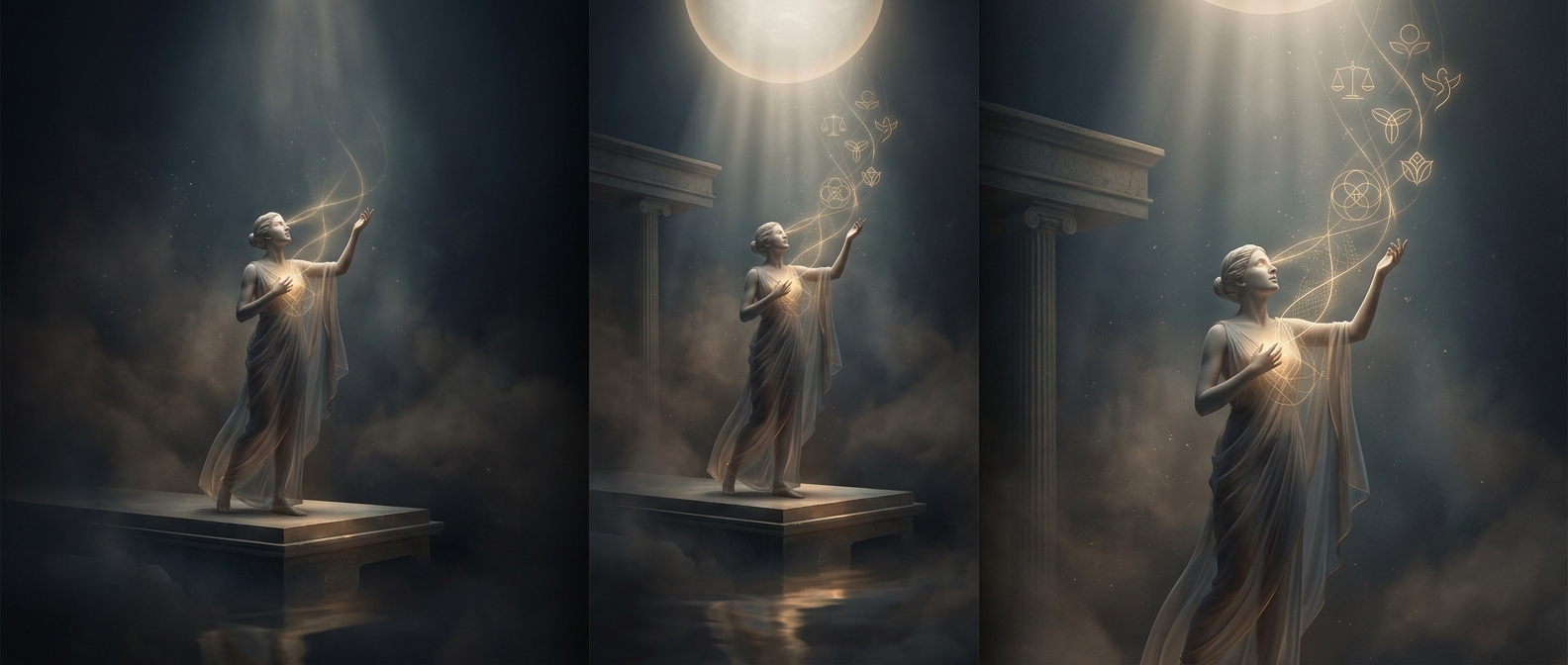
Geometry as a route from the visible to the intelligible
For Neoplatonists, the world flowed from a highest reality called the One: a source so unified and fundamental that it lay beyond ordinary description. Reality unfolded from it in stages, including Intellect—the realm of timeless, knowable forms—and the soul. Spiritual ascent meant turning attention back through this order toward its source.
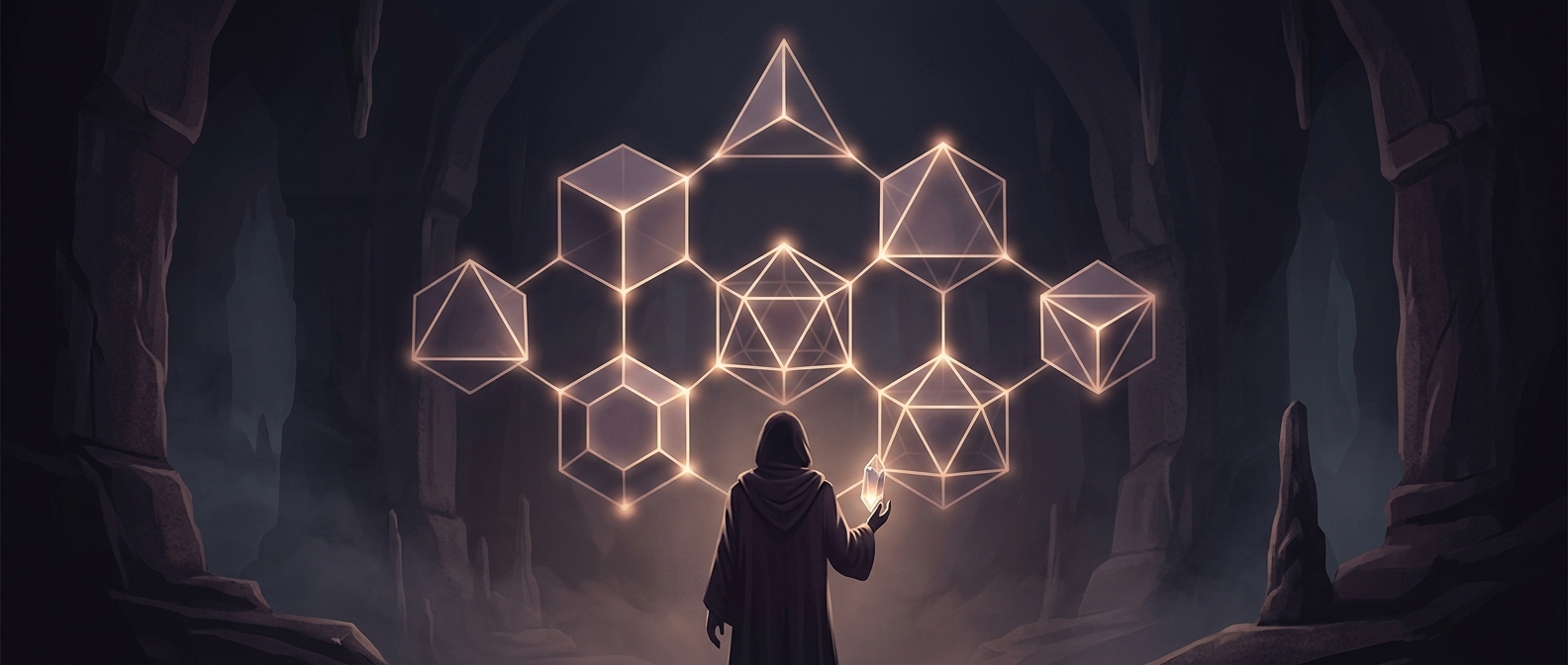
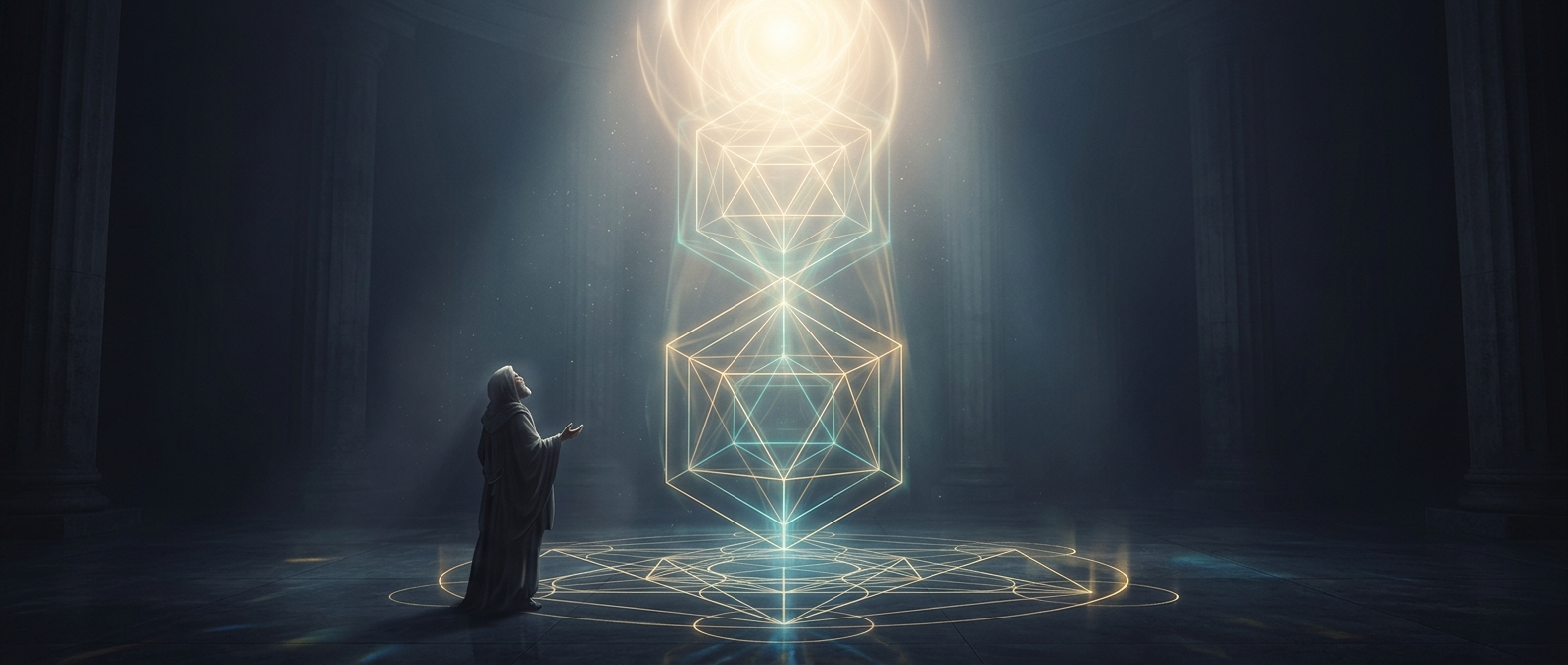
Geometry could help because it starts with visible shapes but asks the mind to grasp truths that are not themselves visible. A drawn triangle is imperfect: its lines have thickness, and no physical example is exact. Yet the mind can consider what a triangle must be, apart from any particular drawing. Neoplatonists treated this movement from imperfect objects to immaterial principles as practice in looking beyond the sensory world.
Not a mathematical spell
The point was not that solving a difficult problem instantly transported someone to the divine. Geometry served as a discipline of attention and abstraction, part of a wider philosophical life that aimed to free the soul from being ruled by bodily distractions and changing appearances. Mathematical contemplation trained the mind to attend to what was stable and nonphysical.
Thinkers such as Plotinus and Proclus did not reduce the One to a theorem. In their view, the One was beyond even the forms that reason could understand. Mathematics could orient the soul toward higher realities, but the final approach involved a deeper kind of contemplation than calculation. The surprising claim was not that a diagram contained God, but that studying its invisible order could teach the mind how to turn away from the merely visible.