An Elk in an Astronomer’s Household
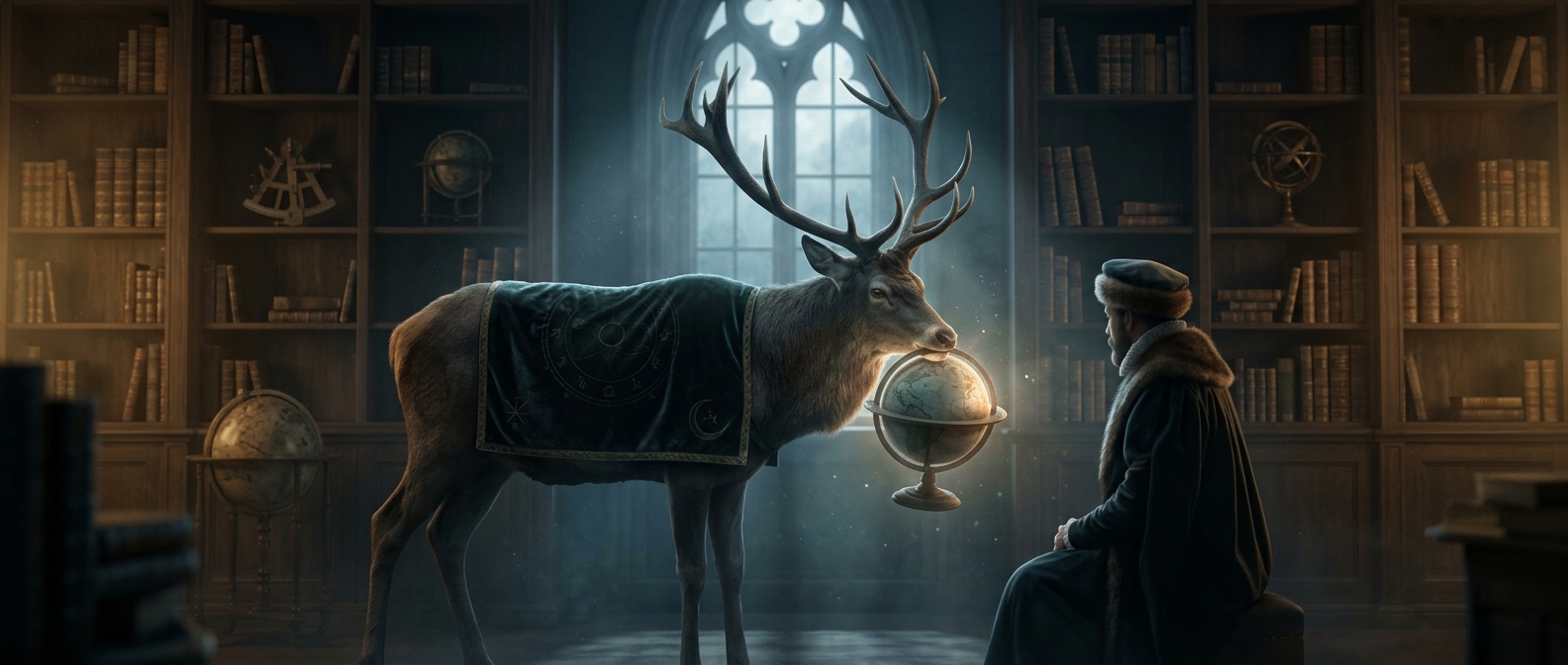
Tycho Brahe’s estate on the Danish island of Hven was not simply a private home with a telescope attached. His residence and observatory, Uraniborg, formed the center of a busy operation: Brahe and his assistants made repeated observations of the sky, using large instruments to track the positions of stars and planets. Against that carefully organized setting, a tame elk wandering indoors was an especially striking presence.
The Estate Behind the Anecdote
In the 16th century, astronomy depended on patient, repeated observation rather than photography or electronic sensors. Brahe’s work required instruments, assistants, and a place where observations could be made and recorded over many years. Uraniborg brought those activities together with the routines of an aristocratic household. Keeping an elk there hints at how different that household was from a modern research institution: scientific work, domestic life, and the unusual interests of a wealthy nobleman shared the same estate.
The animal is memorable because it makes the setting feel tangible. Brahe’s legacy is usually told through precise measurements that later helped transform astronomy; the elk offers a glimpse of the remarkable household in which those measurements were made.