The “Green Fairy” was a story layered onto a drink
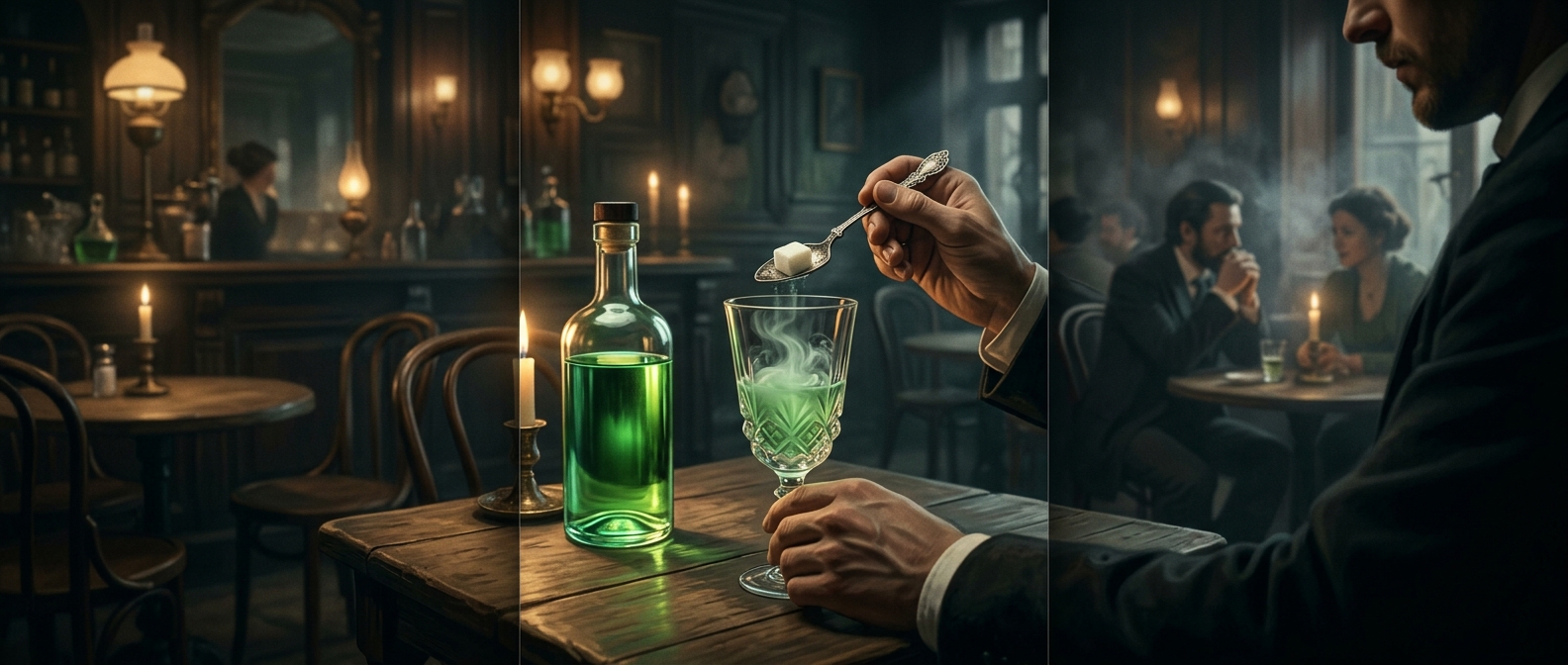
Absinthe’s mystique grew from more than its ingredients. In 19th-century cafés, drinkers slowly poured water over the spirit, often through a sugar cube. The water turned the clear, herbal drink cloudy—a visual transformation that helped make serving it a small performance. Posters and stories attached to absinthe amplified its association with artistic freedom and altered states.
Wormwood, one of absinthe’s defining herbs, contains thujone. That chemical became central to the drink’s dangerous reputation, but it is not a hidden psychedelic ingredient. At sufficiently high doses, thujone can affect the nervous system; the amounts present in regulated absinthe are not understood to produce the dramatic visions associated with the “Green Fairy” legend.
What drinkers actually experience
The more immediate effects come from the alcohol. Absinthe is typically bottled at high strength, so intoxication can arrive quickly if it is drunk undiluted or in large amounts. Confusion, poor coordination, and vivid misperceptions can occur with severe intoxication, but those are consequences of alcohol’s effects on the brain—not evidence that absinthe reliably causes hallucinations.
That distinction helps explain why the legend endured: a potent spirit, an elaborate ritual, and a striking green color offered an appealing story about an extraordinary drink. In practice, the theatrical cloud of water is a change in how the herbal oils disperse, while the strongest change in the drinker is usually the alcohol.