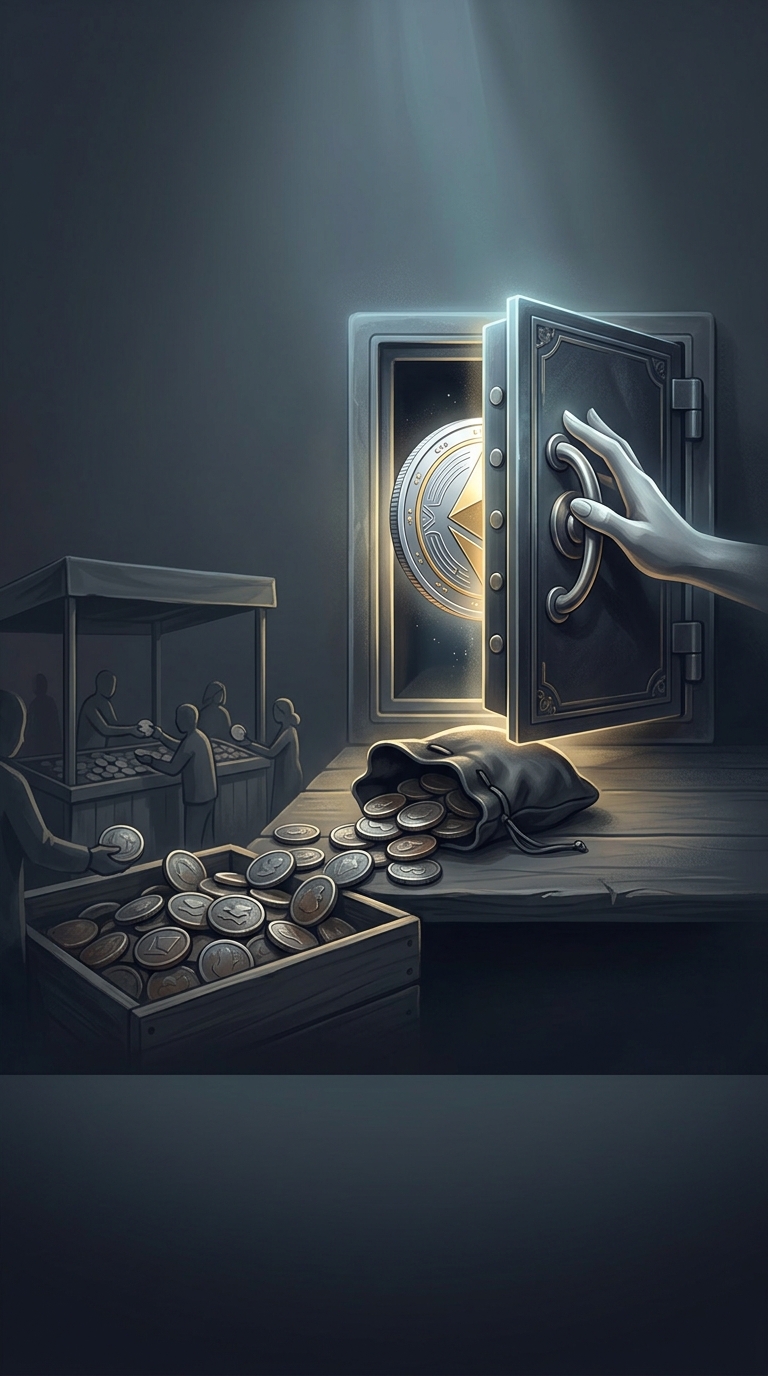
Why “bad money” pushes good money aside
Gresham’s law describes what can happen when two kinds of money are treated as equal in official payments even though one is worth more as metal or in the market. People tend to spend the money that is overvalued by the rules and hold onto, melt down, or send away the money that is undervalued. The better money disappears from everyday circulation—not because people cannot recognize its value, but because spending it would mean giving up more than they have to.
The effect depends on that unequal official valuation. If one coin contains more precious metal but must be accepted for the same amount as a lighter, less valuable coin, people have a reason to part with the lighter one first. “Bad money” does not simply mean counterfeit or poorly made money; it means money that is overvalued relative to the other currency under the prevailing rules.
The name came later than the idea
Thomas Gresham, an English financier, described the problem in a letter to Elizabeth I. But he was not the first to put the principle into words: the Polish astronomer and economist Nicolaus Copernicus had described it decades earlier. In the 19th century, economist Henry Dunning Macleod popularized the name “Gresham’s law,” drawing on Gresham’s letter.
So the familiar label reflects which account later economists chose to attach to the principle, not who first noticed it. The practical lesson is older than the name: when rules make unequal forms of money interchangeable at the same price, people have an incentive to spend the one they value less and keep the one they value more.