How Collagen Becomes Gelatin
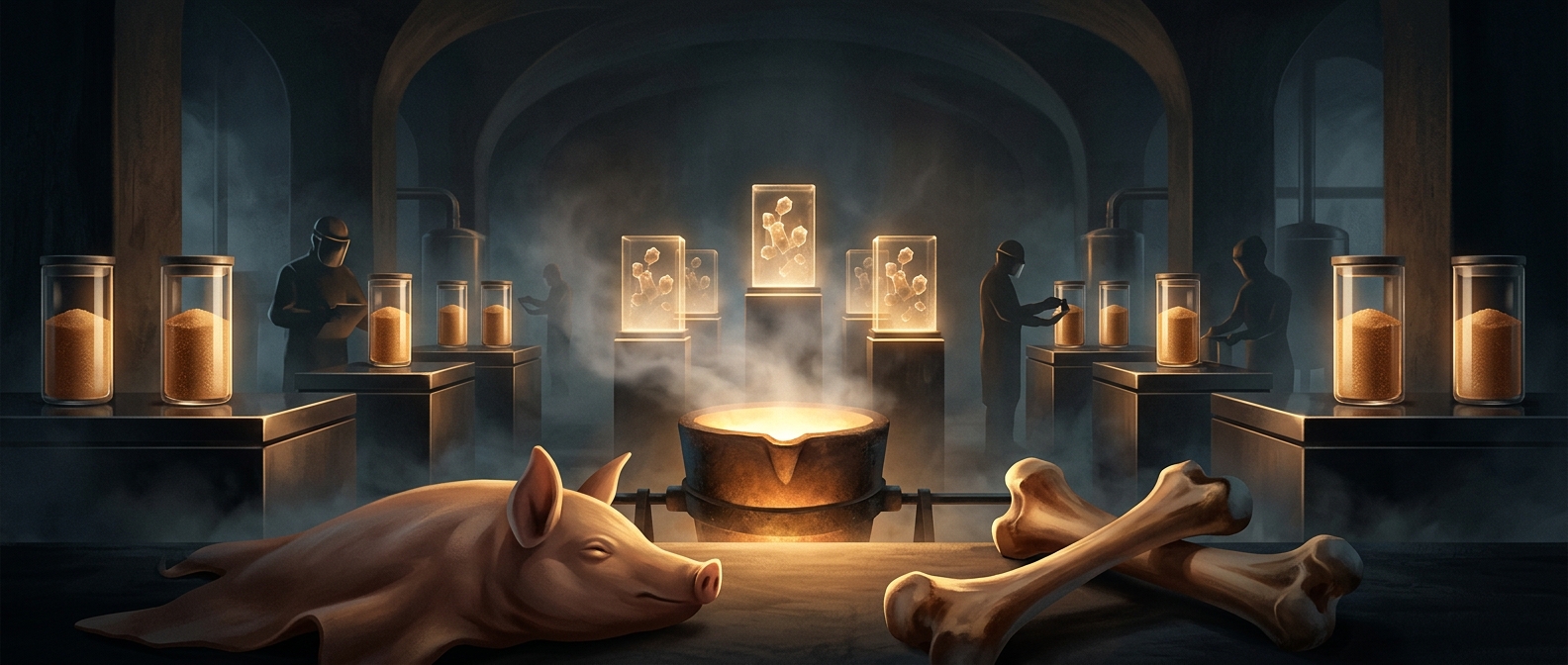
In animal skin, tendons, and other connective tissues, collagen forms tough fibers that help hold the body together. To make gelatin, processors clean collagen-rich material and heat it in water, often after treating it to help loosen the fibers. The treatment breaks collagen’s orderly structure into smaller protein strands that dissolve into the liquid.
The resulting extract is filtered and concentrated, then dried into sheets or powder. In a dessert, warm water disperses those strands. As the mixture cools, they partly reconnect into a loose network that traps water; that network is what gives gelatin its soft, wobbling texture.
Why the Source Matters Economically
Gelatin production can turn hides and connective tissues left over from meat processing into a useful ingredient rather than treating them only as waste. This is a form of by-product processing: a facility can recover value from parts of an animal that are not sold as cuts of meat. The same basic material is also used in products such as capsules and some foods, so manufacturers can serve several markets with one extracted protein.
That link to animal tissue also shapes what gelatin can be used by whom. Its source may matter to people choosing food for religious, ethical, or dietary reasons, and gelatin from different animals is not automatically interchangeable for every consumer or product. The dessert’s springy bite is therefore the last step in a supply chain that begins with collagen-rich material and turns a slaughterhouse by-product into a widely used ingredient.