A mining claim that became an abrasives business
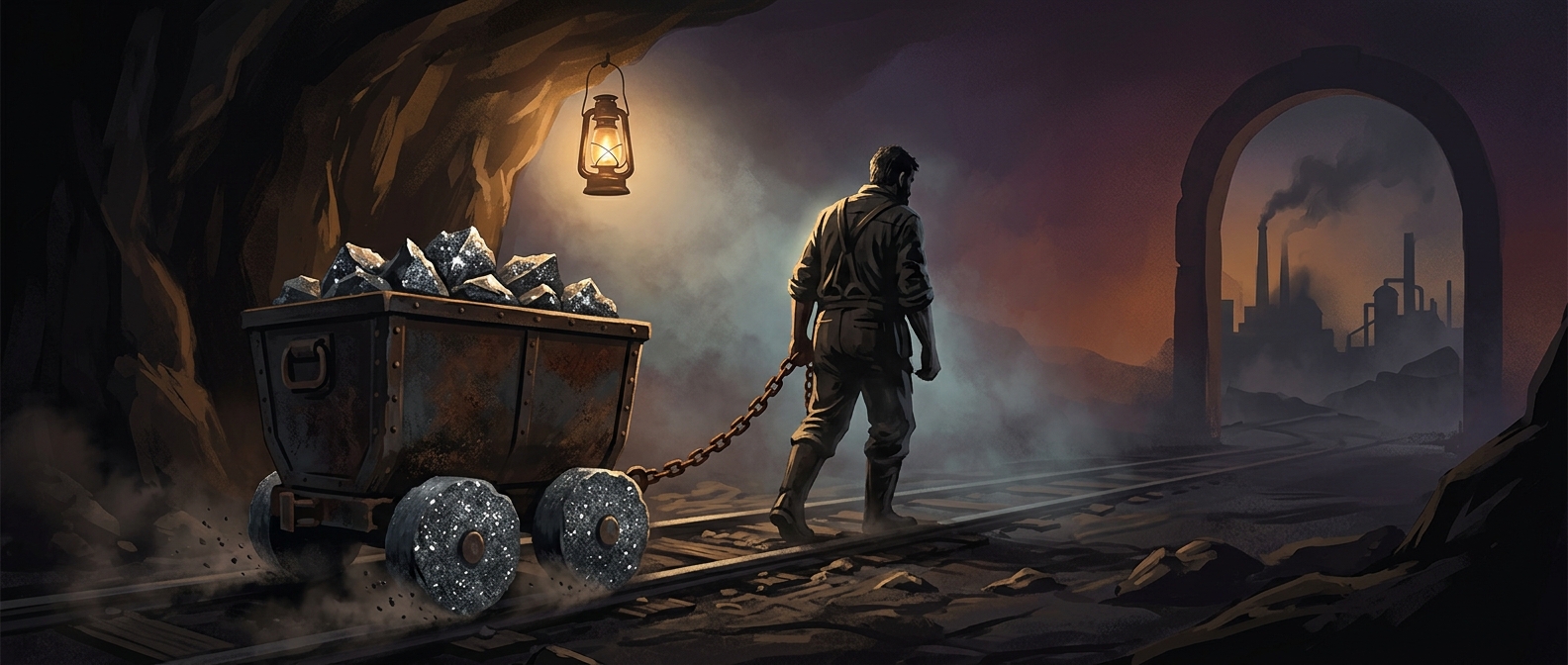
When Minnesota Mining and Manufacturing set out in 1902, its plan depended on finding corundum, a very hard mineral used to cut and grind other materials. The company’s mining effort in northeastern Minnesota did not yield the hoped-for supply. Instead, it found anorthosite, a rock made largely of minerals too soft to serve as the high-performance abrasive the venture needed.
That mismatch mattered commercially: a deposit is valuable only if it contains material suited to a product customers will buy. The company had invested in mining, but the rock it extracted could not fulfill the original plan. It had to look beyond the mine for a viable business.
From raw mineral to manufactured product
Rather than keep betting on the wrong deposit, the young company shifted toward making abrasives. It began producing sandpaper, which turns abrasive grains into a practical tool by attaching them to a flexible backing. That required more than a useful mineral: it called for ways to prepare the grains, bind them to paper, and make a product that could withstand use.
The pivot changed where the company could create value. Instead of relying on a single local mineral discovery, it could build expertise in turning materials into useful, engineered products. That manufacturing experience became part of the broader path that later led 3M into products such as adhesive tape and sticky notes—not because anorthosite itself became the ingredient in them, but because the company had moved beyond mining into materials and product development.
The failed search for corundum did not make the original mine successful. It forced a more consequential change: 3M’s business would depend less on what the ground happened to contain and more on what the company could make from materials.