Why a Sea Sponge Can Keep Its Shape
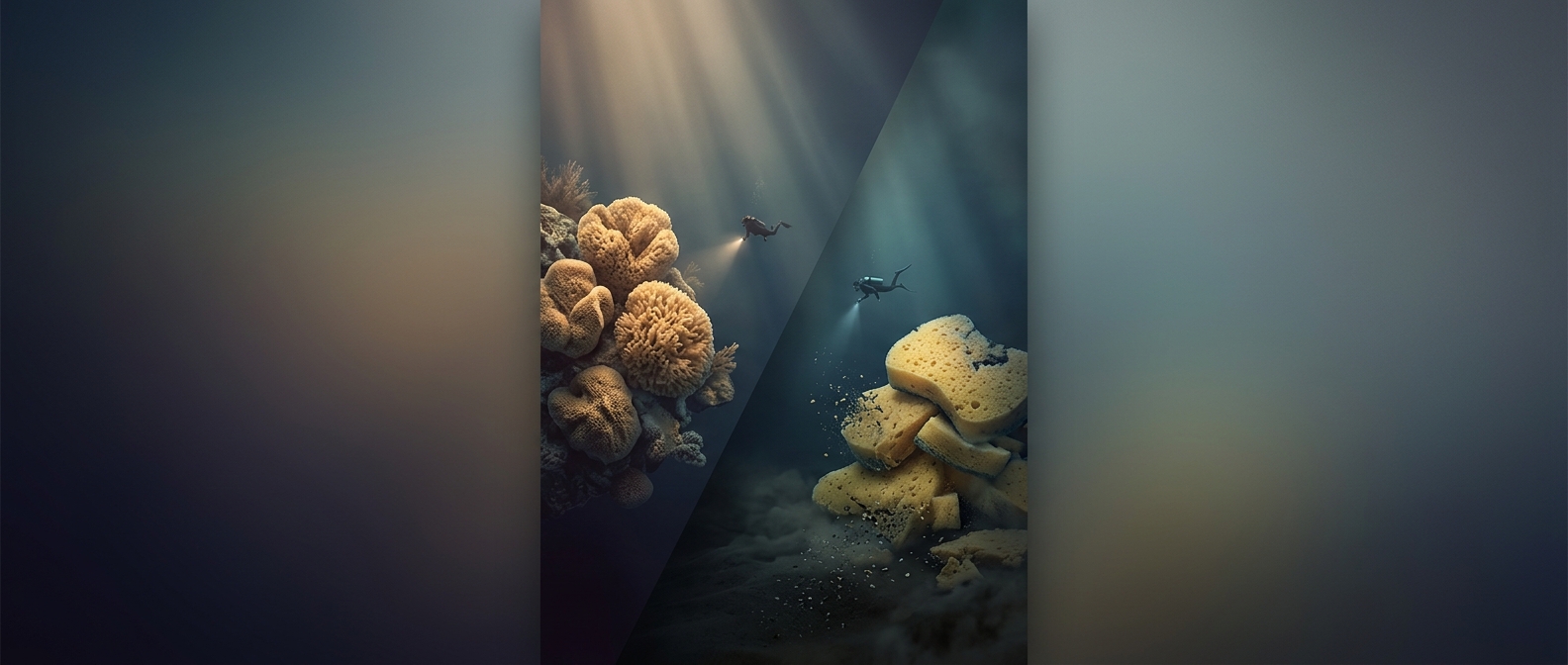
A natural bath sponge is not a plant or a lump of soft tissue: it is the flexible skeleton left after a sea animal is harvested and cleaned. Its interwoven protein fibers form a springy network of pores. Press it, and the network compresses; release it, and it can expand again. That structure is useful for washing and applying cosmetics, where repeated squeezing would wear out a brittle material quickly.
The Cost of Replacing It
Polyurethane sponges are inexpensive to manufacture, which helps explain why they became a common choice. But purchase price is only part of the cost of using a sponge. If a natural one remains usable through many more cleaning cycles, a buyer may replace it less often, making its higher initial price worthwhile over time. Actual lifespan depends on how the sponge is used and cared for, so durability is an advantage, not a guarantee of a fixed number of years.
That tradeoff keeps natural sponges in use: the cheaper option can win at checkout, while the longer-lasting one can make sense for someone who values repeated use. The difference becomes clearest not on the first day, but when one sponge is still doing its job after another has been thrown away.