A Small Detail Becomes a Visual Signature
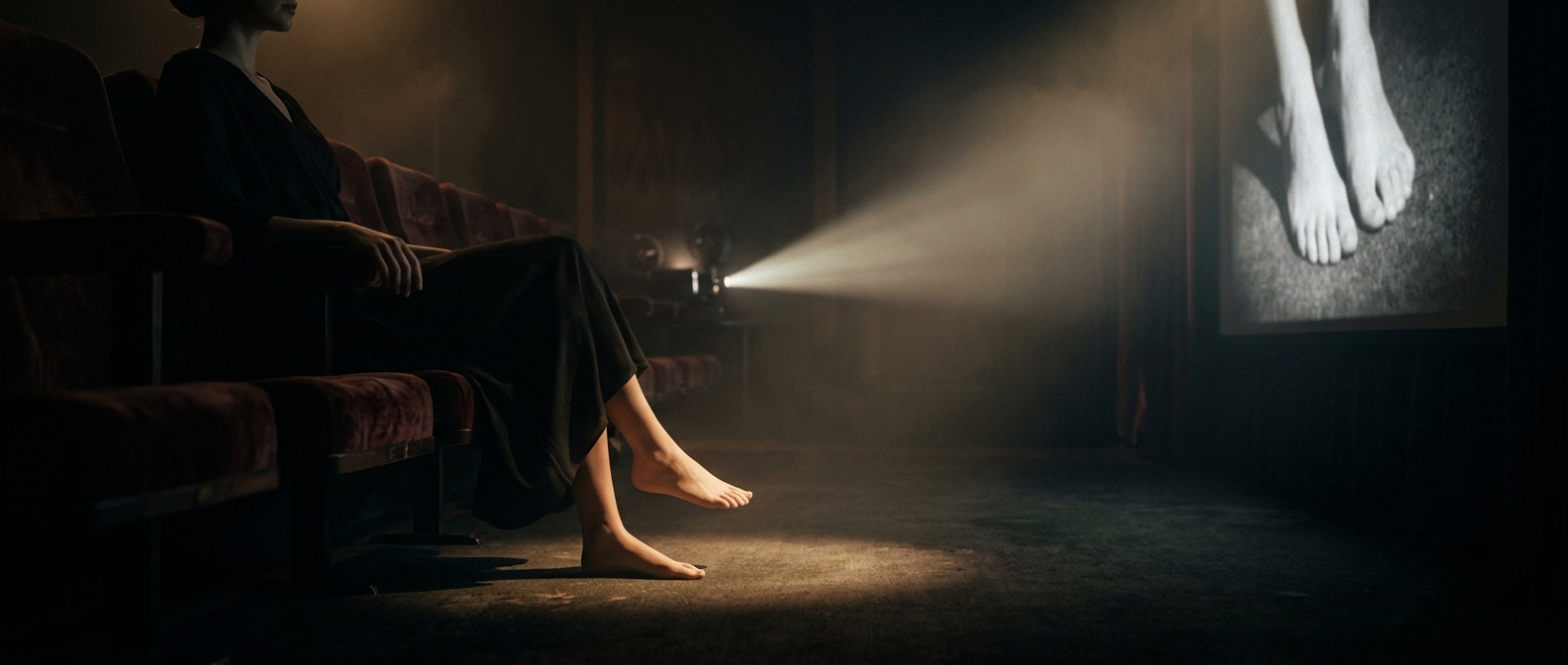
A shot of bare feet can seem incidental: a character is relaxing, getting ready, or simply moving through a room. But when a filmmaker repeatedly gives that detail screen time, it stops being background. The audience begins to recognize it as part of the filmmaker’s visual vocabulary.
Tarantino has described his foot shots as an homage to classic cinema—a deliberate nod to images and habits of filmmaking that came before him. An homage works by borrowing a recognizable kind of image and making it part of a new film’s style. The reference need not carry a plot clue; its value can lie in the pleasure of noticing the filmmaker’s recurring choice.
From Close-Up to Audience Expectation
Feet also offer a very different image from the polished faces and dramatic gestures that usually command attention. A close-up can make an ordinary, vulnerable part of the body feel unexpectedly prominent. Depending on the scene, that shift may read as intimate, comic, awkward, or simply conspicuous. The same visual choice can therefore serve different moods without changing its basic shape.
Repetition alters how viewers interpret the image. Once people know to expect a foot shot, even a brief appearance can feel like a signature—and can prompt jokes or scrutiny that might not follow a one-off detail. That recognition is part of the effect: the shot is no longer only about the character in the frame; it also reminds the audience who is directing the film.