Why a Droplet Gives Heat Back
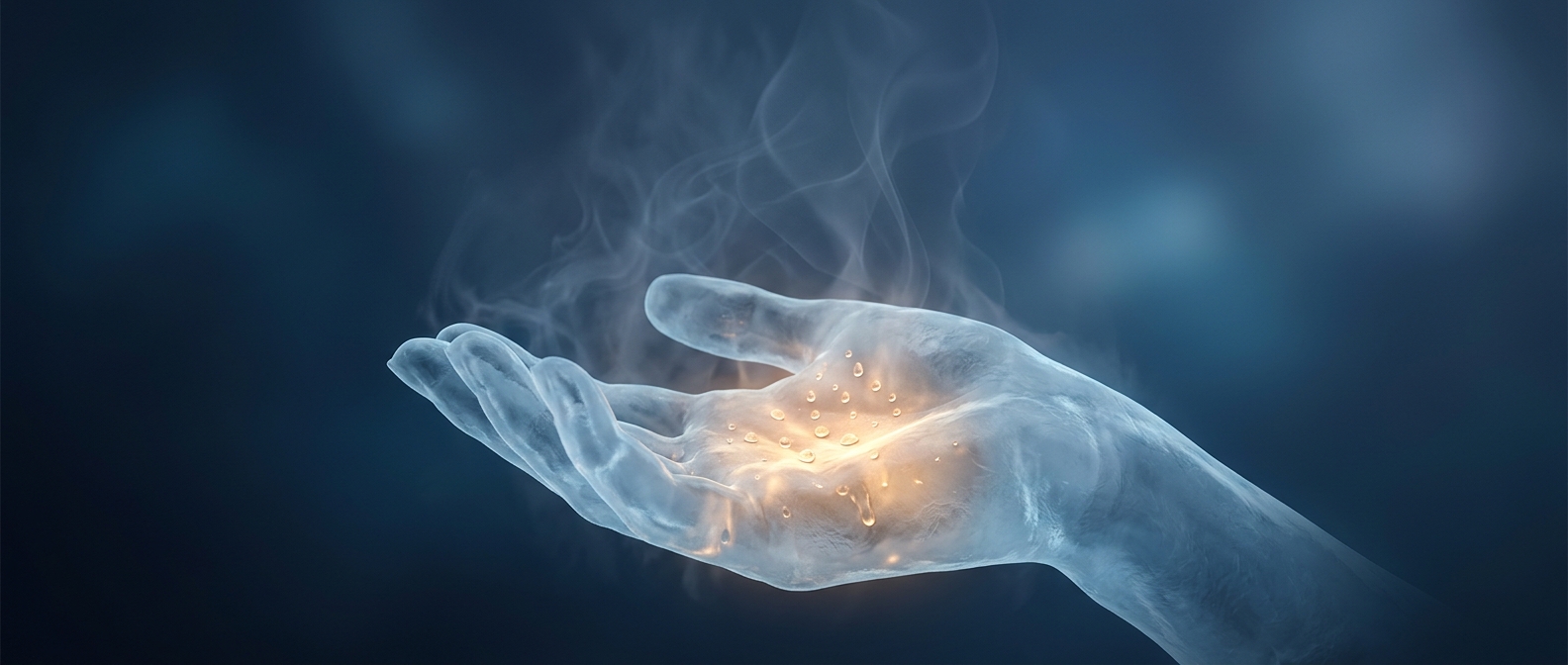
Liquid water takes in energy when it evaporates: that energy helps molecules break away into the air as vapor. When vapor molecules return to liquid, they settle into a lower-energy arrangement. The difference has to go somewhere, so it passes to nearby air, the surface, or other water molecules as heat. The process is called condensation, and the energy transferred during a change of state is known as latent heat.
A Cold Surface Can Receive Heat Without Feeling Warm
At a window, water vapor in the room meets glass that is cool enough for some molecules to condense. The glass receives heat at the surface where droplets form. But that small input does not necessarily make the pane feel warm: heat is also flowing through the glass toward colder air outside, and the pane may continue to lose heat faster than condensation supplies it.
The same exchange matters on a much larger scale in the atmosphere. Water vapor rising from warm ground can condense into cloud droplets as the air cools. The released heat warms the surrounding air, helping shape how air moves and how storms develop. A window’s beads of moisture are the small-scale version of that transfer: water changing state carries energy from the vapor into whatever it touches.