Why Geraniums Can Catch Tiny Insects
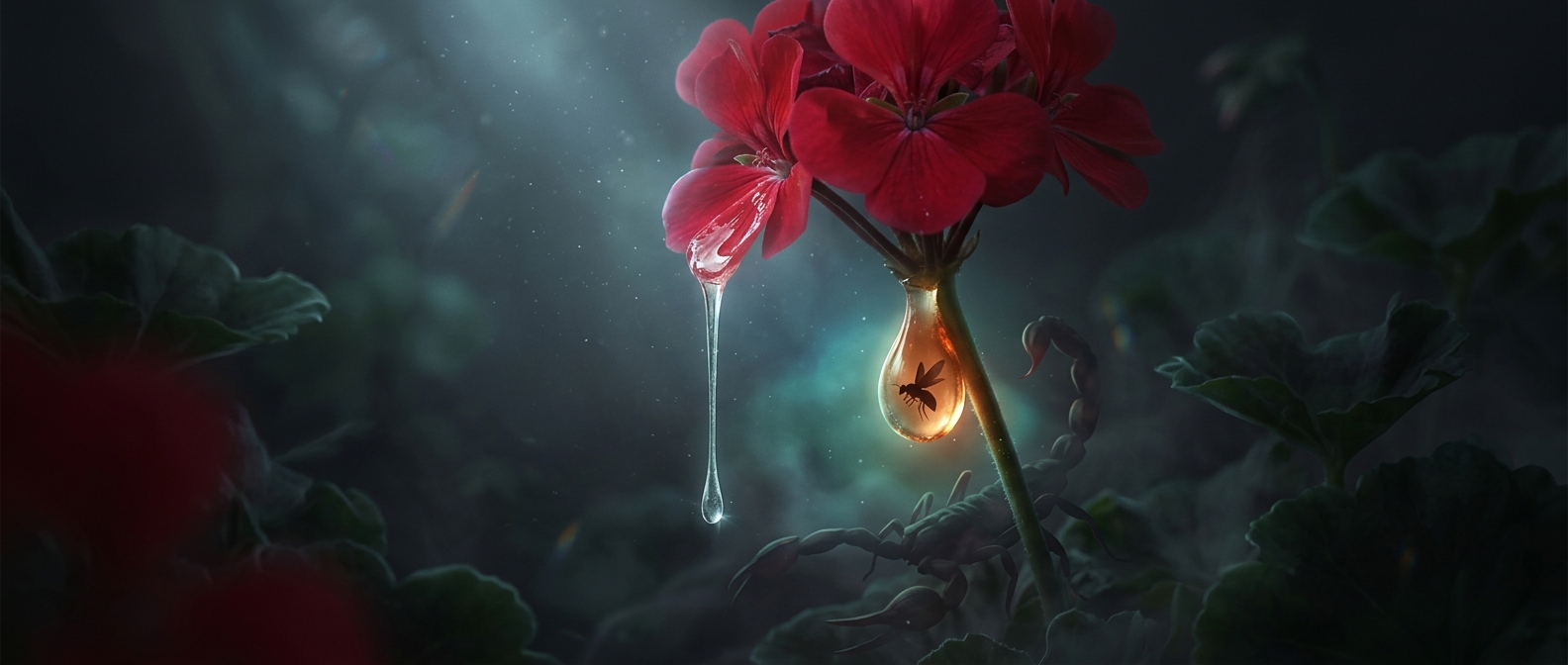
The sticky hairs on some geraniums are more than a fuzzy surface. These hairs, called glandular trichomes, release a tacky substance that can hold small insects when they land. In certain species, the plant can also break down trapped prey and absorb some of the nutrients. That process is slow: the insect is not snapped up like prey in a trapdoor, but remains caught while the plant’s secretions act on it.
This trait is unusual among plants commonly called geraniums, a name often used for members of the Pelargonium genus. It is not a feature of every garden geranium, so the claim applies to particular species rather than the whole group.
What the Scorpio Association Adds
In astrological plant lore, geranium is paired with Scorpio. The pairing is symbolic: the plant’s hidden, adhesive way of capturing and gradually consuming an insect can be read as an image of Scorpio’s traditional associations with intensity, secrecy, and transformation. The botanical mechanism gives that symbolism a vivid point of reference, but it does not show that the plant has an astrological effect.
The striking detail is the contrast between appearance and action: a familiar flowering plant can quietly hold tiny insects in place, with the process unfolding out of sight.